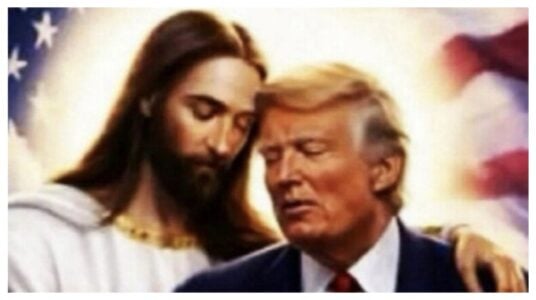
In a moment that has left many shaking their heads, Donald Trump took to his Truth Social account to share an AI-generated image of Jesus embracing him. The post, captioned with a defiant remark about the disapproval from the “Radical Left Lunatics,” quickly ignited a firestorm of debate and critique online. The juxtaposition of Trump’s self-proclaimed divine endorsement with a digitally crafted figure of Christ raises significant questions about the intersection of faith, technology, and politics.
Critics were quick to point out the audacity of using AI to depict a religious figure, particularly one as revered as Jesus. This move feels emblematic of Trump’s broader tendency to polarize discussions, and many are left wondering what the implications are for faith in our increasingly digital age. Trump’s supporters, however, see this as a bold statement in a world where faith is often weaponized against political figures. The image has transformed into a symbol, perhaps unintentionally, of the ongoing cultural war that continues to unfold, especially in the context of contemporary American politics.
Adding to the drama, a fiery exchange sparked comparisons to historical figures such as Pope Leo, who once stood firm against societal pressures. The Pope’s potential reaction, had he been part of today’s scenario, raises further questions about the role of religious leaders in the face of political antics. Would he defend the sanctity of religious imagery, or would he find some semblance of humor in the absurdity of it all? This exchange underscores the need for thoughtful discourse around topics that intertwine faith and modernity—something that’s becoming increasingly essential in our society.
As the backlash continues to spiral, one thing is clear: Trump’s AI Jesus image and its accompanying commentary are serving as a flashpoint for broader discussions about morality, ethics, and the responsibilities of leaders in times of cultural upheaval. While some find humor and irony in this latest social media escapade, others see it as a troubling sign of the times, where even the sacred seems vulnerable to manipulation and spectacle. In a world where the lines between reality and artificiality are blurring, the implications of such images stretch far beyond the realm of entertainment, delving deep into our collective conscience and cultural identity.
About The Author