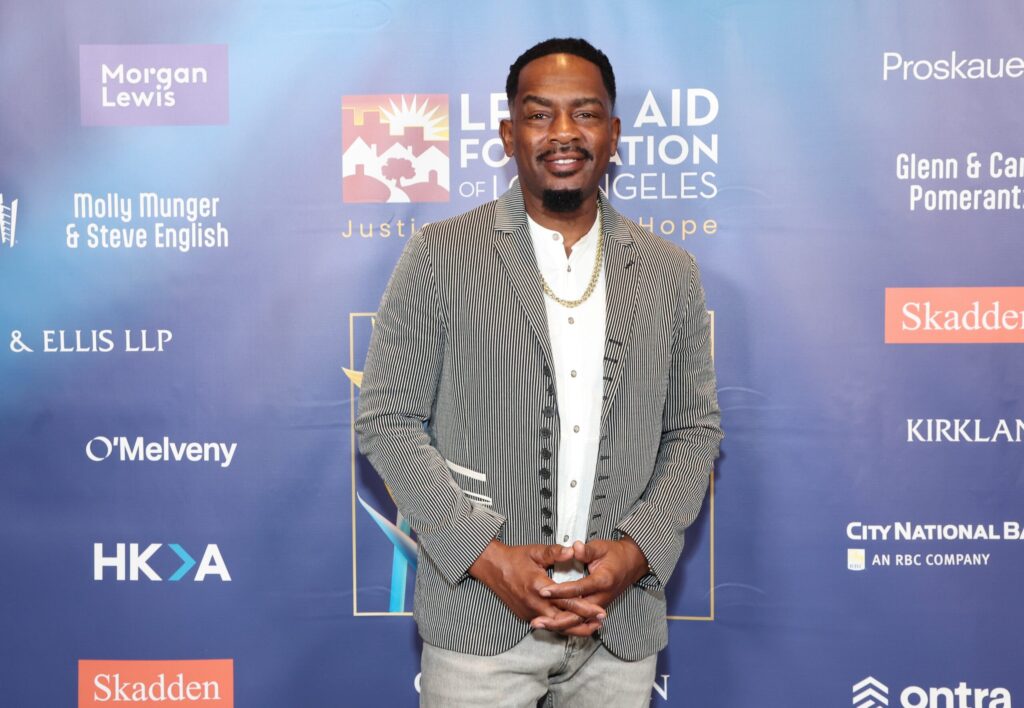
BEVERLY HILLS, CALIFORNIA - OCTOBER 29: Bill Bellamy attends the 27th Annual Access To Justice gala at Beverly Wilshire, A Four Seasons Hotel on October 29, 2025 in Beverly Hills, California. (Photo by Robin L Marshall/Getty Images)
Bill Bellamy, a well-known figure in comedy and entertainment, has recently stirred up quite the conversation online with his remarks directed towards Black women. While his comedic style has often celebrated Black culture and brought laughter to many, this latest message struck a different chord, leading to mixed reactions across social media platforms. Fans who usually appreciate his humor are now questioning whether his comments were genuinely intended as supportive or if they missed the mark entirely.
In a society where the perceptions of beauty and self-worth are constantly evolving, Bellamy’s comments seemed to resonate with those who feel that Black women often face unrealistic standards. However, many others feel that his approach trivialized the serious struggles many women face in expressing their identities. The discourse surrounding his remarks has ignited a fierce debate about the role of public figures in shaping narratives about Black womanhood and whether they have a responsibility to uplift or critique.
Social media has become a battleground for discussion, with some praising Bellamy for attempting to tackle a topic that often goes unaddressed, while others are quick to condemn him for what they perceive as a misguided notion of humor at the expense of women’s dignity. The heated reactions reflect deeper societal issues, showing that Black women are often caught in a complex web of admiration, scrutiny, and expectation. As the conversations unfold, it only reinforces the need for more nuanced dialogues around race, gender, and representation in entertainment.
As we navigate through this controversy, it’s crucial to remember the immense power that artists and comedians wield in shaping perceptions. The challenge lies in balancing humor with sensitivity, especially when addressing communities that have been historically marginalized. Bill Bellamy’s recent remarks may have sparked discontent, but they also highlight the ongoing struggle for understanding and respect towards Black women in both the comedic sphere and beyond. The real question is: how can we move forward from this moment to create a space where all voices are heard and respected?
About The Author