By Tanya Brooks, PowerVault Staff
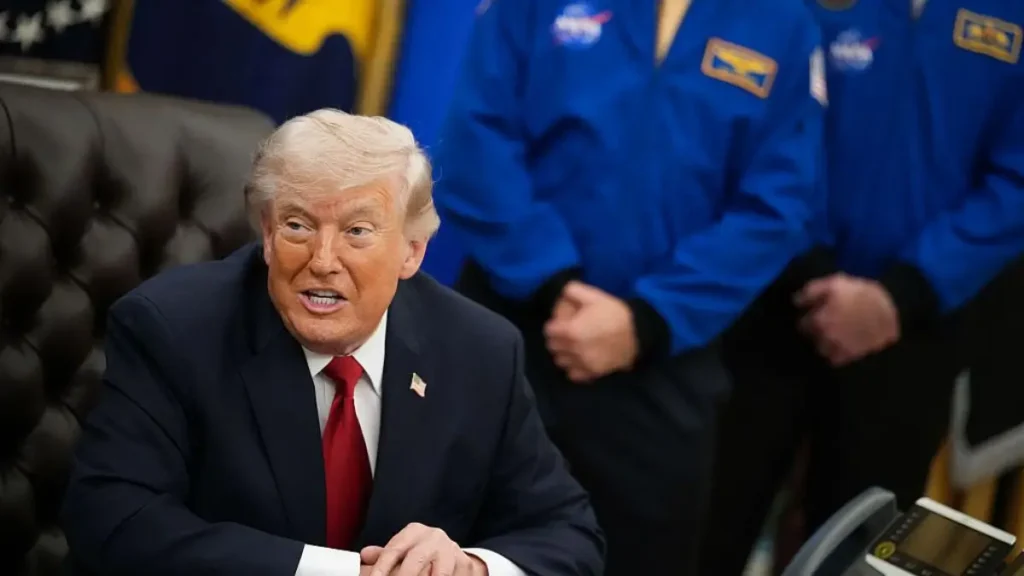
On Independence Day, President Donald Trump took to the stage with a band of NASA astronauts, turning an event meant to celebrate freedom and scientific achievement into yet another cringe-worthy spectacle. In a moment that felt more like a reality show than a presidential address, he flaunted the astronauts as if they were props, only to falter when asked to identify them, leaving viewers to question not just his knowledge but his respect for those who have dedicated their lives to space exploration.
This isn’t just a one-off gaffe; it is indicative of a larger trend in contemporary politics where the leaders we elect often prioritize theatrics over substance. The idea of showing off astronauts—heroes in their own right—was expected to inspire a sense of national pride. Instead, it played out as a bizarre pageant that highlighted Trump’s disconnect from the very values he claimed to represent. As he draped himself in the trappings of patriotism while failing to contextualize the achievements of these scientists, it becomes clear that this is about more than just a poorly executed segment in a holiday speech. It’s a reflection of how political discourse has devolved into a circus where authenticity is sacrificed for ratings.
When we think about Black culture, it’s hard not to draw parallels to the way figures in our community have had their narratives co-opted for spectacle as well. Think of how often Black artists and activists become part of a larger narrative that doesn’t align with their truths. The vital work of those like Angela Davis or Audre Lorde is often reduced to soundbites in political discourse, just as astronauts became mere stage props. The symbolism is potent; it highlights how Black contributions within various fields can be overshadowed by those who see them only as tools for their gain, further perpetuating a cycle of misrepresentation and exploitation.
Looking back, moments like this bring to mind the time when President Obama took the stage with his own guests at events, where those guests were not just background but integral parts of his narrative. Whether it was a teacher or a scientist, the way he engaged with them wasn’t just respectful—it was a commitment to highlighting their stories as a part of a larger American story. Trump’s approach serves as a stark contrast, where the individuals sharing the spotlight with him are stripped of their humanity and significance.
As we move forward, we must keep an eye on how our public figures engage with the scientific community, especially as we face pressing global challenges like climate change and technological advancement. It’s crucial to demand leaders who appreciate and elevate the work of those in the trenches. We need to ensure that the conversation shifts from one of spectacle to one centered around accountability, respect, and genuine engagement. The future of our culture—and indeed our planet—depends on it.
About The Author