By Tanya Brooks, PowerVault Staff
The first thing that hits is the smell of shea butter and edge control in the night air, mixed with Hennessy breath and perfume. Couples tucked into each other on the lawn. Homegirls in matching soft glam, already singing hooks before the DJ even fades the house music. Before Ella Mai steps onstage, the crowd already feels like a group chat pulled into real life.
That is the thing about a good R&B show. It is not just music, it is a mass confession. All the questions people are too proud to text their ex start floating in the air. Which is exactly why Ella naming this run the “Do You Still Love Me?” tour hits different. It is not a flex title. It is a question everybody in the crowd has either asked or ignored.
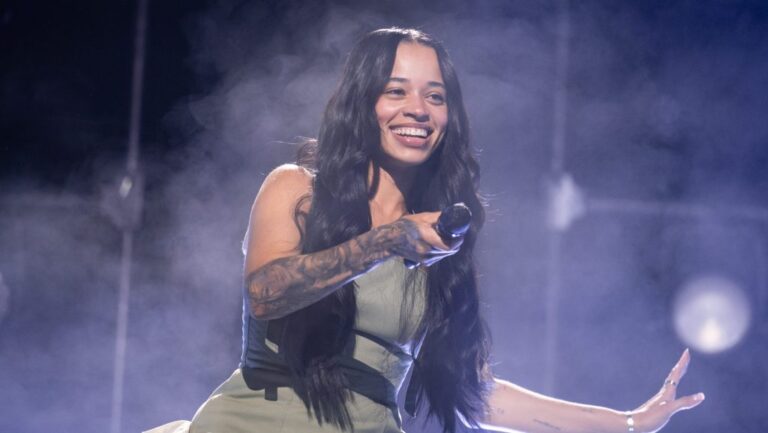
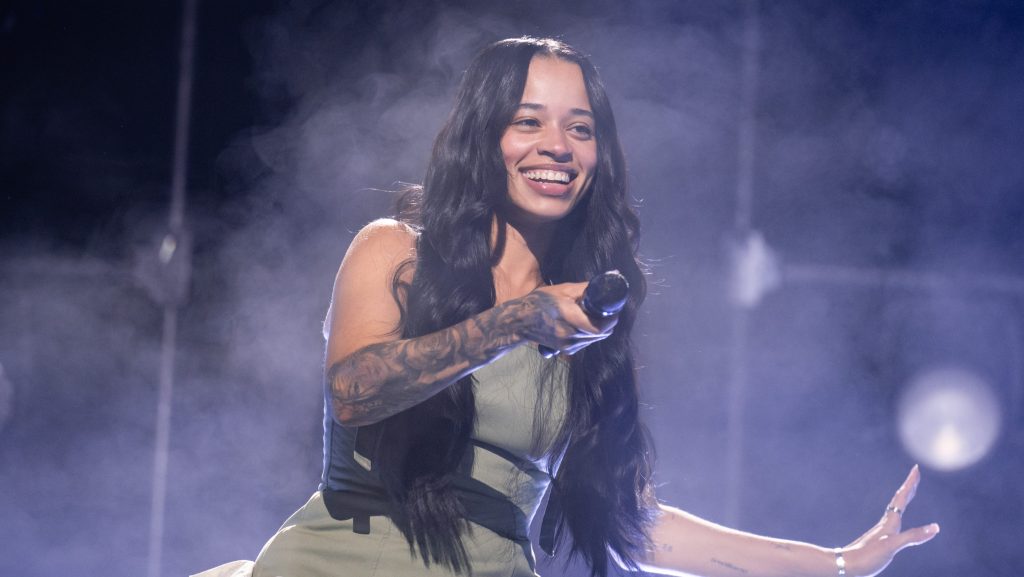
On this midwestern stop, under a clear sky and that specific kind of summer breeze that makes you rethink old situationships, Ella Mai walked out and reminded everybody why she has quietly become one of this era’s most consistent R&B voices. No gimmicks. No pyro. Just a band, a mic, and a catalog built on the soft but honest side of love.
The entrance was simple but locked in. The band eased in with those warm, live keys that have always been a part of her sound, then the bass crept up, and suddenly the crowd realized they knew the first song from the opening three notes. When “Naked” bled into the speakers, the noise level jumped. That record has lived online as a caption and a TikTok sound, but live, it turns into a mirror. People were rapping the verses to themselves more than to her. That is the Ella Mai effect. These are not just love songs, they are therapy sessions you can dance to.
Vocally, this tour finds her in the pocket. Early on in her breakout years, there was real conversation about whether Ella was a studio artist or a live one. That debate felt lazy even then, but now it feels outdated. On this stage, she stretched notes, flipped melodies, and let the band breathe enough that the songs felt familiar but not copy-and-paste from the album. “Shot Clock” turned into a call and response sermon. She played with the phrasing, letting entire lines fall back so the crowd could scream them, then slid back in with these little ad-libs that reminded everybody that British R&B singers can talk that talk too.
“Boo’d Up” showed up earlier in the set than expected, which was lowkey a flex. Most artists with a record that huge save it for the end like a security blanket. Ella dropped it in the middle like, we are not surviving off nostalgia tonight. The crowd reaction proved she could have opened with it and still had the room in her hands. When those drums kicked and that familiar synth line rose up, people who swore they were too grown or too cool to care turned right back into 2018 versions of themselves. That song feels like the last R&B record that truly took over the world in a slow burn way, the way “We Belong Together” or “No Scrubs” did, just stretched into the streaming era.
The new material, anchored by the “Do You Still Love Me?” single, is where the tour really earns its name. Live, that song does not play like a sad girl anthem. It feels like standing your ground. There is tension in the performance, a kind of soft confrontational energy. She is not begging, she is checking in. That nuance is why Ella’s lane is so important for R&B right now. Where a lot of modern love songs swing between toxic pride and full-on begging, her pen lives in the real messy middle. People in the crowd were not just singing along, they were nodding like, “yeah, I have asked that exact question.”
The staging stayed pretty stripped down. Some artists lean on massive LED walls and movie-level visuals to make up for thin vocals or shallow catalogs. Ella did the opposite. A few clean lighting cues, a soft color palette that matched the lover girl energy, and an emphasis on the band and her presence. It felt closer to an old school R&B experience than a pop spectacle. Think more Jill Scott and Alicia Keys than a Vegas residency vibe. Even the transitions between songs felt intentional, with the band flipping familiar chords into new intros, forcing the crowd to lean in and guess what was coming next.
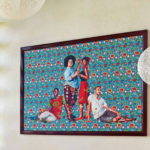
There is a bigger story here than one tour stop. Every few years, the think pieces pop up: “Is R&B dead?” People argue, Twitter threads go up, playlists get made. Yet the same audience that supposedly abandoned R&B is packing out venues to scream along to Ella Mai, Summer Walker, SZA, Bryson Tiller, and the rest of the new school. That disconnect says more about the industry gatekeepers than the fans. The same way some folks tried to call Kehinde Wiley “too woke” and yank his art off walls while Black people kept pulling up and supporting him anyway, like in the Kehinde Wiley embassy situation, R&B’s health cannot be judged by who gets mainstage festival slots alone. You have to look at nights like this.
Ella’s presence also matters in how Black British R&B is crossing over. There has always been a pipeline of UK talent impacting Black music globally, from Sade to Soul II Soul, Estelle, and now the wave of Afroswing and drill. Ella sits in a different pocket. Her accent is there in her speaking voice, but her singing feels rooted in the same church and 90s R&B DNA as American counterparts. In another era, she would be standing next to Faith Evans and Brandy on a remix. Now, she is navigating a landscape where R&B acts have to fight algorithm bias and playlist politics just to be seen.
What makes this tour interesting is how unapologetically soft it is. In a culture where even love songs can sound like diss tracks, Ella leans into vulnerability without pretending it is weakness. That matters for young Black audiences who are constantly being fed the idea that being detached, unbothered, and emotionally unavailable is the only way to win. The same way people were breaking down how colorism and cruelty are baked into something as silly as a dating show on Pop The Balloon, there is a quiet resistance in a Black woman standing on stage in front of thousands and saying, out loud, “Do you still love me?” and turning that question into a singalong instead of a secret.
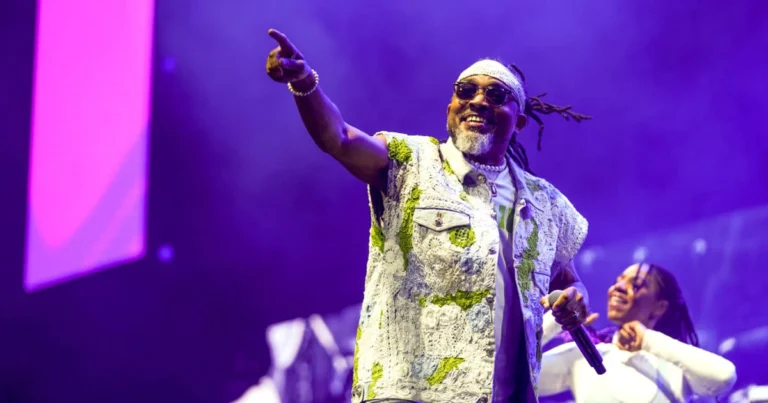
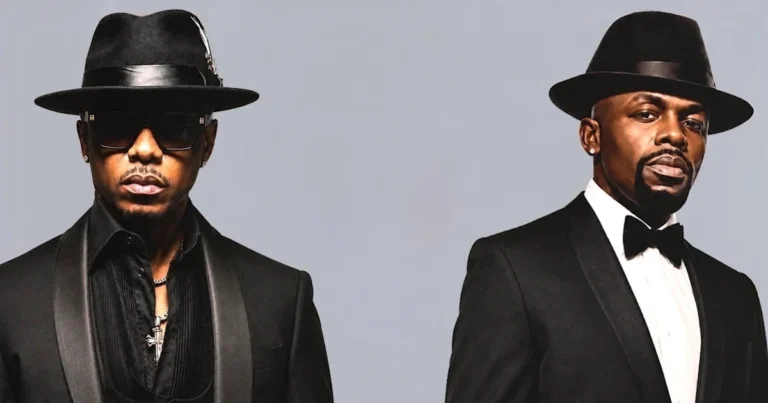
There is also a generational piece here. For older millennials, nights like this feel like a bridge back to the era of 106 & Park and CD booklets. For Gen Z in the crowd, Ella Mai is not a throwback, she is the standard. Watching them belt out “Trip” word for word, from the hook down to the ad-libs, felt similar to seeing younger fans lose it over the legacy artists in that Joe and Donell Jones Verzuz. R&B is living across generations now, not stuck in one era’s idea of what a “classic” is supposed to sound like.
Live, “Trip” is probably the emotional center of the set. The streaming numbers say “Boo’d Up” is the flagship, but performance wise, “Trip” hits like the truest snapshot of who Ella Mai is as an artist. The melody is sticky, the drums knock just enough for you to move, and the lyrics land like a voice note you almost did not send. On this tour, she stretches that bridge out and lets the crowd take over. Hearing thousands of people yell “I put my feelings on safety” in unison feels like a group admission that none of us are as detached as we pretend to be on social media.
Compared to the chaos of hip hop touring right now, with last minute cancellations, messy rollouts, and artists airing out label drama onstage, Ella’s tour feels almost old fashioned in the best way. Show up. Sing. Connect. No theatrics, no rants. Just an artist doing the job. That does not mean her career is without industry politics, it just means she is choosing to keep the focus on the music. The same way someone like Lil Baby can dominate rap, then pivot to community with things like his Back To School Fest in Atlanta, Ella is building a lane that is not about being the loudest, but being the most consistent.
Historically, R&B’s biggest women stars have had to carry more than just vocals. Mary J. gave us pain and grit. Beyoncé turned precision into a religion. Aaliyah brought cool minimalism. Ella Mai’s contribution is subtler, but just as needed. She is making it normal again to talk about wanting love in a straightforward way. No fake toxicity for streams. No pretending she is above heartbreak. That honesty lines her up more with artists like Keyshia Cole and early Alicia Keys, who were never afraid to sound like the homegirl trying to figure it out in real time.
As for what this means going forward, the “Do You Still Love Me?” tour feels like a reset button. Ella Mai is no longer just the girl who had the inescapable radio hit for one summer. She is quietly stacking the kind of catalog that, ten years from now, will have people arguing whether she was underrated the whole time. The live show proves the songs are not just playlist filler, they are anchors in people’s real lives.
What comes next will be interesting. There is room for her to lean further into live instrumentation, maybe even cut a stripped down project that captures how these records feel onstage. There is also space for bigger collaborations, especially as hip hop and R&B keep blurring at the edges again. Do not be surprised if the next wave of rap projects has more Ella Mai hooks sitting in the sweet spot between confession and caption.
For now, the answer to the tour’s question is clear. Do they still love her? Judging by the way people stayed until the last note rang out, then walked back to their cars still humming hooks under the midwestern moonlight, the love has not gone anywhere. If anything, nights like this prove something simple that the culture forgets every few years. R&B does not die. It just waits for artists like Ella Mai to step onstage, ask the right questions, and let the crowd sing the answers back.
About The Author