By Simone Walker, PowerVault Staff
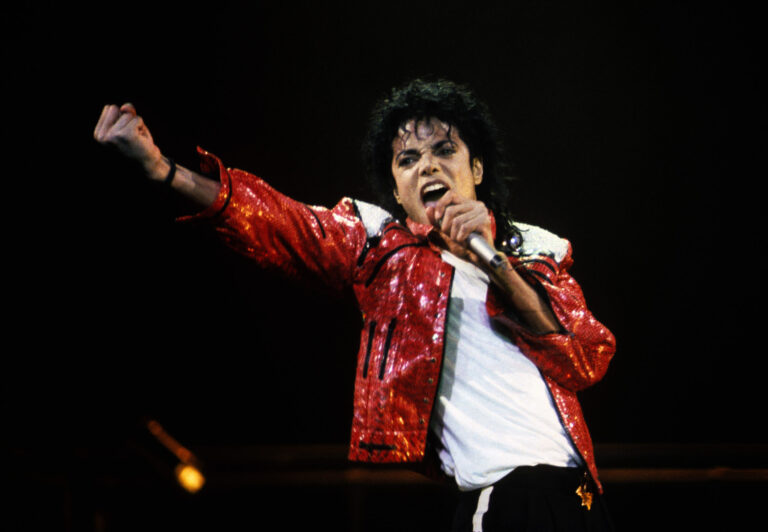
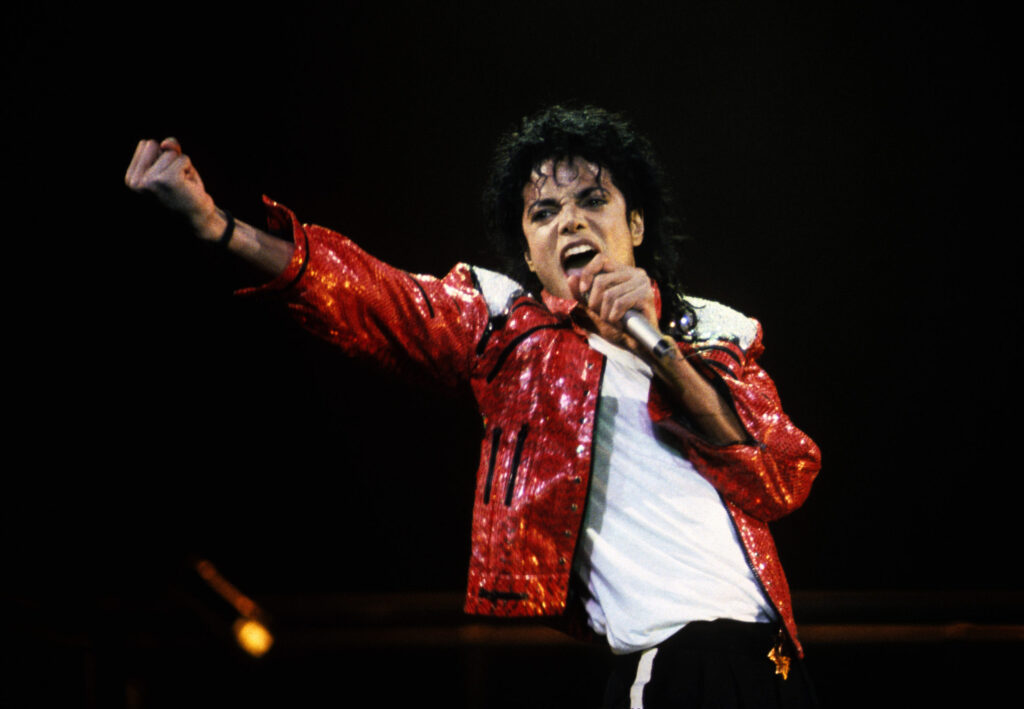
The first time that glove hits the spotlight on a big screen, the whole theater goes quiet. Not phone quiet, not “lemme check this text” quiet. Church quiet. Everybody locked in, waiting on a silhouette we already know by heart. The hat tilts. The bassline creeps in. And for two hours, the most famous Black man to ever walk a stage comes back to life in front of a generation that mostly met him through YouTube clips and family stories.
That is the power of Michael Jackson. And now, that power is not just about music, not just about dancing, not just about the mythology. The new biopic “Michael” just ran past Elvis Presley at the box office and planted the crown somewhere it honestly should have been sitting for decades: on the head of a Black kid from Gary, Indiana, who turned the entire planet into his audience.
On paper, the headline is simple. Michael Jackson biopic breaks records. King of Pop passes King of Rock at the movies. But underneath that is something bigger, especially for Black fans who grew up watching our legends get copied, repackaged and handed back to us with a different face. This is not just a movie win. This is a narrative win. A who-gets-to-be-immortalized win.
Elvis has always been treated like America’s first rock god. Hollywood fed that image for generations with films, documentaries, and endless nostalgia. Meanwhile, Michael’s story stayed stuck in a weird limbo. The greatest performer in modern history was either frozen in Thriller-era perfection or reduced to punchlines and controversy. A lot of people wanted to jump straight from “Billie Jean” to the courtroom. “Michael” walks us back through the actual life, the grind, the genius, and the cost. And audiences are packing theaters to see it, again and again.
There is something poetic about a Black man finally passing Elvis in the space that helped make Elvis a legend to begin with. The same country that once tried to sell Elvis as the safe, white face for a sound Black artists built is now buying tickets to watch Michael Jackson’s story dominate the box office. That is not a small shift. It is a reflection of who holds cultural power now, who spends, who streams, who controls the timeline and the trending page.
Black millennials and Gen Z grew up in a totally different media world than the one that crowned Elvis. The algorithms are ours. The group chats are ours. The memes, the TikTok routines, the playlists, the Verzuz debates, that is where culture moves now. When a film like “Michael” lands and explodes, it is coming from that energy, the same way the internet kept Kobe’s legacy alive in a way even the NBA could not fully script, something we already saw with pieces like how Vanessa and Natalia Bryant honor Kobe. Fans are not just watching stories, they are curating them in real time.
Hollywood is going to read the “Michael” numbers one way. Studios are already in boardrooms asking what other music legends they can turn into glossy biopics. But from the culture side, this is not just about who is next. This is about who gets a fair telling. Michael’s life has been sliced up for tabloid headlines for so long that even some fans forgot the scale of what he actually did. The movie forces people to sit in his world for a full runtime. The Motown machine. The brutal rehearsal schedules. The perfectionism that bordered on obsession. The way a Black boy from a working class family became the model for every superstar rollout after him, from Beyoncé to The Weeknd.
Hip-hop especially owes more to Michael than some folks like to admit. The idea of an album as a full cinematic event, the rollout as a global campaign, the tour as a blockbuster, the merch as its own fashion line, that is Michael. When Kendrick Lamar turns his stage into a moving piece of theater or when Travis Scott treats an album like a theme park, they are working off a blueprint Michael helped draw. So when the film about that architect outperforms the Elvis myth, it feels like the culture correcting the record in public.
There is another layer that makes this moment hit different for Black audiences. Michael Jackson’s story is also a story about how this country treats Black genius. The same America that cheered for his moonwalk tried to devour him when it got uncomfortable. The same media machine that loved Elvis’s hips made Michael’s every move a circus. Watching “Michael” go off at the box office feels like a quiet clapback to that whole ecosystem. We see you. We still know who the real king is.
That tension between celebration and exploitation is all over Black art right now. Look at how Kehinde Wiley’s work was too “woke” for the U.S. embassy when they pulled his portrait, a whole scandal we broke down in detail in our coverage of that controversy. Black brilliance is always welcome until it starts talking back or existing outside the box it was placed in. Michael’s life was one long negotiation with that reality. The film’s success is a rare moment where the numbers line up on our side.
There is also the generational piece. For older heads, Michael is childhood. For younger fans, he is almost mythological. A guy your parents swear nobody can touch, but you never saw live. The movie becomes a bridge. Teenagers are walking out of theaters arguing about setlists, calling their moms like, “Yo, you really saw this man on the Bad tour?” That cross-generational conversation is priceless for the culture. It is the same kind of handoff you get when a new wave reminds you of an old one, like when people started comparing Skilla Baby’s raw honesty and Tupac’s influence around his role in 50 Cent’s universe, something we explored in our story on Skilla Baby channeling Pac.
Of course, any project about Michael Jackson is going to live in controversy. That is baked into his legacy now. Some people walked into “Michael” looking for a takedown, some looking for a clean redemption arc, some just wanting to hear “Human Nature” on THX speakers. No single movie can carry every angle of his life. But the fact that a film centering his talent and humanity can outdraw Elvis at the box office says a lot about where the public is spiritually. Folks are exhausted with one dimensional narratives about Black icons. They want the mess and the magic, not just the scandal reel.
It is also important to say this out loud: there is a race element that can not be ignored. Elvis has been propped up for decades as the wholesome, digestible face of a sound he did not invent. Michael is the opposite. Unapologetically global. Unavoidably Black, no matter how complicated his appearance and personal choices became. Watching his story win in arenas that used to belong to white nostalgia feels like a small but meaningful rebalancing of who gets to be “America’s legend.”
Some of the same people who clutched their pearls over Michael’s every move have no problem tuning in to colorist, humiliating dating shows or Fox News outrage segments that try to downplay Black dignity, like the way people clocked Pete Hegseth’s energy while honoring a Black Marine, something we broke down in our piece on that viral clip. “Michael” thriving in that media climate is not just a flex. It is a reminder that no matter how many smear campaigns or think pieces pop up, Black audiences still decide who our heroes are.
There is a lesson here for hip-hop too. Artists are watching how this biopic hits and taking notes. Legacy matters. Narrative matters. If you do not tell your own story, somebody else will. That is why we are seeing more documentaries, more autobiographies, more artists stepping behind the camera early in their careers. Look at how LeBron is already building out his own mythos while he is still playing, from I Promise to his PGA Tour event in Akron. The Michael film serves as both a tribute and a warning: waiting too long to shape your narrative leaves room for everybody else’s agenda.
What happens next is going to be interesting. Studios are definitely going to chase this moment. Some will get it wrong and try to sanitize messy lives into neat two-hour arcs. Others might actually lean into the complexity the way “Michael” attempts to. Expect more conversations about who deserves a film at this scale. Prince. Whitney Houston done right. Janet Jackson with full creative control. Hip-hop giants like Nas, Missy, OutKast, and Wayne. The demand is clearly there.
For now, though, this belongs to Michael. A Black kid who started in talent shows and church circuits, who took Motown polish and turned it into world domination, who changed what a stage show could be, who made songs that still hit like they dropped yesterday. His story just outperformed the man the industry once tried to call the King of everything. The tickets have been bought. The numbers are logged. History, at least in this corner, has been rewritten.
Years from now, another generation will ask why this mattered so much. The answer is simple. Because every time a Black legend gets their full story told at the highest level, it chips away at an old hierarchy that never really reflected the truth. “Michael” is not just a win for fans of the King of Pop. It is a reminder that our icons do not need anyone’s permission to sit at the top. The culture already put them there. The box office is finally just catching up.
About The Author