By Marcus Ellison, PowerVault Staff
The pop is what gets you first. That sharp little burst of sound, the fake audience gasp, the quick cut to a girl’s face trying not to flinch while the internet laughs. A man walks down a line of women, reads a card, glances at a body, a wig, a skin tone, then lifts a pin. Pop. Another woman “eliminated.” Another clip to farm for comments, stitches, and think pieces.
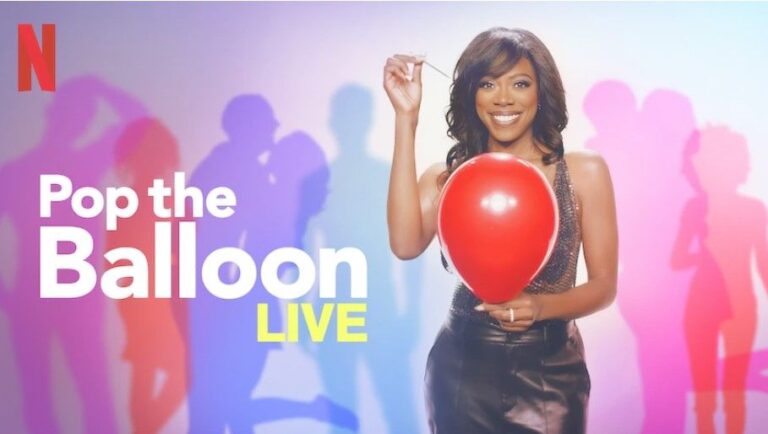
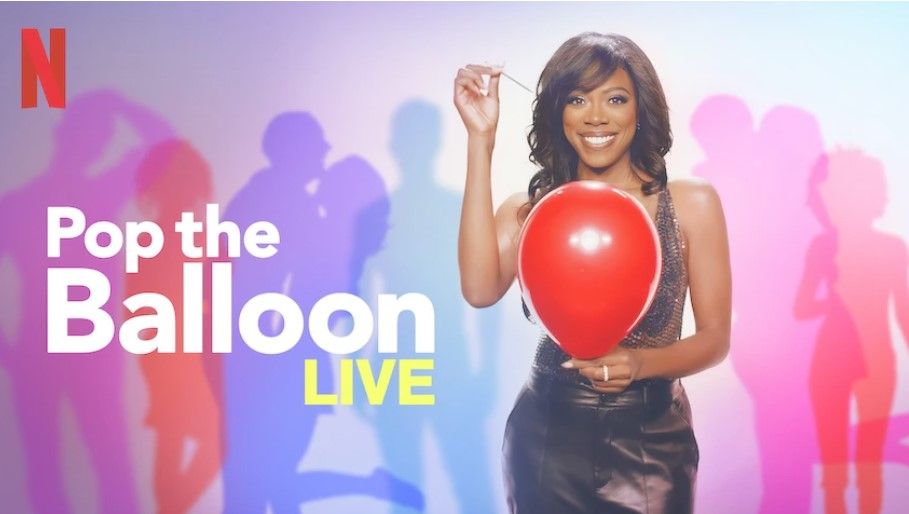
This is the formula behind “Pop The Balloon,” the viral dating show that has quietly turned Black women’s rejection into prime-time entertainment. The setup looks lighthearted on the surface: men walk down a row of women, each holding a balloon that represents their place in the “game.” If the man doesn’t like what he hears or sees, he pops the balloon. The woman is out. The show is trying to sit somewhere between reality dating TV and TikTok challenge, but what it is really doing is putting Black women back on the auction block, this time with ring lights and brand deals.
Anyone who has ever been the only dark-skinned girl in the classroom, the friend group, or the club line knows this feeling already. That micro-second calculation in a guy’s eyes. That hesitation. That “you cool, but my type is…” stare. “Pop The Balloon” takes that quiet violence and turns it into a game mechanic. It is not just rejection. It is performance rejection, curated for views, where the humiliation is the hook and Black women’s dignity is the content strategy.
Colorism is not a subplot here. It is the whole show. Clips travel across social feeds showing light-skinned and racially ambiguous women getting chosen and praised, while darker-skinned women get their balloons popped for reasons that sound like they were pulled straight from a 2009 Twitter thread about “preferences.” Comments about body type, hair texture, height, skin tone, and “attitude” get said with a smile and a mic in hand, like it is all just “keeping it real.” Viewers laugh or argue in the comments, but the algorithm only sees engagement. The platform wins every time a balloon pops.
This is not new. Black women’s desirability has been debated out loud for centuries, just not always with hashtags. On plantations, the same society that declared Black women ugly and animalistic turned around and assaulted them at will. In the Jim Crow era, mainstream beauty pages and Hollywood screens were filled almost entirely with white faces, while Black women were cast as maids, mammies, and comic relief. Even when the door cracked open, the women who got through were often the ones who could pass the “paper bag test,” literally and figuratively.
Hip-hop and Black entertainment have battled this beast in public. Think about early 2000s rap videos, where a sea of Black women danced around, but the “main girl” in the storyline was almost always lighter, straighter-haired, or not Black at all. That pattern did not come from nowhere. It came from a country that decided long ago that proximity to whiteness equals beauty, then paid everyone who played along. When Jamie Foxx had to press Quentin Tarantino over scenes in “Django Unchained,” it was about more than a script choice. It was about protecting how Black bodies and trauma are framed for mass consumption, the same question at the center of that whole clash on set.
“Pop The Balloon” just updates that conversation for short-form video culture. Instead of studio notes and casting calls, we get “content opportunities” and viral clips. The producers can say they are just giving the people what they want, but they are also shaping what young viewers think is normal. A 15-year-old Black girl on her phone is now watching men her age and older publicly discard women who look like her, then watching those clips rack up likes. That is not neutral. That is training.
What makes this worse is the way the show wraps it all in jokes and “experiments.” The idea is that men are “proving” their type while women “see who’s really into them.” That sounds harmless until you remember how many Black women already move through dating spaces with that quiet question in the back of their mind: “Is he actually attracted to me, or am I the exception?” The show takes that insecurity and magnifies it on a loop.
Meanwhile, the men are protected by the language of “preference.” Preference is the shield people love to hide behind when they want to say something harmful without accountability. “I just don’t date dark-skinned women” becomes a personal taste instead of the colorist statement it is. “Pop The Balloon” turns those preferences into punchlines and lets them sit on the internet forever, ready to be replayed anytime someone wants to prove Black women are “overreacting” about colorism.
There is a bigger economy at work here. Black pain, especially Black women’s pain, has been monetized since the moment cameras were invented. From minstrel shows mocking Black womanhood to modern reality TV where Black women are cast as the “angry one,” the “crazy ex,” or the “loud friend,” there is a long pattern of networks and producers chasing ratings by leaning into stereotypes. That same formula is why people watched “Flavor of Love” and “Bad Girls Club” and why some now tune into “Pop The Balloon.” But the stakes feel different in an era where clips live forever and algorithms reward the most triggering content.
Streaming platforms and social media companies know exactly what they are doing. They watch the same metrics we do. They saw how quickly Keith Lee’s food reviews could shift the entire traffic of a restaurant and even land him at a corporate celebration like Raising Cane’s 30th birthday with Todd Graves in Baton Rouge. They understand that one viral personality, one viral format, can move millions of people. So when a show like “Pop The Balloon” spikes in engagement, they are not thinking about the self-esteem of Black girls. They are thinking about sponsorships, spin-offs, and how to scale the format.
There is also a political side to this that is easy to miss. The same media ecosystem that churns out content like “Pop The Balloon” is the one that scrubs and edits how power is seen. When people were asking why the White House tried to tweak Trump’s video or why Trump looked beet-red and slurring on TV in another viral clip, they were really asking: Who controls the image? Who decides what gets cleaned up and what gets left raw? For Black women, the image rarely gets cleaned up. The rawness is the product. The hurt is part of the pitch deck.
Reality TV has always walked that line. Shows like “Love & Hip Hop” and “Basketball Wives” have given Black women visibility and checks, but also fed stereotypes about us being combative and impossible to please. The difference with “Pop The Balloon” is how naked the humiliation is. There is no storyline, no character arc, no real chance for a woman to flip the script. You show up, stand in a line, hold a balloon, and wait to see if a stranger decides you are worth keeping. That is not a date. That is a digital slave auction with better lighting.
There will always be people who say, “If the women signed up, it is on them.” That argument ignores power, money, and the reality of clout culture. A lot of people go on these shows hoping for followers, brand deals, or a shot at a bigger platform. In a world where a viral moment can change your life, who can blame them for trying? Skilla Baby just parlayed his storytelling and persona from music into acting by channeling Tupac’s raw vulnerability, landing a role in 50 Cent’s Power universe, a whole journey we broke down when looking at how he moved from The Price of Fame into Power Origins. The line between opportunity and exploitation gets real blurry when you are young, hungry, and online.
Still, consent does not automatically make a harmful system okay. Black artists sign bad contracts all the time. That does not mean the labels aren’t predatory. Black athletes push their bodies for the league and end up with lifelong injuries. That does not mean the system is fair. When the entire structure of a show is built on publicly grading Black women’s bodies and worth, the ethical problem is bigger than any one contestant’s decision to show up.
What really stings is how this clashes with the other side of Black culture right now. There is a whole wave of men using their platforms to actually pour into the community, not pick it apart. Look at Lil Baby turning his success into a massive giveback event, putting on a back-to-school fest in Atlanta with free haircuts and clothes for thousands of kids, the kind of story we highlighted when he pulled up for 4,000 students in need. That is a man using his influence to create safety and pride for the next generation. “Pop The Balloon” is the mirror universe version, using influence to create insecurity and spectacle.
So what happens next? Viewers have more power than producers want to admit. If people stop sharing the most harmful clips, the algorithm will chase something else. If Black women collectively decide that certain shows are not worth the mental cost and stop auditioning, casting directors will have to rethink formats. If Black men check each other publicly about the language they use on these platforms, the “preferences” excuse starts to lose its grip.
There is room for dating content that is messy, funny, and honest without treating Black women like disposable props. There is room for shows where the tension comes from genuine connection and personality clashes, not from watching who gets discarded first. The culture has already proven it can flip harmful trends into something empowering when there is intention behind it.
“Pop The Balloon” will not be the last show to turn colorism into clickbait. Another version will pop up with a different name, a different gimmick, a new set of contestants hoping this is their shot. The real question is whether the rest of us will keep giving these formats the one thing they cannot survive without: attention. Black women deserve more than to be lined up, poked at, and popped for sport. They deserve to be centered, loved out loud, and protected from any platform that sees their hurt as a path to profit.
Pay attention to which creators and shows rise from here. Watch who builds formats that actually affirm Black women instead of breaking them down. Because the next wave of dating content and reality series is already loading, and the culture has a choice to make about what gets promoted. Either we let “Pop The Balloon” be the blueprint, or we demand something that looks a lot more like love and a lot less like a public execution with confetti.
About The Author