By Tanya Brooks, PowerVault Staff
The same country that blasts hip-hop from its military recruitment ads is scared of a painting.
Not a protest. Not a march. Not a riot. A painting.
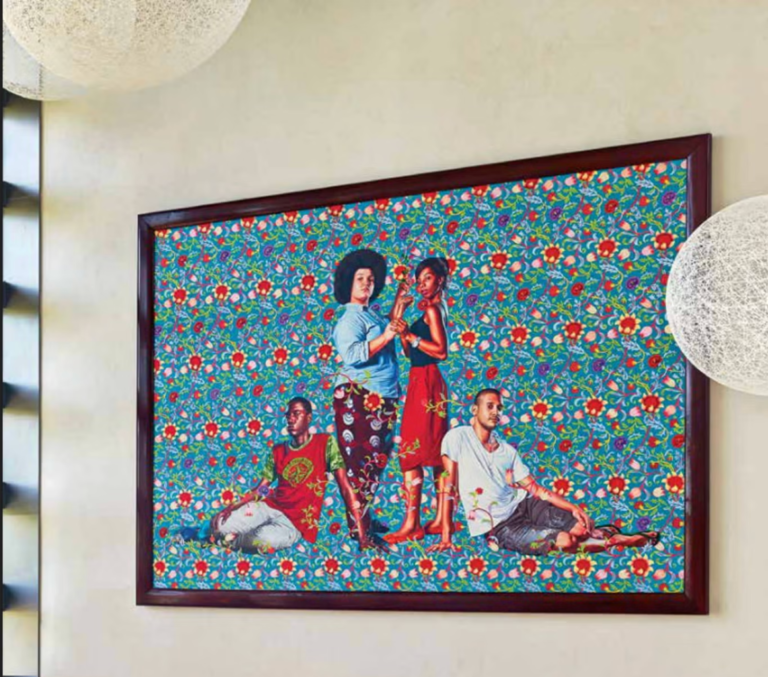
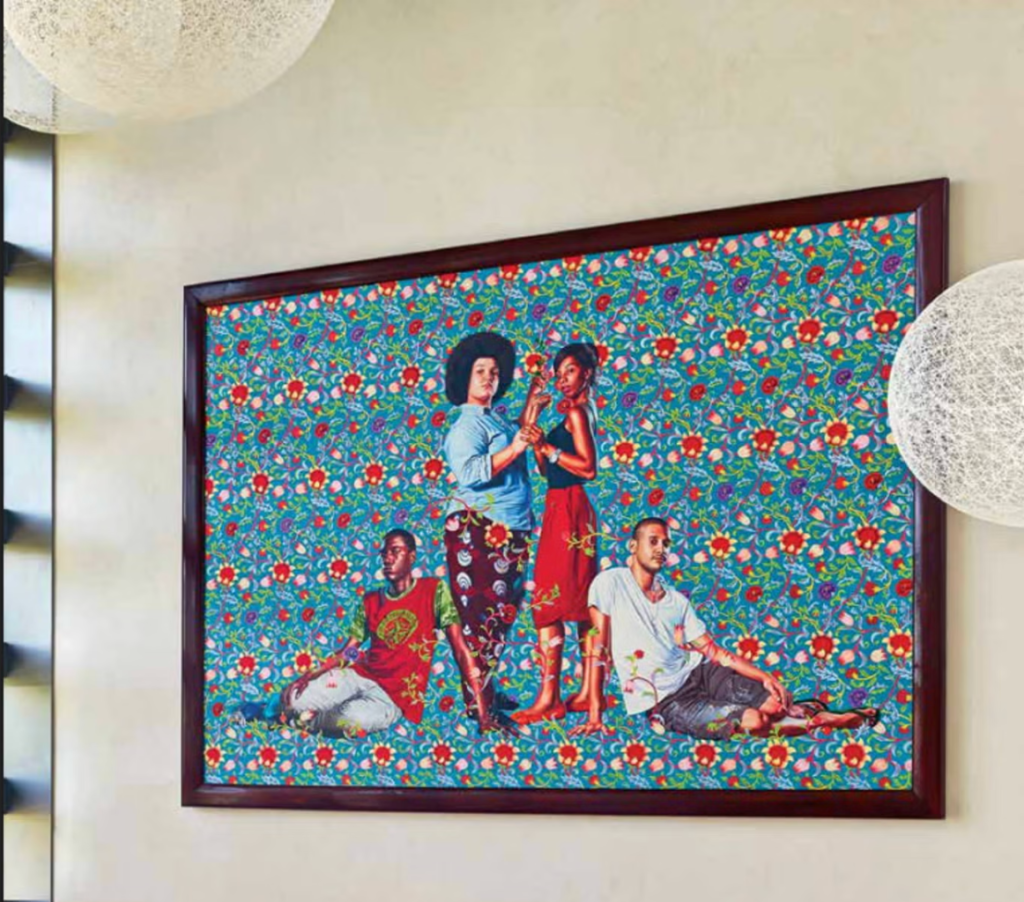
At the U.S. embassy in the Dominican Republic, a portrait by Kehinde Wiley, one of the most important Black artists of this generation, was taken down after the American ambassador reportedly decided it was “very woke.” The issue was not obscenity, not violence, not some wild political slogan. The issue was that the piece dared to show Dominicans. Black and brown Caribbean faces, living and breathing on a wall that is supposed to represent America to the world.
So here we are again, watching the same play run from a different formation: powerful people using “woke” like a slur any time Blackness, queerness, or anything outside their comfort zone gets too visible.
Kehinde Wiley is not some random name local staff grabbed off Etsy. This is the same artist who painted Barack Obama’s official portrait, the same artist whose work flips European art history on its head by dropping Black people right into the center of the frame where they were always supposed to be. His style feels like sampling in hip-hop: he pulls from those old white royalty portraits, then remixes them with Black bodies, modern clothes, lush patterns, and a whole different kind of power. To call that “woke” is like calling Kendrick’s “Alright” a noise complaint. It is a confession that what really bothers you is who the work is centering.
The embassy move is not some random decorating switch. This is the U.S. government deciding that Black art with Black and brown subjects is too political for a building that sits on Caribbean soil. That is wild. Embassies are supposed to be the best version of America on display. If the “best version” cannot handle a Black artist painting Dominican people, what does that say about the story this country is trying to tell the world right now?
People love to act like “culture wars” are just hashtags and think pieces. They are not. They show up in what kids are allowed to read in school, what songs get taken off platforms, what movies quietly lose funding, and what art gets pulled off the wall. It is the same energy that had parents losing their minds over rap lyrics in the 90s, or politicians trying to blame N.W.A. for every cop’s bruised ego. When the state starts deciding what art is “acceptable,” Black creators and Black audiences are always the first ones in the crosshairs.
This Wiley situation also lines up perfectly with how the Trump orbit has always treated images and media. Remember when folks caught that weird edit in one of his White House videos and the internet started asking why the White House tried to edit Trump’s video? Or when he went viral recently looking beet-red and barely getting his words out and people had to ask why he was slurring on TV? Image control is central to how that crew moves. If they can blur, cut, or remove something that makes them look weak or wrong, they will. Taking down Wiley is just another version of trying to edit the frame so the uncomfortable parts of reality never make the final cut.
There is also something extra cowardly about calling art “very woke” in a country like the Dominican Republic, where colorism, anti-Blackness, and the politics of who gets to be seen as fully Dominican are already heavy. Wiley putting Dominicans on the wall inside the U.S. embassy is a quiet statement that Black Caribbean lives are worthy of that big, formal, museum-level treatment. It is the opposite of invisibility. So when an ambassador rushes to pull that down, the message is loud: if your Blackness is not muted or background, it is a problem.
Moments like this expose how “woke” has been turned into a catch-all for anything that makes white comfort tremble. The same word that started as a warning inside Black communities about staying aware of racist systems got flipped into a punchline on cable news, then weaponized against books, teachers, and now paintings. You can almost set your watch by it. The second Black creativity stops being entertainment and starts being affirmation, somebody in power cries woke and tries to shut it down.
Hip-hop has seen this movie too many times. From 2 Live Crew being dragged into court over “obscenity,” to Fox News treating every Kendrick performance like a national security threat, to politicians blaming drill music for violence they created through policy, the pattern is clear. The art is never the real problem. The real problem is what happens when that art helps people see themselves clearly. When it makes kids in the hood realize their story is not small.
Wiley’s work has the same effect visually that certain albums have sonically. Think about what “To Pimp a Butterfly” did when it dropped, how it pulled Black pain and Black pride into one giant, messy, beautiful statement. That album forced America to hear things it would rather ignore. Wiley’s portraits do that with your eyes. This specific embassy piece did it by saying, “Here are Dominicans, front and center, worthy of the same grand treatment white aristocrats got for centuries.” That is political whether you write a slogan on it or not.
The timing also hits in a moment where Black art is under pressure from all directions. On one side, corporations love to monetize the aesthetic: drop a Basquiat capsule collection, put a TikTok dance in a Super Bowl ad, throw a rapper on a festival sponsored by some tech giant. On the other side, the same system is banning books by Black authors, cutting diversity programs, and smearing anything with a hint of social awareness as woke propaganda. It is a weird double consciousness for the culture. You can be on their billboards but not on their walls.
Look at how often Black creativity has to fight for respect in “serious” spaces. Jamie Foxx had to literally fight Quentin Tarantino over a scene in Django because he refused to let his character be reduced to a joke about trauma, and that whole story lives on in our piece about why Jamie Foxx checked Tarantino. Lil Baby is out here turning his fame into real community power, giving away clothes and haircuts to thousands of kids in Atlanta, which we covered when we broke down his Back To School Fest. Black excellence keeps showing up, refusing to shrink itself, and every time it does, there is some pushback from people who liked us better silent or suffering.
Removing Wiley from an embassy wall is not on the same level as book bans or cops brutalizing protesters, but it lives in the same family of control. This is how cultural power gets policed. Little decisions, made in offices most people will never see, that quietly decide whose image gets treated as universal and whose gets tagged as political. That matters. Because kids walking into that embassy, staff working there every day, visitors from across the Caribbean, all of them are being told something about who is allowed to represent America visually.
Some will say this is just “one ambassador with an opinion.” That is the same script people used when the Super Bowl blackballed Kaepernick, or when radio stations “just happened” to stop spinning certain conscious records while pushing safer ones on repeat. It is never just one person. These moves sit inside a larger climate. Government agencies have already been pressed by conservatives to root out “wokeness” in everything from military training to museum grants. The art world is not a bubble, it is a target.
The wild part is that America actually needs artists like Kehinde Wiley if it wants any shot at telling the truth about itself. You cannot sell “land of the free” while hiding from the faces of the people you oppressed, exploited, and then tried to erase from your own visual history. Wiley’s whole career is a correction to that lie. Take him off the wall and all you really did is admit that the lie is still running the show.
For Black artists and fans, this moment is a reminder and a warning. The reminder is that your work hits harder than you think. If a painting of Dominicans in an embassy can shake an ambassador enough to snatch it down, that means your images are powerful. Your lens, your pen, your bars, your beats, your choreography all have the ability to disturb people who are used to not being disturbed. The warning is that visibility alone is not protection. We have Obama portraits, billion-dollar rappers, Black leads in Marvel movies, and still the system will quietly move pieces off the board when it feels threatened.
So what happens next? Watch what other embassies and official spaces start doing with their art collections. Pay attention to which Black artists get invited in and who mysteriously disappears from the walls. Expect more fights over “wokeness” in museums, schools, and public monuments. And also expect Black creators to keep pushing, because that is what the culture has always done. From graffiti writers bombing trains to MCs turning Reaganomics into rhyme schemes, the response to erasure has always been more expression, not less.
The embassy can take down Wiley’s portrait, but it cannot unpaint the statement his work already made. Black and brown faces have seen themselves on that wall. Dominicans have seen themselves at the center of a canvas backed by the full weight of American diplomacy. That image is out in the world now. It will live online, in archives, in memory, in future shows and textbooks and arguments. That is how our culture survives these little acts of censorship. They can move the frame, but they cannot stop the picture.
About The Author