By Renee Fontaine, PowerVault Staff
The story of hip-hop has always started in somebody’s neighborhood. A cracked sidewalk. A crowded apartment. A church basement with bad speakers and too much echo. The places the industry pretends not to see until a star walks out of it with plaques and brand deals.
Channel Tres is trying to catch kids before they have to fight their way through all that alone.
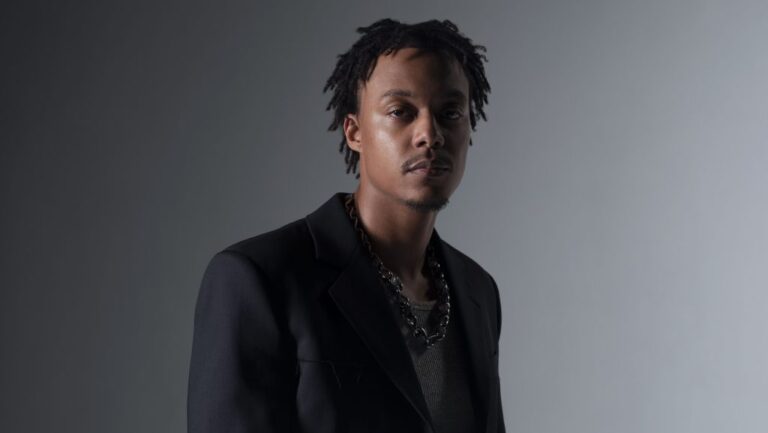
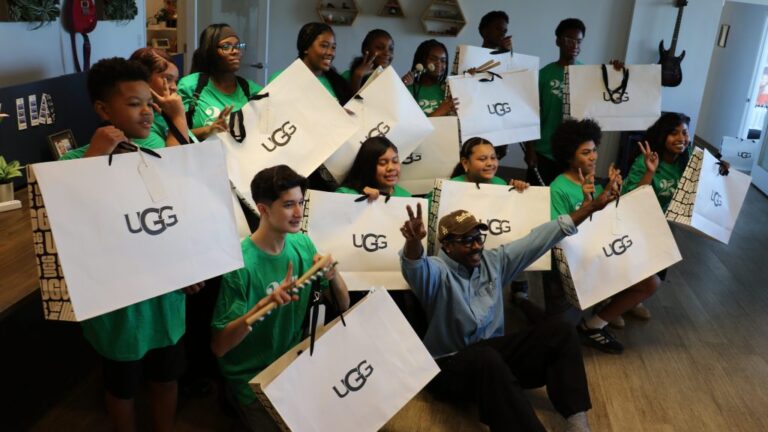
The Compton-bred producer, vocalist and house-rap hybrid is linking up with Harmony Project LA and Ugg to pour into young music students in the city, and it is not just another celebrity photo-op with kids and a big novelty check. For Channel, community is not a side quest. It is baked into his story. What is happening in LA right now sits right in the middle of a much bigger conversation about who gets access to music, who gets the tools, and who only gets told “you’re talented” with no roadmap.
Channel Tres did not come into the game trying to be the most famous rapper alive. His sound lived in those late-night DJ sets, those underground parties where house, funk, g-funk and rap all bleed together. Tracks like “Controller” and “Topdown” turned him into the cool kid’s favorite, the artist your favorite DJ geeks out over. But what is more interesting than the music right now is how he is choosing to invest whatever spotlight he has back into kids who look like him.
Through his Compton House initiative, Channel has already been framing music not just as performance but as a full ecosystem. Production, songwriting, business, wellness, community. Now this partnership with Harmony Project LA and Ugg widens that circle, putting him directly in front of students who might have the same questions he had coming up. How do you get from FruityLoops in your bedroom to a real career. How do you protect your mental health when the industry only calls when you are hot. How do you stay rooted when success tries to pull you out of your neighborhood and never let you look back.
Harmony Project LA is not some random nonprofit that just discovered hip-hop last summer. They have been working in under-resourced communities for years, giving young people long-term music education when their school budgets cut arts first and ask questions later. This is band practice, string instruments, theory, ensembles, real structure, not just “here’s a laptop, go make beats.” When an artist like Channel Tres steps into that world, he is not just doing career day. He is proof that this pipeline actually leads somewhere, that the hours kids are spending in practice rooms can connect to an industry where people like them are often pushed to the margins or only welcomed if they fit a stereotype.
There is something powerful about a Black man from Compton standing in front of a room of students and saying community is a big thing for him, and then backing it up with his time. So much of mainstream coverage of Black neighborhoods still centers on crime, chaos and trauma. When a Black artist uses their platform to talk about infrastructure and long-term investment instead of just flexing, it quietly rewrites that narrative.
Partnerships with brands like Ugg are where it gets complicated and interesting. Corporate money has been circling hip-hop culture for decades, trying to catch vibes and sell it back to the suburbs. Sometimes we get trash campaigns that use rap aesthetics without cutting any real checks for the people who built the culture. Sometimes, though, if the right artist is in the room, that money gets redirected into something tangible. Ugg helping fund and amplify this work with Harmony Project and Channel means instruments, studio access, buses, stipends, space. It means the kids do not just get a pep talk, they get resources.
That tension between the streets and the sponsors has been there since Run-DMC shouted out Adidas and turned sneakers into a religion. The difference now is that a lot of today’s artists have seen what happens when you just throw your face on a campaign and walk away. They watched brands use hip-hop’s cool factor, then stay silent when Black communities were under attack. The artists who care about legacy are starting to insist that if a company wants the culture, they have to help build something that will outlast a press release.
For Channel Tres, this fits with a broader wave of artists treating community work like part of their actual job description, not just something you do once you retire. Look at how some rappers with official days in their cities use that spotlight. Plenty of them turn it into food drives, school programs and scholarships, not just parties. That is part of why conversations about which rappers have their own official day and what it really means for hip-hop hit so hard. A proclamation is cute, but if there is no pipeline for kids, it is just another framed piece of paper on a wall.
Also, this is about more than just “keeping kids off the streets,” that lazy talking point people love to throw at any youth program. The real question is why Black kids should have to be “saved” from their own neighborhoods in the first place. What Channel Tres and Harmony Project are doing pushes a different idea. Not escape, but empowerment. Not “make it out,” but “build where you are.” If you teach a generation of young producers, arrangers, sound engineers and managers, you do not just create a couple of breakout stars. You build a local music economy. You build confidence. You build networks where kids advocate for each other instead of competing for a single golden ticket.
Think about how many of our biggest hip-hop stories started with a crew of kids who figured it out together. NWA in Compton, Dungeon Family in Atlanta, early Cash Money in New Orleans. These were not isolated geniuses. They were clusters. The difference now is that the industry has gotten even more confusing. Algorithms, short-form content, playlist politics, label 360s, sync deals, AI. The barrier to entry looks low, but the barrier to stability is higher than ever. Telling a 14-year-old “just post your beats on TikTok” is not a strategy. Giving them mentors who can explain publishing splits, touring realities and mental health boundaries is.
The wild part is how rare this kind of structured guidance still is. We celebrate artists who come home and hand out turkeys. That is love, no question. But a lot of kids need something less seasonal and more systemic. Regular classes. Safe spaces to experiment. Adults who actually remember their names three months later. Programs like Harmony Project, when connected with an artist like Channel Tres, start to look like that missing middle between raw talent and real opportunity.
It also hits different that this is happening in LA, a city that has given the world so much music while letting so many of its Black residents get pushed further out by gentrification and rising costs. When Channel talks about community, he is not talking in theory. He is talking about neighborhoods where a lot of the original families cannot even afford to live anymore, and kids grow up in the shadow of a culture they helped create but do not always get to own. Putting deliberate energy into young music students is one small way to fight back against that erasure.
There is a mental health angle here that deserves more attention too. Being a young Black creative in America right now means carrying a lot. Violence in the news, police encounters, family pressure, social media comparison, financial stress. Spaces where kids can process all of that through music, with adults who have survived the industry, can literally be life-changing. We have seen what happens when our people are constantly under attack and nobody in power seems to care. That same energy that had folks asking how an ICE agent can leave a gun in an airport bathroom and it barely becomes a story is the same energy that makes parents want more safe, consistent spaces for their kids.
Channel Tres speaks often about community as a big thing for him, but the way he moves lines up with that. Compton House is not about chasing a trend. It is about turning his own journey into a blueprint. He knows what it feels like to be talented but invisible, surrounded by potential with no clear avenue to turn it into a sustainable life. Those scars are usually what make artists either close off and say “I got mine, you figure it out,” or do what he is doing now and try to cut a cleaner path for whoever comes next.
There is also something quietly rebellious about a Black man partnering with a legacy footwear brand in a way that is not just about fashion or hype. The culture has made companies billions selling cool. Seeing that cool redirected into instruments, lessons and mentorship instead of only limited-edition drops is a small shift, but an important one. If brands want authenticity, this is what it actually looks like. Not just shooting a music video in the hood, but helping build the infrastructure that lets the next Channel Tres, the next Kendrick, the next Tierra Whack grow without having to burn out.
Zoom out a bit and this fits into a larger wave of Black artists rethinking how they age in hip-hop and R&B. More are choosing to be present, sober, healthier, more intentional about their impact, the way we have seen with people asking questions like how Young M.A is changing her next chapter through faith and health. Community work is part of that. It is not just about image rehabilitation. It is survival and legacy planning at the same time.
So what happens next. If this partnership between Channel Tres, Harmony Project LA and Ugg actually works the way it should, it sets a model other artists can copy. Imagine if every region had a couple of working artists who made it a point to plug into youth music programs with real consistency and real backing. Not just A-list superstars, but the touring DJs, the indie producers, the songwriters with quiet publishing checks. The industry is full of people who could give two hours a month and change the course of a kid’s life.
For now, the focus is on those LA students walking into rooms where they see someone from their side of town standing with brands and educators and saying, “You belong here.” Years from now, when one of them is headlining festivals or scoring films or running a label, the story might start right here. In a classroom, in a workshop, in a conversation with Channel Tres about community and craft. Hip-hop started in spaces like that. The culture grows when we keep making new ones.
Pay attention to this wave. The next generation of Black music is not just being shaped on the charts. It is being shaped in these rooms, with these kids, with artists like Channel Tres deciding that success is not real if you are the only one eating.
About The Author