
Blueface’s White House Tattoo: What Changed With Rock?
By DeShawn Price, PowerVault Staff Blueface covered his Chrisean Rock name tattoo with the White House, turning another breakup into a livestream reveal. The new image sits on his upper back, where Rock’s name used to...
Advertisement

By DeShawn Price, PowerVault Staff
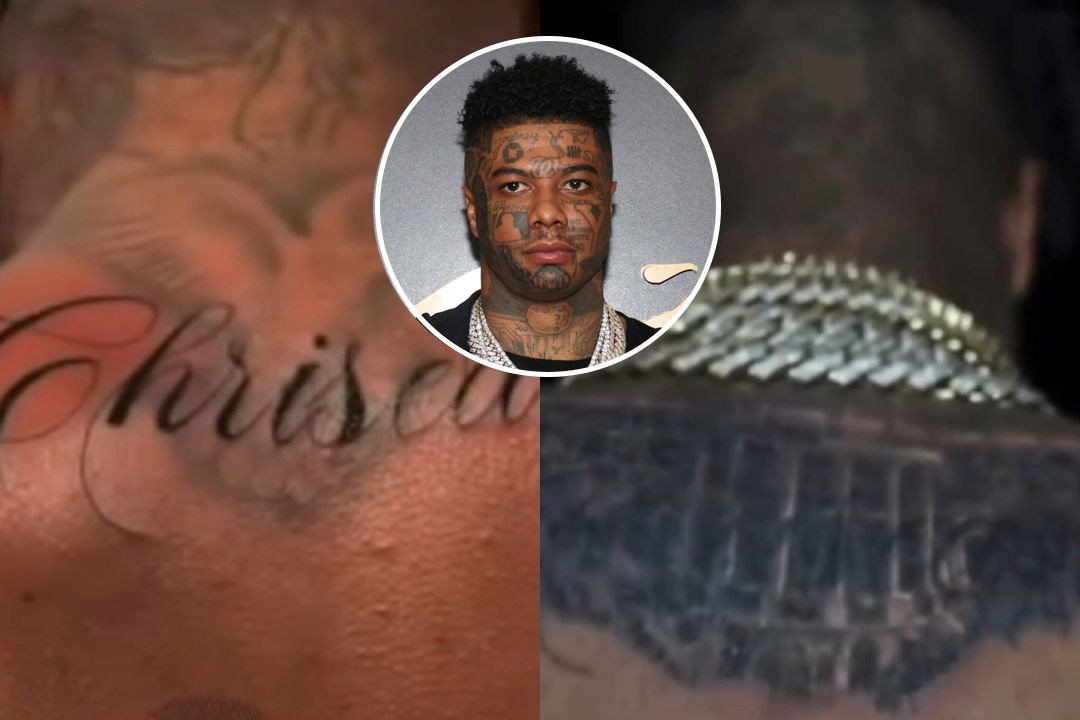
Blueface covered his Chrisean Rock name tattoo with the White House, turning another breakup into a livestream reveal. The new image sits on his upper back, where Rock’s name used to be. Rock has separately said she plans to cover the Blueface portrait on her face. Both developments follow a split that arrived just two weeks after their engagement. The ink gives fans something concrete to inspect. A coverup can erase a name without resolving the conflict that made somebody want it gone. Whether either person has changed the behavior behind this relationship is a different question, and a much bigger one than which artist handled the cover work.
According to XXL’s reporting on the tattoo coverup, Blueface showed viewers the replacement during a livestream on Saturday, Nov. 7. Rock discussed her own plans on a separate stream. Her portrait tattoo had recently been updated, making the proposed coverup another reversal in a relationship full of them. The two have also been spotted together since announcing their split. Blueface has reconnected with former girlfriend Nevaeh Akirah during that stretch, too. That overlapping timeline calls for careful reporting, not a new love triangle storyline built out of assumptions about who belongs to whom. Neither Blueface nor Rock has said those later appearances mean they are back together. Being seen together is not the same thing as announcing a reunion.
Blueface turned around during the broadcast to display the White House image across his upper back. “It's still peeling, chat, so don't judge it,” he told viewers, according to XXL. That detail matters because this was a fresh tattoo reveal, not evidence that the relationship had been settled for months. The supplied reporting gives no explanation for his choice of the White House. An unusual design attracts questions, but the image alone does not answer them. Fans can speculate about symbolism, but political allegiance, a presidential message or some hidden relationship statement would all be guesses. What can be reported is narrower: Rock’s name was covered, and he showed the work publicly. The tattoo preview follows below.
That preview documents a change to Blueface’s body, not a complete account of the breakup. XXL reports that the couple split last month, two weeks after getting engaged. Their argument followed his release from a brief jail stay. He had been arrested for allegedly delaying or obstructing a police investigation after the pair were swatted. That arrest allegation should not be rewritten as a conviction or proof of a separate offense. According to Blueface, Rock then told him, “That's why you went to jail!” during an argument. That is his account of her words, not an independently established transcript of their exchange. The distinction matters when one participant controls the microphone and the other person becomes the subject of the story.
Blueface later described why he believed the relationship should end, telling livestream viewers, “She doesn't know how to calm me down.” He also said their interactions could lead to domestic violence and presented separation as a way to avoid that outcome. He framed that recognition as maturity, telling viewers, “I've grown up a little bit.” That warning deserves more attention than the tattoo design. It does not establish that a new incident occurred, and it should not be reported as one. Rock’s announced plan remains a plan; the supplied reporting does not confirm a completed face tattoo coverup. Those limits should travel with every repost. The accompanying Instagram post belongs to this public conversation, not proof that the relationship has been repaired.
That post should not be mistaken for access to their private relationship. Celebrity romance became serialized entertainment long before livestreams made every argument available on demand. VH1 launched Flavor of Love in 2006, then Love & Hip Hop: Atlanta in 2012. Both helped build an audience for romance, conflict and reconciliation around music personalities. The difference now is control and speed. A television production had editors, scheduled episodes and time between filming and broadcast. A livestream can turn a fresh dispute into public material before anyone has cooled down. Viewers can then clip the harshest line and circulate it without the surrounding exchange, creating another edit neither person necessarily controls. Blueface and Rock operate inside that faster system, where a tattoo appointment can become the next installment without a producer calling action.
The real issue is what happens when a relationship’s worst moments become its most reliable programming.
A partner is not a personal anger management program.
For Blueface and Rock, the personal stakes should outrank the content schedule. A partner is not a personal anger management program. Blueface’s claim that Rock does not calm him down shifts attention away from his responsibility for his own conduct. Choosing distance when conflict escalates can be responsible. Expecting another person to prevent that escalation is a different proposition. Recognizing a dangerous dynamic means little if the next disagreement brings the same expectations back into play. Rock also deserves room to make decisions about her body without strangers treating a face tattoo as proof of permanent loyalty. Neither person needs to win a livestream debate to leave a relationship. The meaningful change would be consistent boundaries that still exist after the camera turns off and the comments stop arriving.
The business incentive runs the other way: keep the camera on. Attention can support advertising, sponsorship opportunities and paid appearances, but the source provides no earnings figures for these broadcasts. Nobody should invent a payday or pretend to know either person’s current contract terms. Still, the distinction between visibility and music income matters. A viral relationship clip does not automatically generate recording royalties, publishing income or ownership of a master. Platform revenue, where available, follows its own eligibility rules and payment terms; a circulating clip is not a royalty statement. PVN’s coverage of Drake’s Billboard dispute over YouTube streams addresses another side of that measurement problem. An artist can dominate conversation without that attention producing the same value as listeners choosing the music.
Fans have responsibilities here, too. Watching a tattoo reveal is not the same as demanding another argument, but audiences can help make conflict the main attraction. Comment sections turn quickly into teams, with every appearance treated as evidence that one side won. That framing leaves little room for someone to step back without being called weak, dishonest or desperate. Familiarity with their broadcasts does not give viewers the full history of an argument or authority over either person’s next decision. PVN’s discussion of Khloe Kardashian’s account involving Lamar Odom offers another reason to examine how private history becomes public entertainment. Readers do not need to become relationship referees. Refusing to reward humiliation is a more useful response than diagnosing strangers from a clipped broadcast or cheering for the next confrontation.
Black celebrity couples face an extra burden when their mess gets circulated as evidence about everybody else. One volatile relationship becomes an excuse for sweeping claims about Black men, Black women or young people with money. That leap is lazy, and Black media should refuse it. There is also a class double standard in whose instability gets packaged as eccentricity and whose becomes a verdict on their community. Blueface and Rock can be criticized without turning them into racial exhibits. Holding somebody accountable requires naming their conduct, not borrowing stereotypes to make the criticism hit harder or travel further. The same standard should apply to outlets making money around them: publish verified details, challenge harmful statements and stop treating public distress as an unlimited content supply.
Advertisement
The next developments worth watching are straightforward: whether Rock completes her coverup, whether either person confirms a reunion, and whether their public conduct changes. Another sighting will not answer all three. Neither will another tattoo, engagement announcement or carefully selected clip. Blueface has changed what appears on his back; Rock says she wants to change what appears on her face. Both choices belong to them. The audience can acknowledge that without calling the work healing or demanding another episode. For a pair whose relationship keeps returning to the screen, the strongest evidence of change may be what they stop broadcasting.
More from PowerVault Network:
