By Marcus Ellison, PowerVault Staff
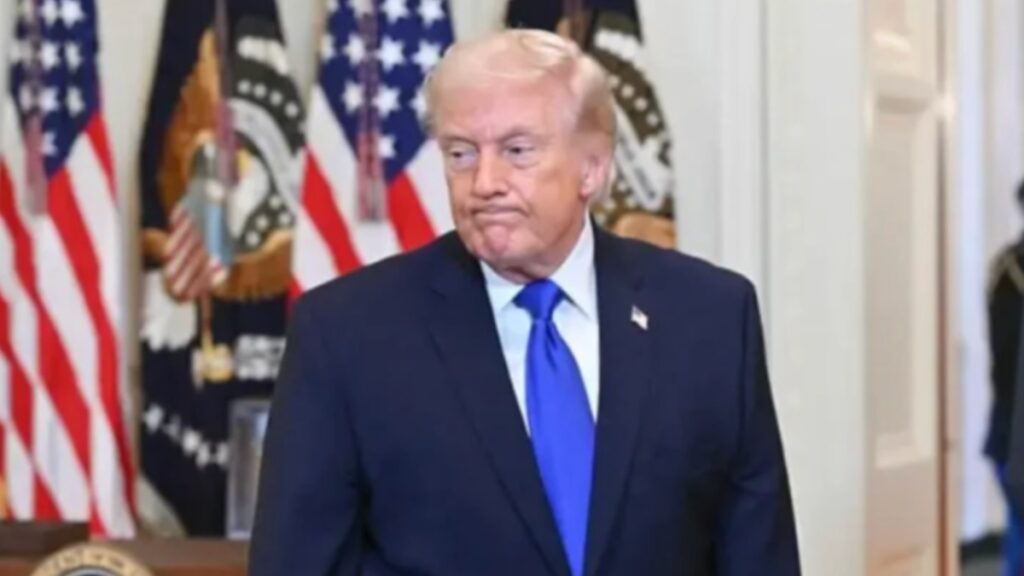
In a surprising turn of events, former President Donald Trump appears to be flipping the script on the political convention, typically seen as the climactic moment of a campaign. Instead, he’s using it as a desperate maneuver to safeguard his political future, revealing a deep-seated fear of losing power. As he scrambles to protect his legacy amidst ongoing legal battles and an increasingly skeptical electorate, his actions are speaking louder than ever, playing into the notion that he is more concerned about maintaining his grip on politics than addressing the real issues facing everyday Americans.
This maneuver comes at a time when the political landscape is changing rapidly, and the stakes have never been higher. Trump’s presidency, characterized by controversy and divisive rhetoric, has left indelible marks on the fabric of American society. The rise of social movements, particularly those advocating for racial justice and equality, has put Trump in a precarious position, exposing the limitations of his once-solid base. The discontent simmering beneath the surface is palpable, and as he attempts to shore up his political standing, it’s clear that he is out of touch with the cultural shift towards accountability and progressive values.
For the Black community, the implications of Trump’s desperate tactics are profound. His approach to governance has frequently disregarded the core issues affecting marginalized communities. Whether it’s immigration policies or police reform, his handling of critical social issues has often felt dismissive and antagonistic. As his political future hangs in the balance, it’s essential for us to engage with this moment critically. Trump’s frantic attempts to control the narrative only serve to underscore the necessity for a political reckoning that addresses the systemic inequities his administration perpetuated. The cultural push for change is not merely a trend; it’s a demand for a future devoid of the racism and hatred that defined too much of his tenure.
Looking back at similar moments in history, one can draw parallels with Richard Nixon’s chaotic attempts to cling to power amidst the Watergate scandal. Much like Trump, Nixon’s desperation led him to manipulate the political system and the media, ultimately resulting in his downfall. Both figures exhibit a profound disconnect from the realities of the nation they claim to represent. The fallout from such desperation often reveals cracks in the facade of power, igniting movements from those who’ve been historically marginalized.
As we look ahead, it’s crucial to keep our eyes on the shifting political winds and the strategies employed by candidates who seek to resonate with a more conscious electorate. The next few months will be telling, as the broader cultural conversation about equity and justice continues to evolve. With the rise of younger voters and a more diverse electorate, Trump’s tactics may not yield the results he hopes for. The question is not merely what he will do next, but how we, as a community, can leverage this moment to demand a more equitable political landscape that truly represents the voices of all Americans.
About The Author