By Andre Coleman, PowerVault Staff
The best nights in your life never start with a plan. They start with a text like “pull up” and end with you watching the sunrise, slightly broke, slightly in love, and not totally sure what just happened. That energy is exactly what new Universal film “One Night Only” is trying to bottle up and put on screen.
This is not another glossy, Instagram-filter version of romance where everybody’s rich, everybody’s stable, and nobody’s phone battery ever dies. “One Night Only” leans into the mess: the hookups that should have stayed in DMs, the ex who still knows which song will ruin your whole mood, the way one night can drag all your unresolved feelings right to the surface. For a generation that’s been dating through apps, pandemics, situationships and soft-launch relationships, a movie actually taking our love lives seriously feels overdue.
Universal’s selling it as a wild, bold, one-night premise, but underneath the chaos is something familiar. Black audiences especially know this structure. Think of “The Wood,” “House Party,” “The Best Man” pre-wedding weekend, even the way “Love Jones” stretches a few nights into a whole emotional lifetime. The idea that love can flip your whole world in a few hours has always sat close to Black storytelling, because so many of our big life moments happen in stolen time: after work, between shifts, in that one weekend you had free before everything changed.
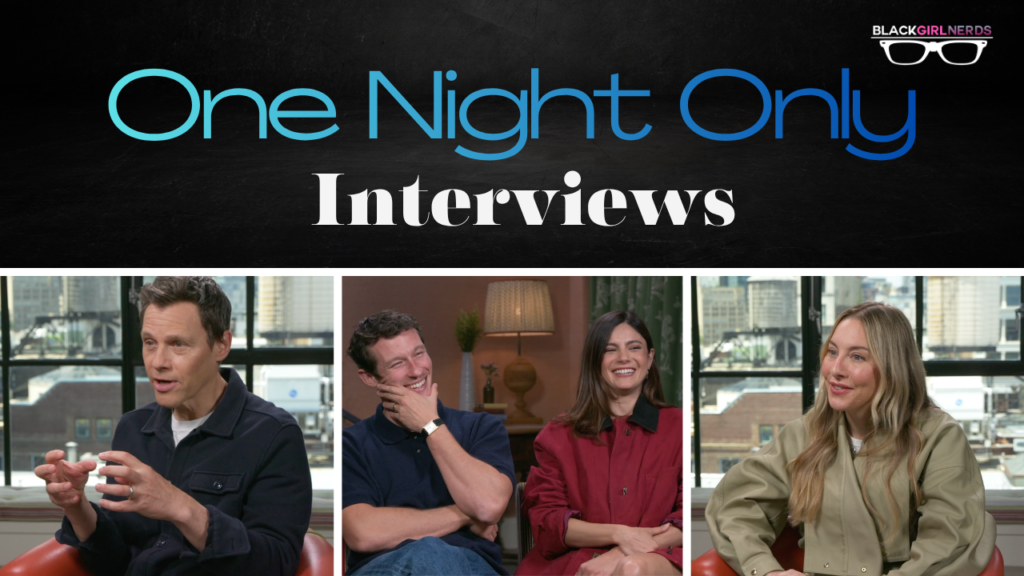
What makes “One Night Only” stand out is how intentional the creative team is about modern love. The cast and filmmaker have been clear that this is not a fairy tale. It is about people trying to figure out what connection even means when everyone’s performing for the timeline. The characters are messy on purpose: emotionally unavailable, too online, scared of vulnerability, but still longing for something real. That sounds like half the group chats out there.
Another piece that sets this film apart is the music. Este Haim pulls double duty as co-composer and the “Door Girl,” which already tells you how tied together the soundtrack and the story are. The door girl is always the quiet narrator of the night: who gets in, who waits, who leaves mad. Having the person scoring the film also sitting in that seat inside the story gives the whole thing a live-mixtape feel, like the movie is being DJ’d in real time. Hip-hop, R&B and pop have been shaping the language of love for decades, but here the music is not just background vibes. It is the emotional GPS, guiding you through every bad decision and honest confession.
That connection between score and story matters because music is where this generation has been learning how to talk about love. Half of what people know about toxicity, boundaries, attachment, “red flags” and “healing eras” comes from songs, not therapy. When SZA, Summer Walker, Brent Faiyaz or Drake drop, timelines turn into group therapy. “One Night Only” taps into that same space, but in movie form. The songs are doing what a good playlist does for a night out: setting you up to feel something you may not have words for yet.
There is also something quietly radical about a big studio putting money behind a romance story that leans into vulnerability instead of just spectacle. Hollywood usually lets Black folks be the comedic sidekicks at the function, the ones running the party, but not the ones whose emotional lives get fully explored. The same way the “Michael” biopic’s box office story revealed how hungry people still are to see Black icons centered, “One Night Only” is testing if audiences are ready to see modern love, in all its chaos, centered on characters who feel like folks you actually know.
Romantic films have always been political in quiet ways. Who gets to be desired, who gets a second chance, who is allowed to be complicated without being punished, that all sends a message. For Black women especially, screen romance has never just been about a cute story. It is about image, safety, and who the culture decides is “worthy” of being loved out loud. You can see that same conversation happening when people debate why we uplift certain celebrity couples as “goals,” like the way LeBron’s birthday post for Savannah James had folks melting because it showed a Black woman loved, supported and respected in a very public way.
Movies like “One Night Only” step into that same arena. These characters are not perfect, not always right, but the camera treats their feelings like they matter. That means something in a world where Black women are still fighting to be taken seriously in everything from maternal health to political conversations to pop culture debates. The way fans rallied around Black women being disrespected on reality formats like “Pop The Balloon” shows how tuned in we are to who gets treated like an afterthought. A film that gives its women full interior lives, messy and beautiful, is a quiet corrective.
On the men’s side, “One Night Only” steps into the same lane that “Love Jones,” “Brown Sugar” and even “ATL” once held: showing Black men navigating love without turning them into memes. There is a long history of hip-hop adjacent stories where men only get two lanes: hyper-masculine player or broken project. This film, from what the cast and creatives have shared, plays in the gray area. Men who front but secretly care. Men who want to be chosen but are scared to ask. Men who are trying to unlearn the same patterns the songs they grew up on glamorized.
That tension mirrors what is happening in the culture. Hip-hop itself is in a reflective era. You see artists wrestling with their own legacies in real time, from beefs like Drake and Kendrick putting ego and vulnerability on wax, to legal fights like Brian Steel going to war with the system for Young Thug. The music is loud, but underneath it, there is a lot of questioning: What does loyalty mean now? What does love mean when the internet never forgets? When a film takes those questions and places them in a single, pressure-cooker night, it becomes more than just “will they or won’t they.” It becomes “who are we becoming when we love like this.”
One thing that stands out about “One Night Only” is how it treats time. One night sounds small, but anyone who has ever had a life-changing party, concert or linkup knows how much can fit into a few hours. Hip-hop history is full of legendary nights that shifted everything. One show. One studio session. One battle. Think of how a single XXL Freshman cover year like the 2016 class can end up defining a whole era. “One Night Only” leans into that same idea: maybe the biggest shifts in our emotional lives do not happen over years. They happen in those compressed, unforgettable, “how did we end up here” nights.
The film also understands how phones and social feeds have rewired romance. Ghosting, soft-blocking, thirst traps, sneaky links, “we just vibing,” all of that lives in the background of the story even when it is not said out loud. Characters are not just falling for each other, they are fighting the urge to perform the night instead of experiencing it. That is a very millennial and Gen Z problem. How many great moments get paused for “hold on, let me get a pic.” How many almost-relationships die because someone scrolls a little too deep and decides they know your whole story already.
Older Black love movies did not have to grapple with that. Darius and Nina were not worrying about who screen-recorded their argument. Harper and Jordan were not dodging podcasts debating whether they were “high value.” “One Night Only” drops romance directly into the influencer era and asks what honest connection looks like when everybody’s brand is also in the room.
There is also a subtle class conversation happening under all the flirting. Nights out cost money. Ubers, outfits, covers, drinks, post-club food, all of that hits different in a time where folks are juggling rent, side hustles and student loans. A lot of Black millennials and Gen Z are living in that “fun but financially fragile” space. A movie that shows characters trying to have the night of their lives while knowing they still have to clock in the next morning, or send that Cash App for the light bill, is closer to reality than a lot of Hollywood love stories want to admit.
That is where films like this quietly connect to bigger systemic conversations. The same economic pressure that shapes one wild night is the same pressure you see in stories about why a surrogate is fighting for custody in California or why Black communities are watching something as random as 2026 hurricane names. Love, safety, survival, they are all tied up together. A good one-night story understands that the characters are not just battling their feelings; they are battling the world they have to walk back into when the sun comes up.
On a cultural level, “One Night Only” arrives at a time when audiences are clearly craving relationship stories that feel closer to the group chat than a Hallmark card. Look at how invested people get in something as small as a reality reunion argument, like the “Love Island USA” mess between Melanie and Sol that had folks doing full forensic breakdowns of who said what and why. That level of obsession, the way people now study body language, micro-reactions, unspoken tension, means viewers are ready for relationship films that respect their emotional IQ. “One Night Only” is stepping into a crowd that will catch every side-eye and half-truth.
Where this movie could really matter long term is in how it influences what studios greenlight next. If a messy, honest, music-driven story about one wild night can connect, it opens the door for more love stories that center Black characters without flattening them into archetypes. More films where a dark-skinned girl is the one being chased, where queer love is not a side plot, where men are allowed to cry without being clowned, where relationships are complicated but not hopeless.
Hollywood keeps trying to figure out what this generation wants. The answer has been loud for a while: stories that feel like us. Not sanitized, not trauma-only, not bootleg copies of white rom-coms with a Black cast swapped in last minute. Stories that understand the way we talk, the music we live in, the pressure we are under, and the tiny pockets of joy we still carve out anyway.
“One Night Only” will not fix dating culture or magically heal everybody’s situationship scars. What it can do is remind folks that even in a world of endless scrolling and fake connections, one real night can still change you. Pay attention to how people talk about this film once they see it. If the group chats start lighting up with “yo, that was too real,” then expect more studios to finally realize that the most powerful love stories for this generation are not the perfect ones. They are the ones that feel like the nights we are still trying to get over.
About The Author