By Andre Coleman, PowerVault Staff
The thing about bullies is they always expect you to flinch first. That is their whole identity. Power, control, everybody else shrinking a little when they walk in the room. For the last decade, Donald Trump has treated American politics like his own personal reunion episode of “The Apprentice,” hurling nicknames, mocking people’s looks, and talking wild like there are no real-life stakes. But every once in a while, somebody steps into that arena and swings back without blinking. That is what just happened with his latest target on the campaign trail, and the clapback landed in a way that clearly was meant to hit Trump where it hurts most: his ego.
Trump lives off the idea that he is the main character. Not just of the election, but of America itself. The logic is simple. If people are arguing with him, quote tweeting him, talking about how dangerous he is, that still makes him the center of the story. That is the old reality TV formula he never let go of. But this time, instead of just defending themselves or trying to be “above the fray,” his latest political opponent took direct aim and flipped the script, basically calling him out as a washed up reality star who never grew up.
That part matters, especially for people who came up on hip hop, reality TV, battle rap, and meme culture. This era is built on the clapback. On who can respond cleaner, sharper, funnier. Trump has spent years branding himself as the one nobody can touch verbally. He plays the villain and expects everyone else to play the scared contestant. So whenever a candidate fires off something that makes even his own base wince a little or laugh in spite of themselves, that is a different kind of threat. It is not just political. It is about image, aura, and who really has control of the room.
Trump’s whole political career is lowkey a spin off from the same energy that turned rap beefs into national news. Except in hip hop, there are rules. You talk slick, but you stand on what you said. You do not duck smoke. And eventually, you have to prove something beyond just talking. Trump has never followed that second part. He leans on insults because that is the only place he feels invincible. The moment someone flips that and jokes about him with the same shameless energy he uses on others, he suddenly looks small, like the dude at the cookout who can dish it but can’t take it when the aunties start roasting his outfit.
There is a reason so many people, especially Black millennials and Gen Z, clocked Trump as a reality character before they ever took him seriously as a politician. He is framed in our minds the same way we remember that wild White House photo with his sons, where people were online asking why he looked airbrushed into his own family picture. That whole breakdown of his weird, off, almost cartoonish presence is exactly what had folks reading pieces like “Why Does Trump Look So Weird In That White House Photo With Don Jr. And Eric” and nodding along. The aura has always been manufactured. So when another candidate calls that out directly, it hits a nerve.
Trump’s brand is built on the illusion that he can never be the butt of the joke. Even when he is clearly embarrassing himself, he tries to flip it into “I meant to do that.” But this new attack did something different. It did not just call him corrupt or dangerous or old. It mocked him. It treated him like that fading celebrity clinging to a reboot nobody asked for. That is the kind of line you know is going to play on TikTok, get stitched on Twitter, and end up on a T shirt by the weekend. And that is exactly the kind of thing that will have him rage posting in all caps at 2 a.m.
For Black voters, especially those who grew up watching how Trump talked about Central Park Five, how he moved during birtherism against Obama, and how comfortable he was with white supremacists chanting his name, this is not just entertainment. There is a deep understanding that a man who built his career on racial dog whistles and public humiliation is not just some goofy TV character. But still, there is something powerful in watching him face a style of disrespect he cannot control. The same way people felt a little satisfaction when JAY-Z finally responded to Nas, or when Drake had to stand there on stage and take Pusha T’s bars in, there is an energy shift when the loudest voice in the room gets publicly checked.
Historically, presidents tried to stay “above” petty insults. Think about Obama. People were out here drawing him as a monkey, calling his wife every racist name in the book, lying on his birth certificate, and he still kept his tone measured, strategic, surgical with the jokes when he did go there. Trump came in and blew that all up. He made childish name calling a central part of presidential politics. Once you do that, you cannot be surprised when somebody younger, quicker, or just less scared of you decides to play the same game and play it better.
There is also a generational thing happening. Trump is almost 80. His whole style of insult is rooted in 80s shock jock radio and 90s tabloid headlines. But the new generation of candidates are living in an era shaped by Twitter fingers, TikTok edits, and group chats where the jokes are lethal. The attention span is short and the meme shelf life is even shorter. To survive in that, you need more than “Sleepy” or “Crooked.” You need timing, rhythm, and cultural awareness. In other words, you need something closer to battle rap than playground bullying.
That is why this latest clapback landed like it did. It was not just mean. It was precise. It went right for Trump’s self image. His obsession with being seen as powerful, successful, and adored. When someone looks at that and basically says, “You’re just a washed up TV guy who never got over being canceled,” that is a different level of disrespect. It is the verbal version of pulling someone’s chain in front of everybody and daring them to do something about it.
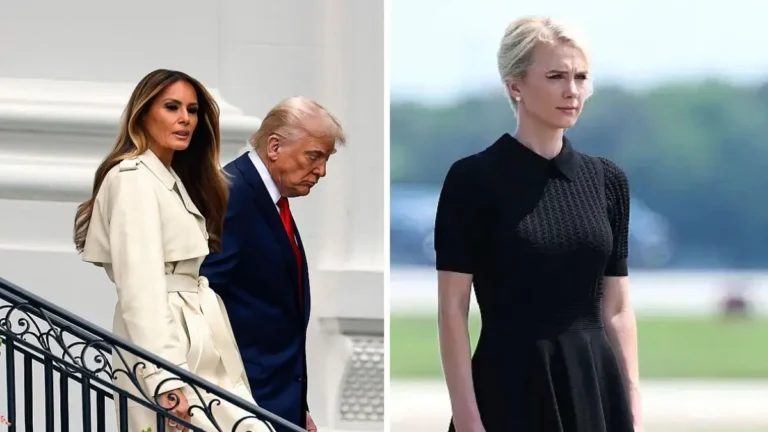
For the culture, this also raises a question about how we engage with politics going forward. Our generation already treats elections like a messy crossover episode between “Love & Hip Hop,” ESPN First Take, and a group chat argument. We talk about candidates like we talk about rappers, hoopers, and reality stars. Who cooked who. Who fumbled the bag. Who folded under pressure. Articles breaking down why Trump shows up with certain people around him, like that whole conversation in “Why Is Trump Always With Natalie Harp And Where Is Melania?”, hit because we are already reading his life like a long running show. This new attack fits right into that storyline.
But there is a flip side that should not be ignored. Every time politics feels more like a roast battle than a policy debate, the real stakes get blurry. While everybody is laughing at Trump finally catching a stray he cannot dodge, there are still voter suppression bills on the table, courts stacked with judges he picked, and communities dealing with fallout from his first term. Black folks in particular know how fast things turn from “this is funny” to “this is dangerous,” because we live in the body that always gets hit first when the country leans into its worst self. That is why stories like a Black man found hanging from a tree in North Carolina land so heavy. The climate Trump helped feed is not a joke.
Still, there is value in seeing someone refuse to be intimidated. Trump has gotten away with bullying people into silence for years. He leans on fear. Fear of his base, fear of his tweets, fear of being dragged in right wing media. When a candidate looks at all that and says, “Nah, I’m going to cook you on camera and smile while I do it,” that sends a message. Not just to Trump, but to everyone who has been telling us quietly they are tired of him but scared to say it loud.
For Black audiences, this also connects back to a long tradition of talking back to power. From the dozens on the block to the way our comedians went at presidents on stage, there has always been a certain pride in not letting anybody, no matter how rich or connected, talk to us crazy without an answer. That is part of why Black music stays such a lifeline during political chaos, something we have already unpacked in pieces like “What Is Black Music Month Really About And Why Has Black Music Always Been Our Lifeline?”. The clapback is not just shade. It is survival, release, and resistance all at once.
Trump is going to respond. That is guaranteed. He cannot help it. The man refreshes his own name like an artist checking their streams. Expect late night posts, rally rants, maybe even a new nickname for his latest opponent that he will repeat until his crowd chants it back. The question is whether this moment marks a shift where more people on that stage stop treating him like an untouchable final boss and more like what he really is: an aging brand trying to stay relevant in a world that has moved on without him.
Heading into the rest of this election cycle, watch who is willing to confront him directly and who still dances around his name like Beetlejuice. Watch which lines stick in the culture, get remixed, turned into TikTok sounds, and quoted the way we quote legendary diss tracks. And more importantly, watch whether anybody can translate that same energy into real policy, real protection, and real wins for the people most at risk if Trump ever gets that power back. Because the jokes are flying now, and he is probably as mad as people are saying, but the real story is whether this country finally learns how to not just clown a bully, but actually stop him.
About The Author