By Jasmine Reed, PowerVault Staff
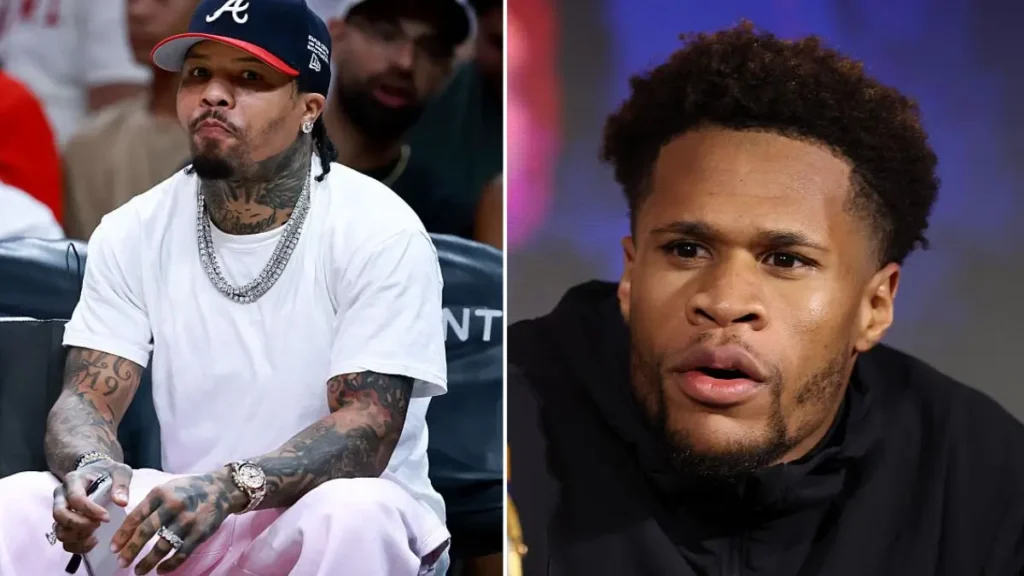
The internet loves a good rivalry until it stops feeling like sports and starts feeling like something darker. One minute the timeline is laughing at memes and face swap edits, and the next, everybody is sitting with that quiet, uncomfortable, “nah, this is weird now” feeling. That is exactly where the Gervonta Davis and Devin Haney drama just landed.
Over the weekend, Gervonta “Tank” Davis decided to take their already heated feud into a place most people in the culture still treat as sacred: somebody’s mother. Not just a regular mom joke, not even a wild insult in the heat of a press conference. Rumors started flying online about Devin Haney’s mom allegedly passing away, and instead of stepping back, checking facts, or at least keeping it neutral, Tank leaned into it and mocked the situation publicly.
There is boxing promotion and then there is playing with death. What Davis did lives in that second category, and that is why this story is bigger than “two fighters talking trash.” This is about where the line is now in an era where clout, clicks, and viral moments are driving how athletes talk to each other and to us.
Boxing has always lived on that edge between violence and theater. Muhammad Ali roasted Joe Frazier so bad that Frazier’s kids were getting bullied at school. Floyd Mayweather and Oscar De La Hoya used race, money, and machismo to sell a fight like it was a blockbuster movie. Mike Tyson once said he wanted to eat Lennox Lewis’ children. None of this is new. But even in those wild eras, death in the family usually stayed off limits. Moms, kids, funerals, real-life tragedy, that was the line.
What makes the Davis and Haney situation hit so hard is how normalized it has become to treat that line like just another prop. Online rumor about your opponent’s mom dying? Use it. Quote tweet it. Laugh at it. Turn someone’s worst possible day into content. That is not “promoting the fight.” That is stripping away basic humanity from somebody you share a ring and a culture with.
For a lot of Black fans, this is triggering because it touches something deep in our experience. Black families are constantly dealing with real loss. From gun violence to health disparities to police killings, death is not hypothetical for us. It is daily. The same way so many people were rattled reading about a Black man found hanging from a tree in North Carolina and police casually calling it a suicide, hearing someone play around with the idea of a Black mother dying hits the gut. It takes you out of sports mode and into “this country really does not value our lives” mode.
The Tank and Haney beef has been simmering for years. Both are undefeated stars, both are lightning rods online, and both represent a new generation of Black boxing talent trying to step into that Mayweather-sized spotlight. Their fanbases argue nonstop over who is ducking who, who really has the better resume, who is the real face of the lightweight division. So of course, every tweet and Instagram story from either side becomes a mini press conference.
Trash talk is part of why fans care. It builds anticipation, builds narrative, builds sides. Nobody is asking fighters to turn into polite corporate robots who only say “may the best man win.” This is a sport where people punch each other in the head for a living. The aggression is real. But there is a difference between saying “I am going to knock you out” and laughing at the idea of your rival’s mother being dead.
When that rumor popped and Gervonta used it as ammo, it signaled something ugly about where some of this new era of promotion is going. It is not even about rage. It is about performance. Fighters are not just talking to each other. They are talking to the algorithm. They know the wildest quote is the one that hits every blog, gets chopped into TikToks, and runs a full news cycle. The risk is that humanity becomes collateral damage.
Think about how we just watched this same pattern spiral in hip-hop. One bar turns into two, then whole songs, then IG Lives, then personal information leaking, then diss tracks so detailed people start worrying if somebody will actually die behind it. Fans hype it up like a TV show until it stops being fun. The Gervonta and Haney situation feels like boxing’s version of that escalation, where the sport is real but the performance around it is starting to mutate.
There is also a cultural layer here that cannot be ignored. In Black homes, talking about somebody’s mom is not a small thing. That is fight-starting language. That is “you crossed a line” territory. So when a Black fighter appears to joke about another Black man’s mother dying, it hits different than just some random promo stunt. It reads as disrespect to family, to grief, and to the role Black mothers play holding our communities up.
Black moms are the ones working doubles, praying over their sons, showing up at the amateur tournaments at 6 a.m., stretching their last dollar so a kid can chase a dream. They are the reason we even get to argue over who is pound-for-pound. Playing with that for engagement is wild. Sports fans can be desensitized, but even the most hardcore ones were calling foul on this.
There is also a question of what boxing itself is rewarding. Combat sports have always traded on chaos. The UFC leaned into Conor McGregor’s wildest comments because it sold pay-per-views. Boxing gave us press tours where tables got flipped and entourages squared up. But there used to be an unspoken rule that you do not mock death, you do not celebrate real-life tragedy, and you do not drag family into it in a way that cannot be walked back.
When the sport stops enforcing that, even socially, it sends a message to young fighters watching: the more reckless you get, the faster you blow up. That is the same logic we are seeing across culture. Politicians wilding on camera because outrage helps them, like how that image of Trump with his sons had people breaking down every angle and asking why he looked so strange in that White House photo. The line between serious and circus is almost gone.
What makes this mess even more disappointing is that both Gervonta Davis and Devin Haney are, in a lot of ways, success stories our community usually loves. Two young Black men who made it out, who mastered a craft, who sit on real money now, who influence fashion, music, and even how young boys talk. Same way we celebrate when an artist gets honored with their own city day and break down what it actually means when rappers get official days named after them, boxing stars should be part of that conversation about Black excellence and visibility.
Instead, the conversation is about whether one of them went too far clowning a rumor about a death that might not even be real. Nobody is talking about technique, about legacy, about who is actually the better fighter. The story is the violation, not the talent.
There is also a mental health angle people do not always want to touch. Imagine you are Devin Haney. Whether the rumor is true or not, your mom is in the middle of public speculation about her death. That is already traumatic. On top of that, your rival is using it as material. Your notifications are chaos. Your family is probably getting calls. Boxing is violent, but that is emotional warfare. There is an impact to this that does not go away when the tweets get deleted.
For fans, this is a moment to check what we are rewarding. Are we only retweeting the most disrespectful clips? Are we ignoring the actual sport and only feeding the mess? The same way we wrestle with reality TV, with surgical gossip around celebs like Kenya Moore’s face keeping RHOA fans debating beauty rules in Black culture, we have to ask what kind of energy we are pushing to the front in sports, too.
Because here is the truth: this incident is not going to stop the fight from happening. If anything, it probably just made it bigger. Whenever Davis and Haney finally share a ring, it will be billed as personal, emotional, dangerous. The networks will run the clips. The commentators will reference the tweets. The promo packages will pretend to be neutral while lowkey using the very moment that crossed the line as a selling point.
So the real question is what happens after. Does Gervonta ever publicly walk this back, or does he double down and lean fully into being a villain? Does Devin respond with his own level of disrespect, taking this beef even lower, or does he box his way out and let his hands do the talking? Do other fighters watch this and decide family is fair game now, or do they see the backlash and pull back from that edge?
In a sport built on controlled violence, respect is the last thin barrier between competition and chaos. Rivalries are supposed to bring the best out of fighters, not the worst out of their humanity. This moment with Gervonta Davis and Devin Haney’s mom feels like a test of where boxing culture is headed. If this becomes normal, the sport will not just be bloodier in the ring. It will be colder outside of it.
Fans should keep watching, not just for who wins on the scorecards, but for who decides to carry this beef like a man and who keeps letting the algorithm tell them what kind of monster to be. Because there is still room for these two to give us a classic fight without disrespecting Black motherhood and grief in the process. Whether they choose that route will say a lot about the future of boxing, and honestly, about where our whole culture is going when conflict, clicks, and clout collide.
About The Author