By Marcus Ellison, PowerVault Staff
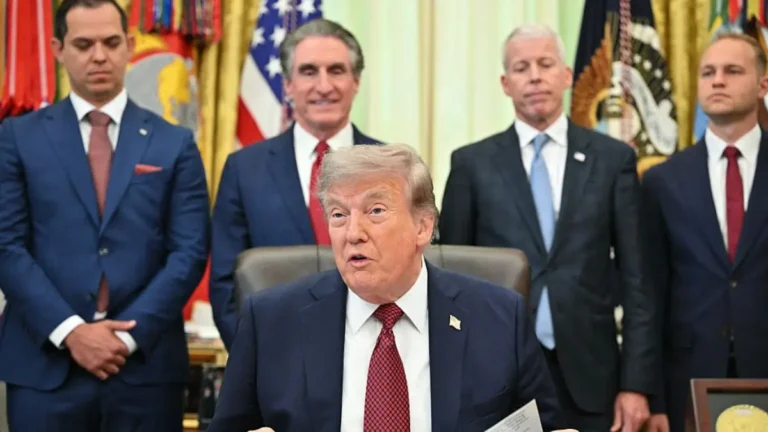
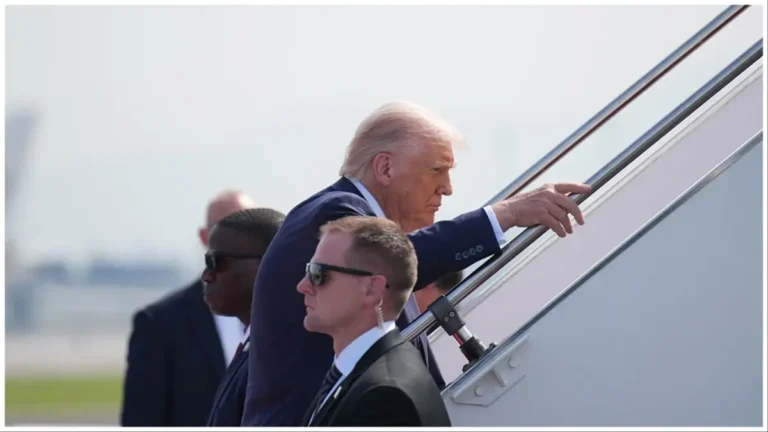
The internet does not miss a single frame. In an era where music fans can zoom into a mirror reflection on an Instagram story and identify an unreleased beat snippet, public figures should know better than to try a quick delete and re-upload. Yet, official political communications teams constantly forget that the digital crowd moves far faster than any media strategy group. Donald Trump found himself in the middle of another viral storm after a recent video appearance went off script in real time. What was intended to be a routine announcement quickly turned into a lesson in how not to manage digital optics, as background details completely hijacked the conversation.
The video was broadcast with the usual hype, but hawk-eyed viewers immediately picked up on something bizarre happening in the background frame. Rather than riding out the news cycle or letting the moment pass without comment, the team behind the camera decided to take down the original upload and quiet-drop a freshly trimmed version. That single panicked decision was the exact spark that set social media ablaze. Viewers grabbed screen recordings, ran frame-by-frame breakdowns, and exposed precisely what the editing room tried to scrub. This is far from the first time a camera slipup created a massive headache, as we explored in our breakdown of Why Was Trump Beet-Red and Slurring on TV? Unpacking the Viral Clip, proving that optics glitches always ignite nationwide debates.
When you attempt to erase a mistake online, you trigger the classic internet rule where the coverup becomes ten times larger than the original footage. Hip-hop heads know this phenomenon all too well. It is the exact same energy as when a rapper tries to quietly swap out an album cover after getting roasted on Twitter for terrible graphic design, or when a studio tries to scrub a leaked reference track from YouTube. The moment people realize you are hiding something, casual curiosity transforms into a full-scale digital investigation. Millions of people who would have never watched the original broadcast suddenly paused their feeds to scrutinize every single pixel of the background.
For Black millennials and Gen Z, watching politicians navigate digital media is like watching someone try to rap off-beat while convincing the crowd they own the tempo. Younger audiences have grown up with a high level of media literacy. They know when a clip is engineered, they know when optics are being micromanaged, and they can smell desperation from a mile away. The obsession with controlling every micro-moment of public perception backfires because it shows a complete lack of faith in the audience’s intelligence. Instead of projecting authority, the hasty edit made the entire operation look disorganized and rattled by public reaction.
This kind of frantic PR maneuvering reflects a larger pattern of unforced errors that have defined high-stakes political events in recent memory. We saw similar chaos play out when executive staff stumbled over routine scheduling, as examined in Why Did Trump Leave CEOs Hanging for 36 Minutes? Here’s What Went Down. In both cases, the core problem was not just the initial slipup, but the clumsy attempt to manage the room after things went sideways. When a political operation prioritizes image management over clean execution, the public quickly spots the cracks in the foundation.
Understanding how independent commentators and digital sleuths break down these moments requires understanding the shift in how culture consumes news. Decades ago, corporate broadcasts controlled the narrative, deciding what was worthy of airtime and what stayed on the cutting room floor. Trailblazers who built independent media platforms recognized that Black audiences and young consumers wanted raw truth rather than polished press releases. That legacy of media ownership and fearless coverage is deeply rooted in how pioneers built independent networks, a story highlighted in our feature on How Cathy Hughes Built Urban One and Revolutionized Black Media. Today, that same spirit lives on in everyday online creators who refuse to accept sanitized government feeds at face value.
The background details in official political broadcasts are rarely random. In the world of high-level communications, every backdrop, flag, paper, and person is calculated to project power and control. When an unexpected element sneaks into that carefully staged environment, it shatters the whole presentation. Trying to retroactively trim those frames is an admission that the image failed. Rather than projecting confidence, it signals insecurity to both supporters and critics. It reveals that the people controlling the feed are deeply worried about what the comment section has to say.
Once a clip gets sliced up and distributed across group chats, TikTok breakdowns, and podcast streams, the official narrative is completely dead. Memes have become the primary language of modern political commentary. A thirty-second edit of a public figure fumbling or trying to hide a background detail carries far more weight in the culture than an hour of scripted speaking points. The internet transforms these stumbles into permanent cultural history. The footage becomes sample material for producers, background visuals for commentary channels, and immediate punchlines across night streams.
Moving forward, political strategists and public figures must accept a reality they continue to fight: you cannot edit your way out of the modern internet era. As digital tools become more sophisticated, public appetite for unedited, raw footage will only grow stronger. Audiences are increasingly skeptical of everything presented on screen, making visible attempts at censorship look amateurish. The next time a major broadcast goes live, expect the culture to ignore the main podium entirely and focus all its attention on what is happening in the edges of the screen.
About The Author