By DeShawn Price, PowerVault Staff
The wildest plot twists are not on Power, not on Snowfall, not even on Zeus. They are in real life, in regular people’s group chats, where somebody texts, “Y’all… I went to the ER for kidney stones and came home with a baby.”
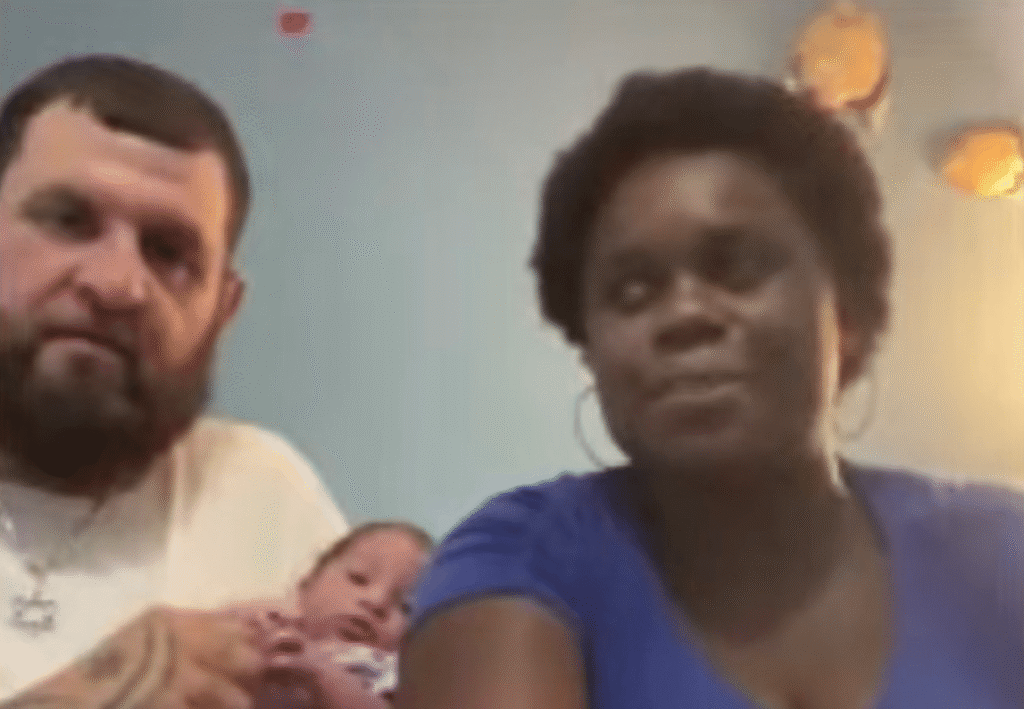
That is basically what just happened to a North Carolina woman named Cierra Bellamy. She rushed to the hospital thinking she had kidney stones, only for her water to break on the way. No bump she clocked, no months of cravings and maternity pics, no gender reveal in a park with the smoke bombs and the folding chairs. She found out she was pregnant at the exact same time she found out she was in labor.
For a lot of people, that sounds impossible. For Black women especially, it sounds like a medical system horror story waiting to be unpacked. Because underneath the shock and the jokes is a serious question that keeps coming up in our communities: how much do we actually know about our own bodies, and how much can we really trust the people who are supposed to help us understand them?
This kind of thing has a name: cryptic pregnancy. Basically, a pregnancy that goes unnoticed until late term or until birth. It is not common, but it is real. Periods can keep coming, weight gain can look like regular bloating or stress, especially if you are already plus-size or dealing with hormonal issues. Some women still feel what seems like regular cramps and assume it is gas or their cycle acting up. Then one day the pain hits different, and suddenly there is a whole human entering the chat.
Stories like Cierra’s always go viral because people love a “how is that even possible?” moment. The comments flood with “couldn’t be me,” and “girl I knew at 3 weeks,” and then the conspiracy theories start about denial, ignorance, or “she had to know.” But when a Black woman says, “I had no idea,” it is worth slowing down and listening instead of jumping straight to judgment.
First, think about how many Black women grow up being told to just “push through” the pain. Cramps, heavy bleeding, headaches, back pain, all treated like a normal part of being a woman. That same mentality shows up in sports, work, and even hip-hop. Rappers talk about grinding through sickness and exhaustion like it is a badge of honor. Athletes like Angel Reese get picked apart for every missed shot while playing through injuries and pressure most of us will never feel, and it becomes a culture of “no excuses” over everything. That same energy lives in our health. If your body hurts, you are “tripping” or “being dramatic” until something breaks.
On top of that, there is the medical system itself. Black women in America are already dealing with higher maternal mortality rates, doctors not believing their pain, and rushed appointments where nobody takes the time to explain what is really going on. The same North Carolina that is now in headlines for a woman unexpectedly giving birth is the same state where a Black man was found hanging from a tree and authorities quickly called it a suicide, leaving the community angry and on edge. There is a pattern of our bodies and our lives not being taken seriously until it is too late or too dramatic to ignore.
So when a Black woman’s pregnancy flies under the radar, it is not just a weird medical mystery. It is also a reflection of how disconnected many of us are forced to be from our own health. Between overworking, caregiving, stress, and lack of access to quality care, a lot of people are in survival mode, not “let me track every symptom and book three follow-ups” mode.
Culturally, pregnancy for Black women is also loaded. There is the joy and celebration, sure, but also the judgment. “Another baby?” “By who?” “You ready for that?” Even the way we talk about famous men and their kids shows how normalized certain double standards are. The jokes around rappers with whole starting lineups of children become content, like the conversations around which rappers have the most kids and what that says about hip-hop culture. But when it is a regular Black woman, not a chart-topping artist, suddenly there are questions about responsibility, life choices, and whether she “planned right.”
A cryptic pregnancy flips all of that. There is no nine-month runway to get your money up, set up childcare, throw a shower, or even decide how you feel about becoming a parent. One day your biggest worry might be rent, your job, your situationship, or your next trip. The next day, there is a baby on your chest and you are staring at a future that just changed in real time.
Think about how that shock hits the mental health side. Millennials and Gen Z are already carrying student loans, housing stress, and burnout from trying to “make it” in a world that feels like it is on fire. We watch the news, we see elections, economy scares, climate chaos, and it is no surprise that a lot of people are hesitant about bringing kids into all of that. A surprise baby on top of that can be beautiful and traumatic at the same time. Social media loves the “blessing in disguise” narrative, but it rarely sits with the anxiety, the grief for the life you thought you were living, and the fear of being responsible for a new person when you barely feel stable yourself.
There is also a body story here, and Black culture is deep in body talk right now. From tummy tucks to BBLs to Ozempic to filters that change your whole face, our feeds are constantly telling us to sculpt and monitor every inch. The same way people are speculating about faces and features, like the conversations around Kenya Moore’s changing look and what it says about beauty in Black culture, is the same energy that makes it easy to miss what our bodies are actually trying to tell us. If you are used to ignoring hunger, overworking through pain, and seeing your body mostly through a camera roll, small changes do not always register as “something is really wrong” or “something is really growing.”
For Black women, that disconnect is not just vanity, it is survival. Generations of being told to be strong, to not complain, to hold it down for everybody else, to show up to the cookout, the wedding, the job, the church, the game, fully dressed and laid, no matter what is happening internally. We praise the Savannah James types for always looking flawless in the stands, the queen of NBA wives in full glam courtside, but rarely talk about what it takes behind the scenes for regular Black women to keep performing that kind of put-togetherness every single day.
That is why Cierra’s story hits different. On the surface, it is a wild TikTok-worthy “storytime.” Underneath, it is a reminder that our bodies can be screaming at us while we are too busy, too stressed, or too dismissed to hear them. It is also a reminder that the healthcare system is not built for our shock moments. A woman walks in saying “kidney stones,” and the staff has to pivot to “this is a full birth right now.” How doctors speak to her in that moment, whether they shame her, whether they believe her when she says she had no idea, all of that leaves a mark.
There is a long history of Black women’s reproductive stories being controlled, judged, and disrespected. From forced sterilizations to welfare stereotypes to the way media still loves a “baby mama drama” storyline, our pregnancies are rarely allowed to just be human and complicated. A cryptic pregnancy cuts across all of that. It is not about “doing it for the gram,” it is not about a perfectly branded motherhood journey. It is raw, unplanned, and very real. That makes a lot of people uncomfortable, because it breaks the illusion that we are fully in control of our lives and bodies at all times.
Our culture is obsessed with the reveal. Gender reveals, album reveals, baby name reveals, political plot reveals. Whole think pieces get written about how certain images land, like the way people studied that weird White House photo of Trump with Don Jr. and Eric trying to decode power and image. But what happens when there is no reveal, no buildup, just a sudden reality check? Cryptic pregnancies are like life’s way of saying, “You thought you were writing this script, but something bigger is happening.”
For Black readers, the takeaway should not be fear so much as awareness. No one is saying every cramp is a baby or every backache is a crisis. But if your body has been feeling off for a while and it is easier to Google than to call a doctor, that is a sign of a bigger problem. If you are constantly gaslighting your own pain because you do not want to be “dramatic” or “a burden,” that is a red flag. And if you feel dismissed by providers, there is no shame in pushing for a second opinion, asking more questions, or bringing someone with you who can advocate.
Stories like Cierra’s will keep going viral because they are wild, and honestly, the jokes are going to fly. That is how Black folks cope. But after the memes, the culture conversation needs to land somewhere deeper. We talk all the time about protecting Black women, about loving Black women, about celebrating Black mothers. Protecting also means giving space for their shock, their confusion, their “I really did not know,” without turning them into punching bags or morality lessons.
Going forward, expect more of these cryptic pregnancy stories to surface, not because they are suddenly happening more, but because social media finally gives regular women a platform to say, “This happened to me too.” With reproductive rights shifting, healthcare costs rising, and stress levels at an all-time high, our bodies are going to keep reacting in ways that do not fit the textbook. The question is whether our community, our doctors, and our culture will respond with compassion and curiosity instead of shame and disbelief.
If anything, Cierra’s surprise baby is a wake-up call for everyone scrolling and side-eyeing. Listen to your body. Ask the hard questions. Make that appointment you have been putting off. And when another Black woman says, “I didn’t know,” believe her first, then help her figure out what comes next. Because the plot twists are not slowing down, and we are going to need each other healthy, informed, and supported for whatever the next chapter brings.
About The Author