By Renee Fontaine, PowerVault Staff
The funniest Black stories never start on a soundstage. They start in the kitchen, with somebody burning the macaroni and cheese, an auntie side-eyeing from the corner, and a cousin trying to explain why he quit a perfectly good job to “focus on his brand.” That exact mix of love, disappointment, delusion, and inside jokes is what built Black sitcom history. And that is exactly the energy The Fall and Rise of Reggie Dinkins taps into as it steps into season 2.
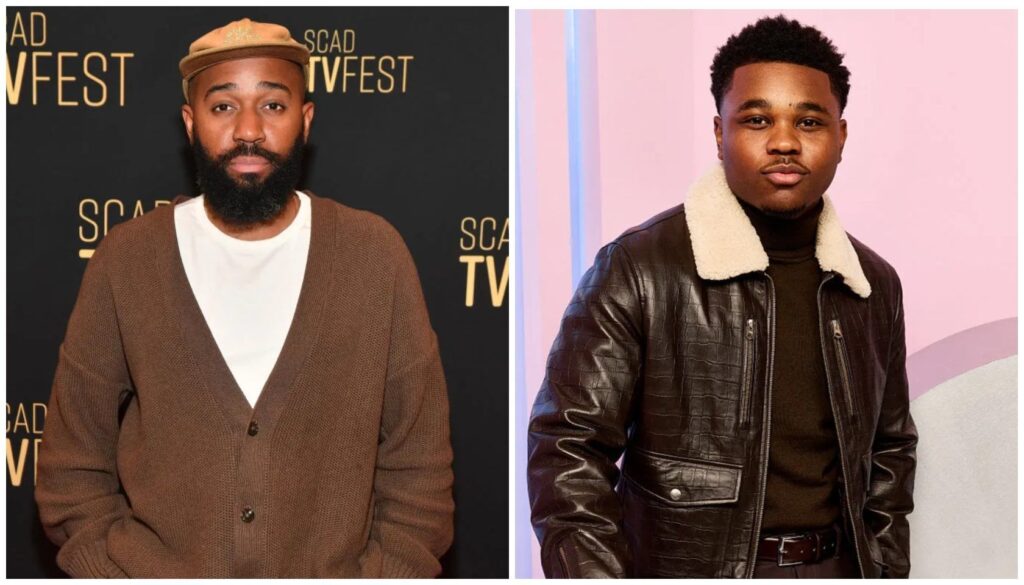
Phil Augusta Jackson and Jalyn Hall are not just making another “Black show.” They are playing in the same sandbox as Martin, The Fresh Prince of Bel-Air, My Wife and Kids, and Everybody Hates Chris, but with a 2020s brain. The Fall and Rise of Reggie Dinkins follows a grown man trying to get his life together while his family alternates between holding him down and wearing him out. It is delightfully messy, deeply familiar, and, most importantly, it is not afraid to let Black characters be goofy, wrong, selfish, loving, and layered at the same time.
Season 2 comes in at a time when the conversation around Black TV has gotten weirdly stiff. Everything has to be “important,” “prestige,” or trauma-filled to get greenlit. A lot of execs love Black pain but get nervous about Black joy. Jackson, who already gave us the criminally underrated Grand Crew, clearly has no interest in that boxed-in version of us. His work keeps saying the same thing: Black people deserve to be funny in public, not just in the group chat.
Reggie Dinkins, as a character, is the cousin everybody got. Smart but scattered. Big dreams, inconsistent follow-through. The one who swears the next plan is the one that will change everything. Watching him fail, learn, fumble again, and slowly rise is lowkey revolutionary, because Black men on screen usually get two lanes: hyper-competent superhero or broken stereotype. Jalyn Hall, who many people still associate with heavier roles, leans into the humor and humanity that a lot of young Black actors never get to show.
The best part is how the show treats family. Not as props. Not as background noise. As the whole ecosystem. Black families are often written like a TED Talk about respectability. The Fall and Rise of Reggie Dinkins lets the family be ridiculous and real without turning them into a thinkpiece with a laugh track. The aunties talk slick, the parents mess up, the kids clock everybody’s hypocrisy, and somehow they all still show up for each other when it really counts.
That balance matters. So much of the culture right now is about performance. Perfect Instagram families. Perfect narratives. Online, people are quick to dissect what a couple’s breakup “reveals about society,” like we did when folks picked apart Serayah and Joey Bada$$ and how that split exposed the way people project on Black women’s love lives. If you missed that, go read our breakdown of Serayah and Joey’s breakup. Shows like Reggie Dinkins push back on that fake perfection. They remind us that sometimes a family argument is just a family argument, not a referendum on the entire race.
Black sitcoms have always done that work. Think back to The Fresh Prince episode where Will’s dad leaves again. Everybody remembers the tears and the “How come he don’t want me, man?” line, but that moment hit as hard as it did because the show had already given us so much silliness. Carlton dancing, Jazz getting thrown out, Uncle Phil roasting Will’s fits. Comedy built the trust so the pain could land honestly.
The Fall and Rise of Reggie Dinkins is playing in that same emotional lane. A lot of scenes are just Black foolishness at its finest: bad decisions, dramatic reactions, and the kind of one-liners you definitely steal for your own family group text. But under it, there is a constant question: what does it really look like for a Black man to try to “rise” when family, money, identity, and expectations are all pulling at him at once?
That question feels especially loud in this era where Black men’s paths are judged in real time. Rappers, athletes, influencers, regular dudes with a mic and a podcast. Everybody is being watched, critiqued, and turned into content. We just wrote about which rappers have the most kids and what that really says about hip hop culture, and the comments alone could be a sociology course. People are hungry to talk about Black fatherhood, responsibility, and legacy, but so much of that talk is loud, shallow, and judgmental. A show like Reggie Dinkins lets those themes breathe in a quieter, funnier way.
There is something powerful about seeing a character try, fail, and not be discarded. Reggie gets clowned, but the show never makes him disposable. That is not a small thing. Black characters, especially men who are not instantly “successful,” often get written as cautionary tales, not full humans. Reggie is a mess, but he is also loved. And that combination is what so many of us grew up around. The uncle who could not keep a job but would drive across town at 2 a.m. if you needed him. The cousin who made bad choices but was still the funniest one at the cookout.
From a craft standpoint, Phil Augusta Jackson’s background in comedy writing is all over the show. The dialogue is quick without feeling forced. The jokes trust the audience to keep up. There is a certain Black shorthand that has always lived in our living rooms and barbershops, and it feels good to hear that rhythm on screen without it being translated for a white gaze. That is the same authenticity fans responded to in things like Grand Crew and Atlanta, even though those shows have very different tones.
One of the reasons this series resonates is because it leans into the “middle.” Not extreme poverty, not billionaire fantasy. Just regular Black life with irregular drama. Look around the culture right now and you will see how rare that is. Our stories get flattened into one of two categories: suffering or spectacle. Either it is police violence, incarceration, and trauma, like the news cycle around cases such as the Black man found hanging from a tree in North Carolina, or it is hyper-luxury, private jets, and influencer flexes. There is not nearly enough space for the millions of us living in between those extremes.
Reggie Dinkins lives in that middle. The bills matter. The job search matters. The family pressure matters. But nobody is a statistic. Nobody is a thinkpiece. They are just people trying to figure it out, which is exactly why so many fans are connecting to it. The stakes feel real without being trauma porn.
The show also quietly speaks to how Black families are renegotiating roles in this generation. Parents are learning to apologize. Kids are more vocal about mental health. Aunties and uncles are being forced to retire the “what happens in this house stays in this house” rule. Reggie’s “rise” is not just financial or career based. It is emotional maturity, accountability, and learning how to be seen by the people who watched you grow up.
Jalyn Hall’s casting is a big part of why it works. This is a young actor who has already carried heavy stories, so seeing him in a more comedic, grounded lane feels like a reset. It mirrors what a lot of Black creatives are doing in real life. Look at artists like Young M.A, who has been open about health scares and faith and how that is shaping her next chapter. If you have not tapped into that story, go read our look at Young M.A’s journey and sobriety. Black talent across music, TV, and film is trying to write their own narratives instead of staying locked in whatever lane people first put them in.
Phil Augusta Jackson is doing the same behind the camera. Hollywood loves to typecast writers just like it typecasts actors. If you are good at punchlines, they do not always trust you with heart. If you can handle drama, they assume you cannot be funny. Jackson keeps proving that Black storytellers do not have to choose. The same pen can give you wild jokes and gut-punch moments in the same scene, because that is how life actually feels for us.
There is also something to be said about timing. As networks and streamers cut shows left and right, Black comedies do not always get the space to grow. A lot of our favorites from back in the day had shaky first seasons before they became classics. Go rewatch the earliest episodes of Martin or Living Single and compare them to their third seasons. Night and day. The fact that The Fall and Rise of Reggie Dinkins is getting a second season in this climate means somebody sees the value. More importantly, audiences are showing up.
Social media reactions to the show reflect exactly that. People are not just quoting lines. They are saying, “That is my uncle,” “That is my mom,” “That is literally my family at Christmas.” When a show becomes a mirror instead of just background noise, it starts living in the culture differently. It becomes reference material. It becomes shorthand. That is how you go from “new series” to “yo, remember that Reggie Dinkins episode where…”
Looking ahead, season 2 is a chance to deepen everything that made the first run work. More backstory, more mess, more growth. The question is not just whether Reggie will finally get it together, but what “together” even means in a world where the goalposts keep moving for Black success. Is it money, stability, healing, or just staying connected enough to laugh about it when life goes left again?
Keep an eye on how the show handles that question. If The Fall and Rise of Reggie Dinkins can keep threading the needle between clowning and care, it will not just be another series we watched for a season and forgot. It will sit in the same lineage as the Black sitcoms that raised us, while speaking directly to the chaotic, funny, exhausting reality of right now. In a media landscape obsessed with our struggle or our shine, a show that loves our everyday foolishness might be one of the most important things on TV.
About The Author