By Andre Coleman, PowerVault Staff
The timeline barely gets a chance to breathe before somebody’s face, body or BBL becomes the main character. One minute folks are arguing about who really won the Drake and Kendrick battle, the next minute the group chat is zooming in on Kenya Moore’s jawline like it is a Zapruder film for Real Housewives truthers.
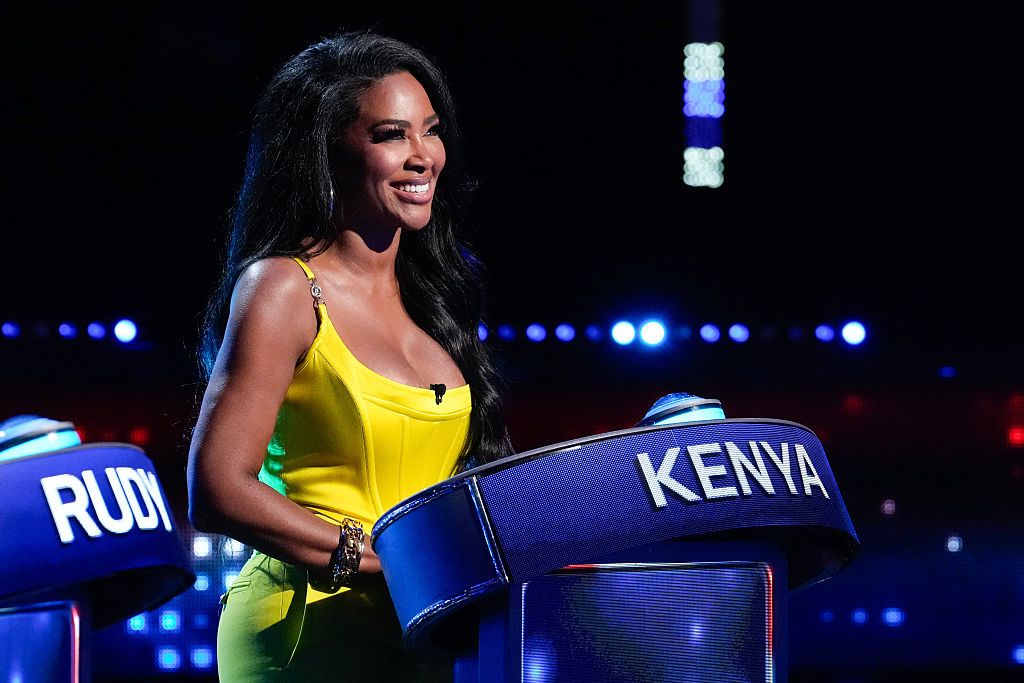
Kenya Moore just popped out with a dramatically different look, and the internet is doing what it does best: investigating, instigating and instigating some more. New photos of the former Miss USA and longtime Real Housewives of Atlanta star have fans asking one question louder than the rest: did Kenya Moore get a facelift?
On the surface, it is simple. A reality star posts a fresh face, tighter skin, snatched jaw, and suddenly the comment section turns into a plastic surgeon’s Yelp page. But with Kenya, this hits a little different. This is the same woman who walked onto Bravo screens a decade ago twirling and yelling “Gone with the wind fabulous” like a battle cry. The beauty pageant queen who made “I’m gone with the wind fabulous” a meme and a mantra before some of these TikTok kids even hit middle school. When her face changes, fans feel like the character changed too.
In the latest pics, Kenya’s skin looks extra smooth, her cheeks a bit fuller, her jawline more defined and her overall face just slightly lifted in a way that screams either elite skincare and lighting or a very subtle visit to somebody’s Beverly Hills office. The makeup is softer, the beat less harsh, giving her that “I woke up like this but my esthetician didn’t” glow. Commenters immediately started whispering about a facelift, mini lift, or some kind of tweakment that took her from reality TV glam to almost soap-opera star polished.
This is not new territory for Housewives fans. Every franchise has its “who is that woman” moment. NeNe’s nose. Porsha’s body. Melissa Gorga’s everything. Even outside the Bravo universe, Black celebs get this microscope constantly. Let a woman hit 45 and still look camera ready and the internet starts playing surgical bingo. Is it Ozempic, a facelift, a filter, or just minding your business and drinking water?
What makes Kenya interesting is how much of her story has always been about beauty and confidence. She came in as the pretty villain, the pageant girl who weaponized her good hair and good face like a storyline shield. For years, she bragged about being a natural beauty, clapping back at castmates who accused her of fake hair, fake butt, fake anything. So when that same woman suddenly looks like she traded a few hours under Bravo lighting for a few hours under anesthesia, fans feel like they caught a slip in the matrix.
The conversation around Kenya’s face is not just gossip, it is a mirror for how Black women in the spotlight are policed. Aging is treated like a scandal. If a Black woman shows wrinkles, she is “letting herself go.” If she smooths them out, she is “fake.” There is no winning, only survival. The same culture that demands Black women stay forever 28 also shames them when they use the tools available to survive in an industry built on looks and youth.
Hollywood has always run on the idea that men age into “distinguished” and women age into “replaced.” Kenya is in her fifties in an industry that barely lets women over 35 keep their peach, their mic or their relevance. A little tweak here or there is not just vanity, it can be strategy. Image is currency. Just look at how tightly political figures and their teams manage optics. The way power uses appearance is something we broke down in detail in our piece on Trump, Natalie Harp and 2026 optics in Why Is Trump Always With Natalie Harp And Where Is Melania?. Reality TV is not that different. The stakes are smaller, the surgery is quieter, but the pressure is the same: stay camera ready or get left behind.
There is also a specific kind of pressure on Black women in the beauty space. Kenya is not just any reality star. She owns a haircare line, sells a beauty lifestyle, and has built a brand on “I know what I’m doing when it comes to looking good.” When your coins are tied to your edges and your glow, you become a walking advertisement. That can make any aging line on your forehead feel like a negative Yelp review on your face.
Think about how we praise Savannah James. Her looks and styling are part of why people call her the queen of NBA wives. Her hair, makeup and fashion have become a whole aesthetic, to the point that we had to break down how she does it in Savannah James Best Looks: Courtside Outfits, Hair, Makeup. Savannah gets love for aging gracefully, for looking rich and real at the same time. Kenya operates in that same lane, but with the extra chaos of reality TV drama, villains edits and producers who would absolutely build a whole storyline around one pulled-tight selfie.
What is wild is how normalized this has become. The same fans asking if Kenya got a facelift are also casually naming procedures like they are brunch orders. Mini lift, fox eye, buccal fat removal, filler, threads. The language of cosmetic surgery has gone mainstream. It is the same way basketball fans casually talk plus minus, PER, and shot charts now. Culture has turned regular viewers into mini analysts. You see it in sports with how deeply people broke down Angel Reese’s missed layup against Caitlin Clark and all the culture war behind it, which we unpacked in Why Did Angel Reese Miss That Layup. With Kenya, the “analysis” just shifted from the court to the contour.
The hard truth is that reality TV, Instagram and filters have destroyed our ability to recognize a normal aging face, especially on Black women. Our aunties did not have ring lights and retinol serums. Today’s 50 looks like 35 with the right budget and a good camera. Some of that is skincare and better health, some of that is a surgeon with a quiet NDA. Fans are left trying to decode where the line is between maintenance and makeover.
There is also a class conversation sitting quietly under all this. Cosmetic tweaks are not cheap. For a lot of Black women watching, the idea of a facelift is not even on the radar. We are still talking about medical racism, maternal mortality and basic healthcare access. When a celebrity quietly spends five figures to erase a few years, it can feel like they live on another planet. That same distance shows up in stories about policy and power, like when we covered how a surrogate in California is fighting for custody of a sick baby in Why Is A Surrogate Fighting For Custody Of A Sick Baby In California?. Different issues, same reminder: what regular Black folks are dealing with is not what the rich and famous are dealing with.
Kenya’s alleged facelift also fits into a long history of Black women being punished for changing their looks while white celebrities quietly upgrade like iPhones every few years. When a Kardashian comes back with a new face, it turns into think pieces and YouTube breakdowns, but the sympathy is often baked in. When a Black woman does the same, the judgment is stronger, the language harsher. Suddenly it is “self-hate” and “trying to look white” even if the features are just a snatched version of what she already had.
For Kenya specifically, there is a layer of reality TV karma at play. This is someone who has clowned other women’s looks on camera, who has used shade about age, weight and style as part of her storyline. RHOA was built on reads, and Kenya mastered the art of cutting below the belt. So when fans feel like her face changed, some of that commentary is not care or concern, it is payback. The same fanbase that cheered her dragging other women’s wigs is now gleefully dissecting her own alleged scalpel moment.
Still, there is something a little sad about how quickly Black women’s faces become public property. People zoom in, speculate, diagnose, and drag without ever thinking about the mental health side. Aging on reality TV is not just about crows feet and smile lines. It is about knowing that every screenshot will get compared to a decade-old confessional look, that every pound and pore will get memed. When you live in that world long enough, a facelift can feel less like vanity and more like armor.
Kenya has not confirmed a facelift, and honestly she does not owe anyone that. The same way folks defend privacy when it comes to pregnancies, surrogacy or parenting choices, that same energy should exist for what women do with their own faces. If she wants to say it is skincare, cool. If she eventually admits to a tweak, also cool. The real question is why so many of us feel like we are entitled to a full surgical report from a woman we only know through edited arguments and confessionals.
What this moment really shows is how Black celebrity women are trapped between being aspirational and being sacrificed. Their faces are billboards for beauty standards, but also battlefields where the internet works out its own insecurities. People want Kenya to be forever young, forever shady, forever flawless, and also forever “natural” and “real.” That contradiction is impossible. Something has to give, and most of the time it is the truth.
Looking ahead, do not be surprised if Kenya leans right into this. She has always been media savvy. A facelift rumor is storyline gold for a vet who knows how to stretch a moment into an arc. There might be a coy joke about “little tweaks” on camera, a confessional about aging, maybe even a whole “new Kenya” rebrand built on this fresher face. Whether she confirms anything or not, the image has already done its job. People are talking. Bloggers are posting. The brand stays alive.
For fans, this is a reminder to look past the Facetune and the filters and ask better questions. Not just “did she get a facelift,” but “why do we need her not to age,” “who profits from that pressure,” and “what does it do to all of us watching.” Kenya Moore’s face might be the topic today, but the larger conversation is not going anywhere. As reality TV keeps churning out new stars and Instagram keeps raising the bar on what Black beauty is supposed to look like, expect more of these “did she or didn’t she” debates. The real plot twist would be a culture that lets Black women get older on camera without turning every wrinkle or every lift into a scandal.
About The Author