By Jasmine Reed, PowerVault Staff
Picture this. Sunday morning in the South. Steeple, stained glass, choir robes, parking lot gravel still wet from last night’s rain. But instead of folks lining up for service, police lights bounce off church windows, and a Black child’s body is hanging from a tree.
That is not a scene you ever forget. Not if you are from here. Not if you know this country’s history. Not if you grew up on stories about strange fruit and had to Google Emmett Till in middle school because the pictures were too much but the truth felt familiar.
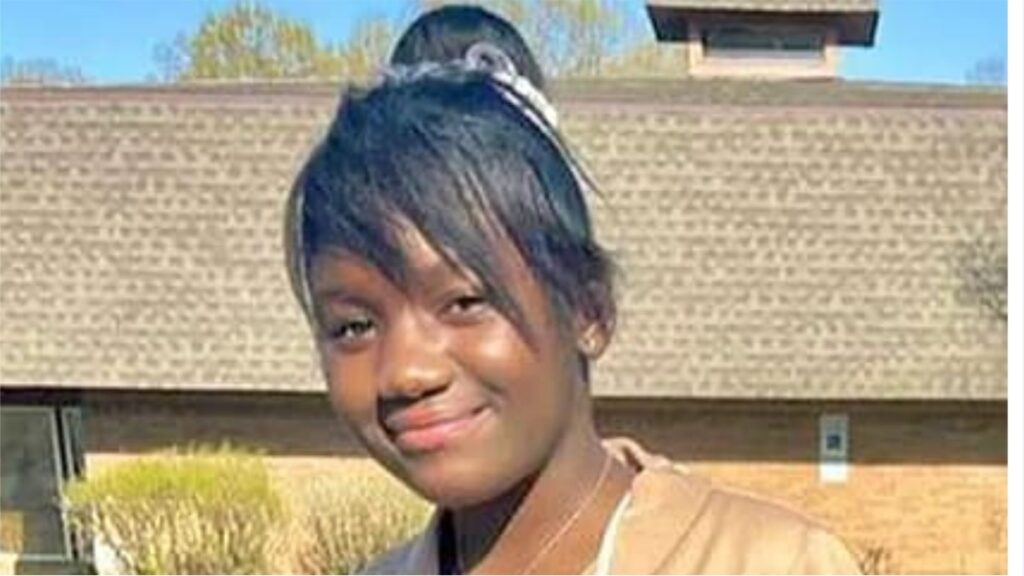
Now Charlotte is sitting in that kind of nightmare. A 16-year-old Black girl, found hanging outside a church. Police say suicide. Her family says, hold up, something is not adding up. New records drop, more details leak out, and instead of clarity, there is that old heavy feeling Black folks know too well. The system wrote the ending to this story way too fast, and we are supposed to just nod along and move on.
For her family, that is not happening. For this community, it cannot.
The case has turned into another painful example of the disconnect between what Black families see and what official reports say. On paper it looks neat: teenager, mental health struggles, tragic self-harm. Case closed. But when a Black girl is discovered hanging from a tree in 2026, in the South, outside a church, there is no such thing as “neat.” There is history in that image. There is racial terror in that image. There is a whole country’s trauma baked into that silhouette against the branches.
That is why her family is pushing back. They are looking at the scene, the facts they have been given, the speed of the ruling, and saying what a lot of Black people say under their breath when these stories hit: something is off. From questions about who first found her, to how long she had been there, to what the cameras did or did not catch, every new document creates more doubt than peace.
Black families are tired of being told to take the state’s word as gospel when the same state has fumbled our lives, our votes, our safety and our stories over and over. We just watched judges have to step in and check the Postal Service over some wild new rule that could have slowed down mail-in ballots, which is why folks were breaking down how that all worked in pieces like what is really going on with the USPS voting rule and why judges are blocking it. The pattern is the same. Power moves quietly, Black people are the collateral, and then we are expected to trust the process that almost never trusted us.
This Charlotte case hits a deeper nerve because of what hanging means in Black memory. It does not matter if you were born in 1960 or 2000, those images of lynching live in our textbooks, our grandparents’ whispers, our protest signs, our music. Billie Holiday singing “Strange Fruit.” Civil rights photos your teacher rushed through in class. That one museum exhibit you could not finish. A Black body in a tree is not neutral, and pretending it is just a “method” in a mental health report ignores the racial violence that shaped this country.
So when officials rush to label a Black hanging as suicide without what feels like a deep, transparent investigation, it feels like history repeating. It feels like those stories from the 1940s and 50s where a Black person was found dead under “mysterious circumstances,” the town called it suicide, and everybody Black knew exactly what really happened but had no way to prove it without risking more blood.
In the last decade, we have seen this movie again and again. Black men and women found hanging in public places, from California to Texas to Mississippi, and families left fighting the “no foul play” stamp police drop on the file. Each time, authorities say there is no evidence of a hate crime, no sign of a struggle, no reason to think it is anything but a self-inflicted death. Each time, Black people remember that evidence has a way of going missing when it is our lives on the line.
There is another layer here that does not get enough air: our girls. Black girls are not protected in this country the way they should be. They go missing and it barely hits local news. They speak up about abuse and people question their character. They die in custody or under suspicious circumstances and somehow the narrative gets flipped until they are the ones on trial. This Charlotte teen is part of that pattern too. A young Black girl, her name now circulating not because she got to have a full life, but because how she died does not sit right with the people who loved her.
Police reports and new records are trickling out, and each detail is being pored over like lyrics from a surprise drop. The location of the body. The time of discovery. The condition of her belongings. Any sign of a note. Any mention of cameras. Any hint of prior threats. The family is doing the work the system should be doing for them, because experience has taught Black folks that if we do not fight for the full truth, no one will.
Hip-hop has been calling this out for decades. NWA screaming about crooked cops. Tupac warning about the system’s “war on the Black man.” J. Cole and Kendrick rapping about kids lost to violence, to the streets, to a government that counts their bodies but not their dreams. The culture has always been a record of how easily our deaths get filed away as statistics instead of scandals. Stories like this Charlotte case live in the same world where rappers have to show up for one another in court and demand fairness, like what went down when people broke down why so many artists packed the courtroom for Lil Durk’s murder-for-hire trial. Different arena, same fight: you will not just do what you want to us in the dark and expect us to stay quiet.
Another thing this case exposes is how Black grief and Black suspicion get framed as irrational. When a white family questions an autopsy, it is concern. When a Black family does it, it is “conspiracy.” That double standard is wild when history literally backs up our fears. From medical experiments on Black bodies to police departments caught hiding evidence, Black paranoia has usually turned out to be Black reality arriving late.
Look at how fast people clown or dismiss Black communities online when we do not accept the first press conference version of a story. The same internet that can break down every frame of a Marvel trailer or debate whether T.I. is really done with rap like in that deep dive on whether T.I. is actually retiring from music suddenly gets tired and impatient when Black folks ask real questions about our safety. That selective energy tells you exactly who people think deserves complexity and who is supposed to just be “tragic” and move on.
There is also a political edge here that cannot be ignored. Every time a suspicious Black death is rushed into the suicide category, it keeps certain numbers low and certain narratives clean. Hate crimes stats stay manageable. “Community relations” talking points stay positive. Local officials avoid having to admit there might be white supremacists or predators operating in their backyard. It is easier to say a 16-year-old Black girl quietly killed herself than to open the door to the possibility that something violent, targeted and ugly happened on church property.
And then there is the church itself. For Black folks, church is supposed to be sanctuary. Safety. The place Grandma dragged you on Sundays and where the youth choir got you your first solo. To have a Black child’s body hanging outside a church throws the whole idea of sacred space into crisis. It is like the universe glitching. Even if the death was self-inflicted, the choice of location raises questions about what messages this girl got about worth, about forgiveness, about whether there was anywhere she felt truly protected.
What makes this even heavier is how normal it has become to scroll past Black pain. Between streaming drops, sports drama and politics turning into reality TV, we live in a content feed that will show you a police killing and then a cooking hack in the same minute. Our brains are trained to keep it moving. Pieces on why Trump walks funny off Air Force One or what his weird walk says about him get more jokes and engagement than a story about a dead Black child ever will. That is not a knock on entertainment, it is a reminder that the algorithm does not care about our healing.
So what now. For this family, the fight continues. They are demanding independent eyes on the case. More transparency around the records. Real answers about why certain investigative steps were or were not taken. In 2026, families have more tools than ever: social media, community legal aid, national platforms that will amplify their story when local outlets get too cozy with police talking points. But it is still an exhausting battle to wage while you are grieving a child.
For the rest of us, this is a call to stop treating these stories like random tragedies and start clocking the pattern. Black kids dying under suspicious circumstances. Officials defaulting to the easiest narrative. Families labeled “difficult” for not swallowing it. Rinse, repeat. Whether you are locked into hip-hop, film, sports or just trying to get through your nine to five, this is about the basic right to have our deaths investigated with the same care and suspicion white families get automatically.
There will probably be more records released. Maybe video. Maybe additional autopsy notes. Maybe witnesses who were quiet at first decide to talk. Or maybe officials double down and hope the news cycle moves on. But this moment is a line in the sand. Every question this Charlotte family asks makes it a little harder for the next suspicious case to get rubber-stamped and buried. Every share, every conversation, every refusal to let this girl’s name fade into a statistic is a small act of resistance against a system that has always tried to write us off quickly.
Watch how the city responds. Watch if outside investigators get involved. Watch if national civil rights groups step in or if local organizers have to carry this on their backs. And remember: when a Black child is found hanging from a tree in America, the real story is never just about one family. It is about whether this country is finally ready to treat our lives, and our deaths, like they actually matter.
About The Author