By Simone Walker, PowerVault Staff
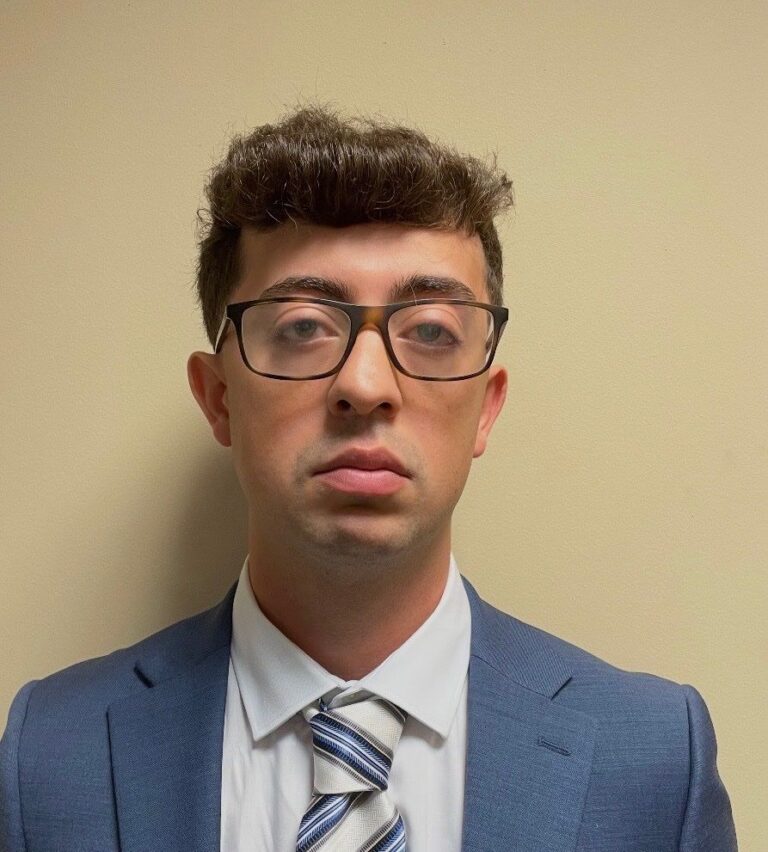
The camera cuts on and there it is again: that look. Not fear. Not regret. A smirk. The kind of half grin people have when they think the whole thing is a joke, or they are too numb to care. Across the room, a Black woman is shaking, trying to pull words out of a chest that only feels full of air and grief. Somewhere in the middle, a judge is talking about evidence and ballistics while the country argues about guns like it is just another segment between commercials.
This time, the headline is about the Charlie Kirk shooting hearing, a preliminary hearing turning into prime-time content, complete with an “alleged killer,” a sobbing widow, and a second gun defense that already feels like the start of a Fox News segment instead of a search for the truth. Conservative media has grabbed the story and wrapped it in culture war packaging: look what “they” did to Charlie Kirk, look how “their” violence is out of control, look how guns are the solution, not the problem.
Strip all that spin away and what you really have is something Black America has seen for decades. Courtrooms where life and death are reduced to performance. A grieving spouse on the stand whose pain gets turned into content. A defendant whose body language becomes a character in a story written by people who were never there. And a justice system that somehow keeps managing to be both slow and sensational at the exact same time.
According to reports from the preliminary hearing, prosecutors say they laid out what they claim is strong evidence tying the suspect to the shooting of conservative activist and commentator Charlie Kirk. The alleged shooter reportedly sat in court with a smirk, the kind of dismissive expression that enrages victims’ families and becomes instant B-roll for legal shows. Kirk’s widow, called to testify, broke down as she faced the person accused of taking her husband’s life. The defense is already pointing to a second gun, raising doubt about who fired the fatal shots and trying to plant that seed of “you can’t be sure” in a future jury’s mind.
That second gun angle is not new. Anyone who has followed big trials around shootings has seen this playbook. If you cannot convince people the killing did not happen, you try to convince them they cannot truly know who did it. There was another shooter. Another weapon. Another angle the cameras did not catch. Reasonable doubt becomes a story, not a standard. And in America, stories about guns are always louder than the people actually dying from them.
What makes this case especially volatile is who Charlie Kirk is and what he represents. Kirk is not just some random name on a docket. He built his brand as a loud, aggressive conservative voice, especially to young white audiences. Gun rights. “Law and order.” Attacks on Black Lives Matter. Takes on protest and crime that treat our communities like props in a lecture. His platform has helped feed the same energy that laughs at Trump’s walk off Air Force One one day and then turns right around to push policies that hurt Black folks the next. You can see that tension in coverage like Why Was Trump Walking So Weird Off Air Force One, where the joke is funny, but the power behind it is not.
Now that Kirk himself is the victim of a shooting, his name becomes a weapon in a different way. Every detail of this case will be used to argue that “the streets” are out of control, that protest movements created chaos, that only more policing and more guns can fix it. The same people who shrug when a Black teen is found hanging from a tree or a Black man is shot by police in his own home suddenly find deep passion for justice when it is one of their own. You can see the double standard if you put this next to stories like the North Carolina case in Black Charlotte Teen Found Hanging At Church, where a Black family cannot even get a real investigation without a fight.
Watching Kirk’s widow cry on the stand pulls at something human that cuts across politics. Losing a partner to violence is a wound that does not care who you voted for. Her pain is real, and it deserves respect. The danger is how fast that real pain becomes a prop for people who do not care about violence unless it helps them score a point. Some of the same pundits who will spend months talking about this case went silent when police texted about “hunting” Black folks in Mississippi, then got caught. Whole communities have to beg the country to care when the victims look like us, like in the Mississippi Police Chief racist texts scandal.
The courtroom optics in the Kirk hearing feel almost designed for television. A smirking suspect. A crying widow. Lawyers arguing over which gun did what. It plays like a true crime miniseries where the nation picks a side based on vibes, not facts. This is how a country that claims to love justice actually processes violence now: through screenshots, memes, and cable highlights. The risk is that the deeper questions get lost. How did another armed confrontation end in death instead of de-escalation. Why is every conflict in this country one split second away from gunfire. Who keeps selling the idea that the answer to fear is always more weapons.
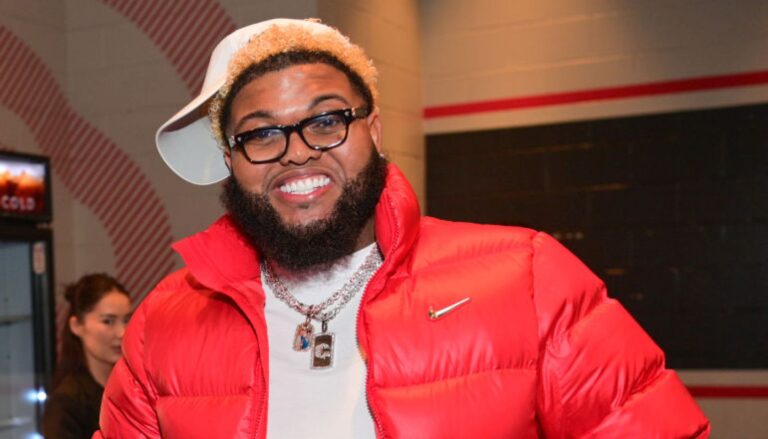
Black communities know that double bind too well. When a rapper is on trial, cameras show up heavy, ready to label the entire culture as violent. Look at how Lil Durk’s case got framed, until the details finally started shifting the narrative and you saw artists standing with him in court. Our own breakdown of what happened in Lil Durk’s murder for hire trial showed that gap between the story the system wants to tell and the story the community actually knows.
Compare that to how this Charlie Kirk case will likely be presented. The suspect will become a symbol for “urban crime” or “left-wing violence” if there is even the slightest opening to twist it that way. The right will use Kirk’s name the way the media used “superpredators” in the 90s, to justify whatever crackdowns or anti-protest laws they were already dreaming about. Each hearing, like this preliminary one with the smirk and the sobs, becomes another chapter in a narrative that was written long before any shots were fired.
Beyond the politics, there is a hard conversation this country keeps dodging about guns. The “second gun defense” is only possible in a place where everybody is strapped. Multiple firearms at one incident is not shocking anymore. That alone should scare people more than a courtroom smirk, but it will not. The conversation will stay stuck on who pulled which trigger instead of how many guns were in the room in the first place and why that is normal now.
Hip-hop has been wrestling with that same reality in public for years. Songs about gun violence hit different when rappers are getting killed at their own shows, at dice games, at home with family. The culture has been forced to mourn and self-criticize at the same time, asking how much of the imagery we push is reflection and how much is fuel. Meanwhile, the broader country acts like drill lyrics are the root problem, not the fact that guns are easier to get than a decent therapist.
Right now, the Kirk case is in that early stage where everything is speculation. A preliminary hearing is like a trailer, not the full movie. Prosecutors show just enough to argue the case should go forward. The defense tests out different angles to see what might land later. The judge decides if there is enough to keep the machine rolling. But the culture war version of this case is already in full release. Conservative shows are already using it to talk about “Democrat cities,” “crime waves,” and “open borders” even if none of that actually connects to the specific facts in this case.
For Black audiences watching this unfold, there is a strange mix of reactions. On one hand, somebody was killed and his family is shattered. That is real, and it deserves more than jokes. On the other hand, the same ecosystem that will now demand justice for Charlie Kirk has often dismissed or mocked our grief when we were the ones burying loved ones. There is a long track record of selective outrage, where violence is a national crisis only when the victim fits a certain profile.
That split is why so many of us have started focusing more on power than personalities. Whether it is Trump beefing with Canada over a lake name, or his movement fighting judges over USPS mail-in voting rules, or conservative commentators building brands off attacking “wokeness,” the pattern is the same. Violence, policy, and media spin all get braided together to shape what the country feels, fears, and funds.
What comes next in the Charlie Kirk shooting case will not just be about this one defendant or this one family. Jury selection, if it gets that far, will become a referendum on how people feel about protest, crime, and guns. Expect every leaked clip from the courtroom to hit social media with captions already telling you how to feel. Expect politicians to name-drop Kirk while pushing bills that have nothing to do with actually stopping violence. Expect the “second gun” to be treated like a plot twist instead of a symptom of a deeper sickness.
The real question is whether people who are tired of all this, especially in Black communities that have carried the weight of gun violence and over-policing at the same time, are going to keep letting other folks control the story. There is space here to talk honestly about safety that is not just “more cops” or “more guns.” There is space to ask why some lives spark national crusades while others barely get a local news crawl.
As the Kirk case moves from preliminary hearings to whatever comes next, watch who centers the widow’s humanity and who only uses her pain as a talking point. Watch who actually cares about how many guns were in that room and who only cares about what they can do with that second weapon on TV. Watch how quickly the same voices crying for accountability here go quiet when the victim is a protester, a rapper, or a Black kid whose name they never learned.
The courtroom smirk might be the image that trends today. The sobbing widow might be the clip that gets replayed all week. What will really matter is what this country chooses to do with another reminder that we are living in a place where every argument can end with a trigger pull and every death can be turned into content. The culture has a choice: either let other people weaponize this case to push the same tired fear narrative, or use it to demand a conversation about safety, justice, and life that actually includes all of us, not just the ones with a platform.
About The Author