By Tanya Brooks, PowerVault Staff
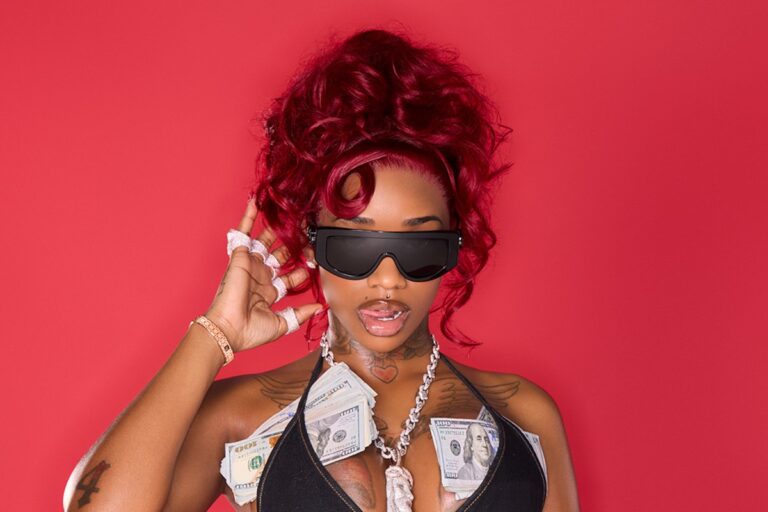
The culture loves a countdown. “She got about two more weeks.” “That sound already tired.” “Next summer, y’all not gon’ claim this.” Social media turned predicting a falloff into a sport, especially for women in rap. But every time somebody swears Sexyy Red’s 15 minutes are up, she pops back up with a new clip, a new feature, a new meme, and a crowd of thousands screaming word for word like they never heard of music snobs or think pieces.
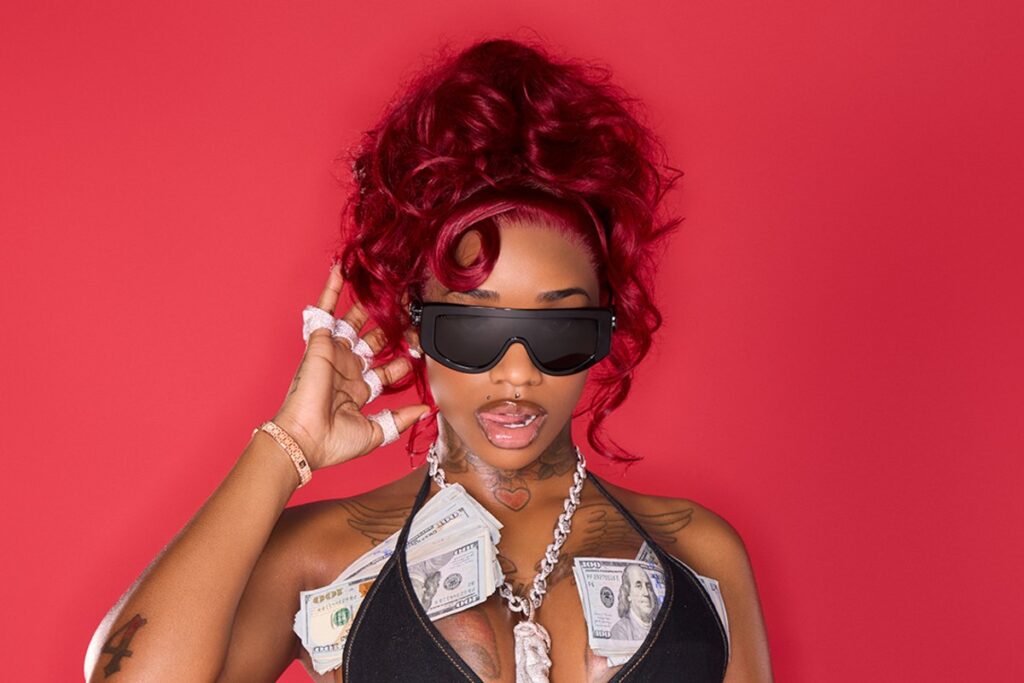
Sexyy Red is not supposed to be here this long, if you listen to people who still think respectability politics run the charts. The St. Louis rapper came in loud, raw, unfiltered, and unapologetically ratchet, with a delivery that sounds like outside in the summertime. Critics called her a gimmick. Fans called her their cousin from the hood. Brands and blogs tried to decide if they should embrace her or distance themselves. None of that stopped her from turning into one of the most recognizable new stars in rap.
What keeps Sexyy Red’s clock from running out is simple: she actually understands what era she’s in. We’re in the time of personality, clips, chaos, and connection. People do not just want a song, they want a character. Sexyy is a fully formed one. The accent, the hair, the outfits, the facial expressions, the slang, the honesty, the jokes that sound like your funniest friend in the group chat. People tune in because they feel like they already know her, and they stay because she keeps giving them something to react to.
That is why the whole “15 minutes” conversation around her always felt a little lazy. The industry has seen quick viral moments before, especially for women rappers. Remember the way folks tried to write off Cardi B in her early Love & Hip Hop days, like she was just a punchline posting funny Instagram videos. People said the same thing about City Girls when they first broke through, that it was cute but short lived. Yet here we are, years later, with Cardi a Grammy winner and Yung Miami still finding ways to trend, collab, and experiment musically, popping up in everything from hit records to our Best New Music roundups.
Sexyy Red watched all of that in real time. The difference with her is how she’s leaned into being a leader for the specific lane she’s in. Not a leader in the buttoned up, brand deck way, but a leader in how she makes other girls from her world feel seen. She raps about what a lot of women from the hood actually say to each other in private, without dressing it up for corporate comfort. That is why she has packed shows in cities the industry forgets to glamorize, and why crowds from teen girls to grown women rap her lyrics with zero shame.
Every generation has that woman in rap who becomes the lightning rod for America’s fears about Black girls being too free. In the 90s it was Lil Kim with the hardcore imagery. In the 2000s it was Trina getting banned from certain stations while male rappers said worse. In the 2010s Nicki and Cardi got blamed for “corrupting” a generation while their male peers skated by untouched. Sexyy Red is the latest in that line, and the pushback she gets says more about the audience than about her.
The truth is a lot of people still do not know what to do with a dark skinned, unapologetically hood, pregnant on tour, unfiltered Black woman who refuses to shrink her personality for anybody. There is a comfort people have with certain polished images of Black success. They want the curated R&B romance of a Jaymin song like “Rollin’” on one playlist, but they act like there is no room for Sexyy Red’s raw corner store narratives on another. Both are real, both are us, and both deserve space.
Another reason her 15 minutes are stretching into a full era is how she plays the industry game without pretending she is not playing it. The Drake connection is a prime example. Drake has always aligned himself with whoever has the streets and the memes at the same time. Linking with Sexyy was not charity, it was strategy on both sides. He gets to tap into her raw energy and younger fanbase. She gets the stamp that every rising rapper secretly knows still shifts perception: a Drake co-sign and stage time. In a business where visibility is currency, her popping up in his orbit signaled to labels, brands, and casual listeners that she is not a fly-by-night TikTok act.
What makes that relationship interesting is that Sexyy never shrinks herself in those big moments. She is not suddenly polished for the Drake crowd. She is still cussing, still trolling, still dressed like she got ready in the back of a car on the way to the club. That refusal to code switch in front of the so-called “bigger” audience is part of why her core fans trust her. She does not abandon the hood for the arena. She brings the hood to the arena.
Of course, the other side of that is backlash. The same folks who accuse modern rap of being too safe or too brand friendly turn around and clutch their pearls when someone like Sexyy Red shows up being exactly as reckless and free as they claim they miss from the 90s. The thinkpieces about lyrics, parenting, and “the youth” always seem to land on the backs of Black women. Nobody asks where the fathers are when a Future album drops. Yet when a Sexyy Red video surfaces, suddenly every critic turns into a guidance counselor.
There is a deeper conversation here about who is allowed to be messy in public and still be treated as an artist. White pop stars and rock legends have decades of being chaotic, sexual, and reckless baked into their mythology. Black men in rap have made whole careers off violence, misogyny, and flexing with no one questioning whether they deserve a seat at the table. But when a Black woman uses that same wild energy to center her own pleasure, her own humor, and her own perspective, people start talking about expiration dates.
That is why the “15 minutes” framing around Sexyy Red deserves to be retired. The question is not whether she will still be on top of the charts in 10 years. Most artists are not. The question is whether she is shifting what is possible for the next girl who looks and sounds like her. Right now, a young Black girl in a small city can watch Sexyy Red and see someone who did not come from an industry family, did not soften her accent, did not run from her hood, and still found a way to go global. That matters, even if you never add a single Sexyy Red song to your playlist.
Her rise also sits in the middle of a bigger shift happening across Black culture. Artists, actors, and creators are realizing that the old gatekeepers do not have the same chokehold they used to. You can see it in how Black filmmakers are building their own spaces like the SCAD Savannah Film Festival. You can see it in how someone like Channel Tres uses his L.A. connects to pour back into young Black music students in his own way, as we covered in our piece on who he is working with in LA. Sexyy Red is doing a version of that in rap, whether she frames it like that or not. Her visibility is a door cracked open that never existed before for certain kinds of Black girls.
The discomfort she causes is part of her impact. When older fans complain that “this not real rap” while young girls scream every lyric, that tension is a sign of a culture evolving in real time. Hip hop has always had this generational tug of war. There were folks who swore Soulja Boy was the end of lyricism. There were people who said City Girls were the death of standards. Yet hip hop is still here, more global than ever, with room for Kendrick Lamar dissertations, Griselda griminess, and Sexyy Red twerk anthems on the same festival bill.
There is also a business angle to why Sexyy Red is still a topic. The industry loves someone who can generate constant conversation. Her interviews, her live moments, her social clips, her accidental viral quotes, they all feed the machine. Whether people are laughing with her or arguing about her, they are talking. In the current attention economy, that is as valuable as a radio hit. Labels understand that. Brands are slowly catching up. Even the haters play their part every time they stitch a clip to complain.
For Black women in entertainment, the fight to be taken seriously while being fully themselves is ongoing. Look at how long it took for Megan Thee Stallion to be treated as a serious lyricist, not just a body and a hook machine. Look at how someone like Young M.A had to navigate health scares, faith, and public perception just to get a fair shot at a new chapter, which we broke down in our piece on her sobriety and evolution. Sexyy Red is another front in that same battle. People want her to either clean up or disappear. She is choosing a third option: get bigger and stay the same.
So is Sexyy Red falling off or just getting started. The honest answer is that she is still very much in the middle of her run, and the culture is still figuring out what to do with her. She has already survived the first round of “she a fad” takes. She has outlasted a couple of viral-rapper cycles. She has built a fanbase that shows up in real life, not just in comments. And she has inserted herself into rap’s larger story in a way that cannot be edited out when people look back at this era.
What happens next will depend on how she chooses to evolve without losing the rawness that made her pop. Maybe that means more structured albums, maybe more high profile collabs, maybe breaking her own artists and turning into the kind of leader she already sees herself as. Or maybe it means doubling down on the chaos and letting the world adjust. Either way, this is not a clock counting down anymore. It is a new normal being written in real time, and whether you love Sexyy Red or hate everything she represents, you are going to have to keep watching a little longer.
About The Author