By DeShawn Price, PowerVault Staff
The first time that voice hits you live, it does something to your body. Not the Auto-Tune era, not the meme era, not the TikTok hook of the week. A real voice. A church-trained, soul-seasoned, three-note-and-you-know-it’s-her voice. That is what Gladys Knight has been for generations. The kind of artist your grandmother, your mama, and you could all agree on without starting an argument in the car.
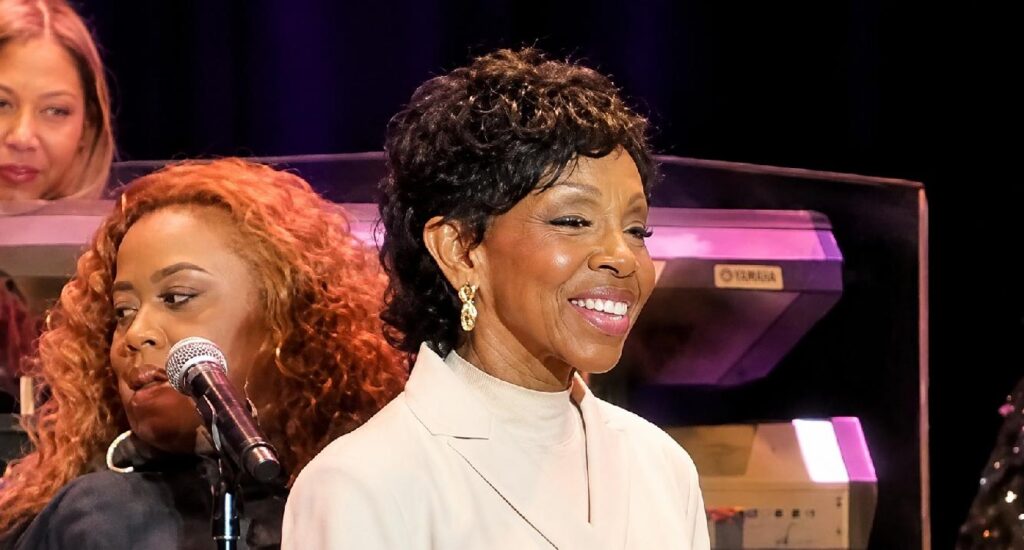
Now, at 82, that same legend is quietly cutting back on touring, and the whispers from fans about her recent performances are starting to turn into real concern behind the scenes. Reports say people in her own touring circle raised flags about her condition before a big Hollywood Bowl show this summer. Some felt she was not in the shape she used to be. Others felt the machine around her was pushing too hard, asking too much from a Black woman who has been giving everything to live music since before most of us were born.
That is the tension sitting under all the “Is Gladys Knight okay?” searches and the shaky fan videos getting passed around in group chats. This is not just about one artist maybe being tired onstage. It is about what this culture expects from its elders, what the industry demands from aging Black icons, and whether we know how to let our legends rest with honor instead of waiting until there is a crisis.
Gladys Knight has been outside working for over six decades. Not six viral years. Six decades. From the early days with the Pips, stacking harmonies and matching steps, to solo runs that turned into global tours, she has lived on the road. That grind is the old-school blueprint. Singers from her era did not have streaming checks, influencer deals or liquor brands to fall back on. The show was the bag. So even as the years stacked, the touring never really stopped. Cruises, casinos, festivals, residencies, state fairs, symphony shows, Vegas, Europe, back to the States. A constant loop.
Now that loop is slowing down, and that should not be shocking. Eighty-two years old is a blessing. Being able to walk out onstage at 82 and still hit real notes is something close to a miracle. But Black legends do not get treated like miracles. They get treated like machines. Just ask the estates of artists who were pushed until their bodies broke down. The pattern is familiar: the rumors start, the team brushes it off, the fans argue online about whether “she sounds fine” or “something is off,” and the industry quietly keeps selling tickets until they literally cannot anymore.
Gladys cutting back on touring after concerns from her own people is actually one of the more responsible turns this story could take. That means someone around her is paying attention. Someone is choosing health over hustle. In a business that will put an 80-year-old on a 30-city run without blinking, that is not small. It is a real decision to slow the money down to keep the person alive.
Black fans wrestle with this in a very specific way. Our legends are not just entertainers. They are family. Gladys is not just a singer, she is the soundtrack to Sunday clean-ups, cookouts, repasts, road trips and block parties where the Bluetooth speaker stayed on “Midnight Train to Georgia” a little too long because the aunties took over the playlist. There is a reason the internet still goes up whenever an OG like Anita Baker or Patti LaBelle trends. The fear is always the same: “Please don’t let it be bad news.”
That fear shows up in how we talk about them performing, too. When Anita was having in-ear issues and drama with Babyface on tour, the timeline had a full meltdown. Some people wanted to protect her at all costs. Others were mad about refunds. It turned into a referendum on respectability, age, and who owes who. Something similar is bubbling with Gladys, just quieter. Fans asking, “Why is she still touring so much?” are getting pushback from people saying, “Let her work, that is what she loves.” Both sides are reacting to the same thing: nobody wants to watch a hero struggle in real time.
There is also the money part people avoid saying out loud. A lot of Black artists from Gladys’s generation were not paid fairly when they were in their prime. Masters were stolen, contracts were predatory, and there were no brand partnerships cushioning the blow. Touring became the main reliable income stream. Even now, some of these “farewell tours” are less about the joy of performance and more about shoring up generational wealth before the clock runs out. That is not gossip, that is the reality of a racist industry that squeezed the first generation of Black crossover superstars and left them to figure it out later.
So when a report hits that insiders were worried about Gladys before a big show, and the response is to cut back on dates, the question under it is heavy: Is this about health, or about a Black woman finally being allowed to clock out from a job she has been doing nonstop since segregation? Or both?
Black culture is in a strange place with age and visibility right now. On one hand, we respect elders in theory. We call them “Auntie,” we post the clips, we do thinkpieces about giving people their flowers. On the other hand, the attention economy is brutal. If you are not touring, dropping something, trending or giving a viral speech, you risk getting pushed into the algorithmic basement. That pressure to stay visible can be just as toxic as a label deadline. You see it in politics, too. The way older leaders cling to the mic because they fear what happens when they step away from the spotlight is part of a bigger American obsession with power and image. Just look at how the Trump world plays photo ops, from who stands next to him to why people keep asking why he is always with Natalie Harp and where Melania is. None of this is just vibes. It is strategy, survival, and ego wrapped together.
For Black women in particular, the expectation to “keep going” is relentless. They are supposed to hold the family together, the choir together, the fanbase together. Even our conversations about political struggle recognize how much is dumped on Black women’s backs. The same culture that will honor Black women freedom fighters during Black August while asking why Black women political prisoners are ignored will still turn around and demand that a Black woman entertainer in her 80s prove she “still got it” every night for our nostalgia.
There is another angle that deserves real honesty: some fans do not actually want to see their legends age at all. They want the 1970s record frozen in time, the Gladys on Soul Train in the purple dress, not the grandmother who might need to sit more during the set. That disconnect between the image in our heads and the reality onstage can be jarring. Sometimes the reaction is compassion. Sometimes it is cruelty and clowning. Social media makes it easy to turn an off night into a meme, to reduce a whole legacy to one shaky note caught in 4K from the worst angle in the house.
That is why it matters how this story is framed. Cutting back is not the same as disappearing. Retirement, if it comes, does not erase six decades of impact. If anything, it forces us to confront how spoiled we have been. Hip-hop fans just watched something similar play out with legends facing health scares, legal drama, or just the wear and tear of being on the road since the 90s. The same way people are asking what Young Thug’s trial means for his future and his legacy, and why a lawyer like Brian Steel became a folk hero for defending hip-hop in court, soul and R&B fans are now quietly asking: what does it mean when the people who built this whole thing physically cannot keep carrying it?
Gladys Knight is not a background vocalist in the story of Black music. She is a pillar. Before there was a streaming playlist for every mood, there were vinyls and cassettes of that voice getting people through heartbreak, long drives, and longer lives. Before hip-hop dominated the Grammys, it was artists like her forcing those doors open. Before the current wave of R&B artists hit the stage, someone like Ella Mai could only exist because there was a template for what a touring Black singer with real chops looks like. You can hear the echoes of that in the way newer artists are reviewed, critiqued, and celebrated, whether it is an Ella Mai tour review breaking down why R&B still needs her or fans debating which stage setups feel like “real” R&B shows.
So where does this leave fans now, practically? If you are lucky enough to live near a city she still chooses to perform in, the conversation becomes personal: Do you go see her while you still can, knowing she might not be vocally where she was at 45, but understanding that being in the room with that kind of history is rare? Or do you protect your own memories and sit this era out, streaming the classics at home and supporting her by respecting her need to slow down?
Maybe the culture needs a new model for aging icons. Less “farewell tour” and more “residency on their own terms.” Less two-hour shows and more curated nights where they share stories, play the hits, and let the band and younger guests carry the heavy lifting. Less pressure to prove they can still run up and down a stage, more space to just be, to be honored, to be human.
What happens next with Gladys Knight will not just be about one tour schedule. If she chooses to retire fully, semi-retire, or pop out rarely and selectively, that choice will sit inside a bigger conversation about how Black culture protects its elders. The industry is not going to suddenly grow a conscience by itself. That part will always come from fans, families, and the few people inside those teams who care more about the person than the profit.
So watch what gets announced over the next year. Pay attention to how often her name shows up on festival posters, casino marquis, or “one night only” events. Listen to how people talk about her when she is not in the room. Because this moment is not just a sad rumor about a legend maybe slowing down. It is a real-time test of whether we have learned anything from how we treated the icons we already lost. If the answer is yes, then Gladys Knight should get to step back, rest, and still feel the full weight of our love. Not because she is onstage earning it one more night, but because after everything she has already given, she does not have to prove anything to anybody ever again.
About The Author