By Andre Coleman, PowerVault Staff
The story of Black resistance usually starts with a brother in a leather jacket, fist up, staring down the system. Cool poster. Clean narrative. But if the camera panned a few inches to the left, you would see who actually kept the movement alive: Black women holding babies, holding books, holding guns, holding court cases together with nothing but audacity and love.
Black August was never supposed to be a hashtag. It was born inside prison walls in the 1970s, created by incarcerated Black revolutionaries who used the month to fast, study, train, and honor those who died fighting the state. People hear “George Jackson” and think of that legacy. What rarely gets said is how many Black women sat in those same cages, took those same risks, and paid with their freedom for the same struggle, only to be written out of the script once the murals got painted.
Ask someone on the street to name a political prisoner and you will hear George Jackson, Mumia Abu-Jamal, maybe Mutulu Shakur if they really know their history. Ask for Black women political prisoners and the room gets quiet. Assata Shakur, sure. After that, people start reaching. That silence is not an accident. It is a decision, repeated across movements, classrooms, and timelines, to treat Black women as the backbone of resistance but never its face.
Black August forces a harder question. If this month is about honoring sacrifice, why are the women who bled for this work still invisible? And what does it say about our culture that we know every detail of a rapper’s court case, but have to Google the names of the women who took on the state before it was a trending topic?
Political prisoners are people locked up not just for what they allegedly did, but for what they represent. For Black women, that has meant being punished for refusing every box this country tries to stuff them in. Think about the Panthers, the Republic of New Afrika, Black Liberation Army, MOVE, and local radical collectives from Oakland to Harlem. Women were not just cooking for meetings and stuffing envelopes. They were strategists, medics, organizers, security, and, in plenty of cases, armed fighters.
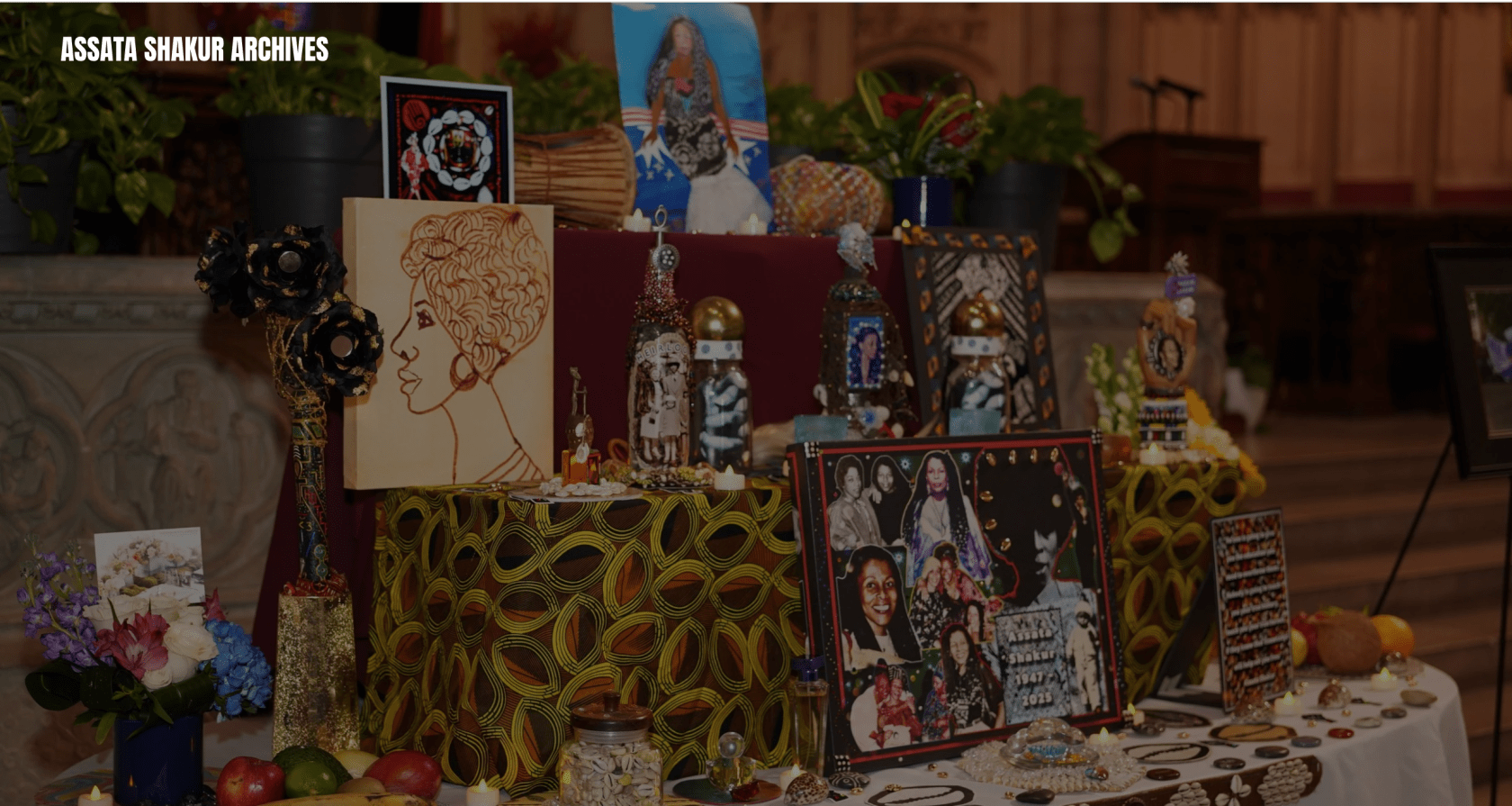
Take Assata Shakur. The state branded her a terrorist and plastered her face on wanted posters for decades. Hip-hop turned her into a quiet North Star, from Public Enemy shouting her out to Common rhyming “Assata taught me” like a whispered prayer. That was not just nostalgia. Her story hits because she represents a Black woman who refused to beg for humanity from a system built on her dehumanization. She fought back, got framed, escaped prison, and lived. That last part is what the state could not forgive.
But Assata is not the only one. Women like Safiya Bukhari, Sundiata Acoli’s comrade and Panther turned prison organizer, or the women of the MOVE organization in Philadelphia, who watched the government literally bomb their neighborhood in 1985, killing children and destroying a whole block. Several MOVE women spent decades behind bars, carrying the label of “cop killers” while survivors watched the city quietly move on. Their names rarely trend, even when their stories echo everything we claim to be outraged about today.
The pattern is familiar. This country loves a story where Black women sacrifice, but it gets real uncomfortable when those women pick up radical politics, self-defense, or anything that sounds like they are done playing nice. Think about how America talks about Harriet Tubman. The edges get sanded down. You hear the spirituals and the bravery, but not the fact that she carried a gun, threatened to shoot people who tried to turn back, and ran a full-on underground operation that would be labeled “domestic terrorism” if it happened today.
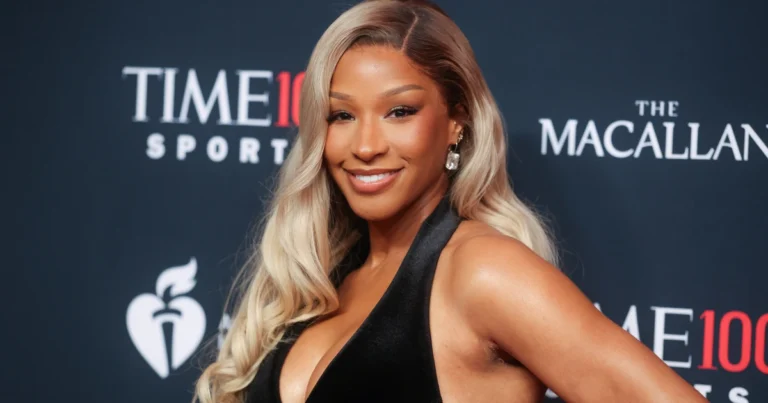
The same flattening happens now, just with better lighting. There is space to praise Black women as “resilient” and “strong,” as long as the resistance stays photogenic and brand-safe. We cheer LeBron writing a love letter to Savannah, calling her his anchor and “relationship goals”, but we rarely talk about what happens when that same kind of Black woman loyalty is given to a movement instead of a man. When the state feels abandoned, it punishes.
Look at how the system moves with Black women and criminalization right now. You do not need to be a Panther to see it. A surrogate mother in California is fighting in court just to make sure a sick baby she carried is protected, exposing how much control the law wants over women’s bodies and choices. That case, which we broke down in detail here, is not the same as a political prisoner case, but it lives in the same ecosystem. Black women’s decisions about life, family, and power are constantly monitored, judged, and, when they step out of line, punished.
Even in hip-hop, where Black women are finally getting their flowers on the charts, that deeper story still gets ducked. The culture loves Assata’s name in a bar, but who is organizing for the women sitting in cells right now for self-defense, for being tied to someone accused of a crime, or for getting political in the wrong zip code? The system has always known that if you break Black women, you break communities. That is why welfare queens were invented as a myth. It is why Black mothers get blamed when schools fail. It is why a simple slip from an NFL announcer calling Travon Walker “Trayvon Martin,” which we covered here, stung so hard. The state is always ready to turn Black names into symbols, but it never wants those symbols to point back to its own violence.
The truth is, this country has never had a clean relationship with Black women who fight back. When they are caretakers, they are praised. When they are organizers, they are tolerated. When they are revolutionaries, they become problems to be erased. That is why Black August hits different when the focus shifts and you start asking, where are the women in this story? The answer is ugly. Many are in graves, many are in archives, some are still behind bars, and far too many are remembered only in footnotes if they are remembered at all.
Hip-hop, for all its flaws, has always been one of the few spaces that tried to keep those names alive. Dead Prez, Pac, Lauryn, Yasiin Bey, countless underground acts, have all pointed back to political prisoners. But even there, the spotlight on women is thin. The same culture that can dissect every bar of a Drake and Kendrick diss war has not built that same muscle for learning the stories of women like Marilyn Buck, who worked with Black liberation groups and spent decades in federal prison, or women locked up after COINTELPRO-style policing tore through radical circles.
That gap is not just a history problem. It is a current problem. When YSL’s RICO case had people asking “who is Brian Steel and why is he fighting the justice system for hip-hop,” which we unpacked here, it showed that fans can care deeply about how the courts treat artists. The same curiosity rarely shows up for women organizers whose names are not on playlists but whose freedom is just as political.
There is also a gender reality we do not say out loud enough. Movements have a bad habit of treating women as disposable. That is true in church, in activism, in rap crews, and in radical circles. Black women do the labor, take the risk, then get pushed to the side when the story is told. That is why some of the most radical work Black women are doing right now is not just against the state, but against the erasure inside our own communities.
Think about the current wave of Black moms and birth workers speaking up about their own bodies, from celebrity moms like Rihanna and Cardi B shifting how we talk about pregnancy and breastfeeding, which we explored in this piece, to local doulas calling out hospitals. That is a continuation of the same fight. The front lines just look different. The state is still in their business. They are still resisting with whatever tools they have.
Black August, at its core, is a discipline. It is about study, not vibes. It is about building a political memory strong enough that the state cannot rewrite your heroes for you. If that memory keeps centering men with guns and speeches but not women with strategies and prison numbers, then the work is not done. And it will not be done until the names of Black women political prisoners roll off tongues as easily as the name of the latest rapper caught in a RICO headline.
For this generation, the question is simple. Will Black women in cages only show up as metaphors and mood boards, or will they be treated as real people who deserve advocacy, letters, lawyers, and love? Hip-hop is powerful enough to make a random kid care about an artist they never met. That same power could be used to make their audience care about a woman locked up for defending her community, her family, or herself.
As more artists get political again, as more young organizers study radical history between TikToks and tour dates, the stories of Black women political prisoners are going to matter even more. Not as nostalgia, but as blueprints. Their lives hold answers about state repression, about movement mistakes, about what it takes to survive inside a system designed to crush you. If Black August is going to be more than a quote on a feed, it has to bring those women from the margins to the center.
The next chapter of this culture will be written by people who decide to remember on purpose. So this Black August and every one after, watch who gets named and who gets left out. Pay attention to the artists, scholars, and organizers who keep saying the women’s names. The future of how we fight, how we protect each other, and how we honor our dead depends on whether those names finally get the same reverence, the same urgency, and the same love the movement has always claimed to stand for.
About The Author