By Marcus Ellison, PowerVault Staff
The culture loves talking about “protect Black women” and “protect Black families” until the conversation gets messy, emotional, and tied up in court papers instead of Instagram captions. The latest example is not a rap beef, not a reality show reunion, and not some viral clip we can joke about on the timeline. It is a newborn with a serious heart condition caught in the middle of a legal tug of war between the people who created him and the woman who carried him.
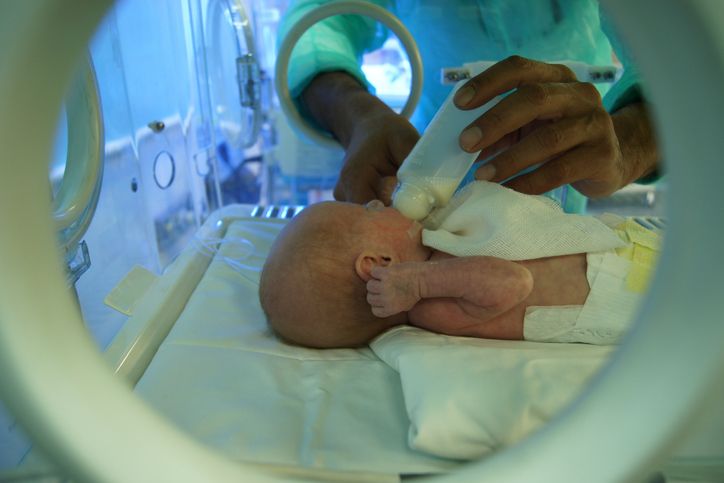
In California and Texas right now, lawyers are arguing over a baby boy who did not ask for any of this. The parents, Nausheen Gilkar and Omar Ahmed, say they followed the rules. They did IVF, paid a surrogate named McKenna West to carry their child, and expected to bring their son home once he was born. Instead, they are now stuck in a multi state custody battle while their baby’s heart condition is reportedly getting worse, and the surrogate is refusing to give him up.
This is not some fringe story. It is the logical result of a system where reproductive technology, religion, politics, and profit all collide, while the law tries to play catch up. And it should have every Black family side eyeing how fast things can go left when the state gets to decide who is “really” a parent.
Here is what is playing out. Gilkar and Ahmed say they entered into a surrogacy contract with West in California, a state known for being friendly to intended parents in these arrangements. Their embryo, their genetics, her womb. Before the baby was born, a California court reportedly issued a parentage judgment naming them as the legal parents, which is standard in a lot of gestational surrogacy cases. On paper, that should have been the end of it.
But once West gave birth, she did not hand the baby over. Instead, she took the child to Texas, where she lives, and started fighting for custody. Now two states are involved, two court systems are clashing, and the baby is in limbo, allegedly not getting the care his heart condition demands. While adults argue over who has “rights,” a medically fragile newborn is being dragged through interstate legal drama like a carry on bag.
Surrogacy is already a topic that splits our community. Some see it as a blessing, a way for couples who cannot carry children to build families, including Black women dealing with fibroids, Black queer couples, or people who went through cancer. Others see it as a slippery slope of commodifying bodies and babies, especially when poorer women carry for richer families. This case hits all those nerves at once.
On one side you have the intended parents, who did what the law told them to do, signed the contracts, got the court orders, and are now watching their baby’s health reportedly decline from a distance. On the other side you have a surrogate who says her conscience or her beliefs will not let her just hand the child over, even though she is not genetically related to him. In the middle sits a baby who needs cardiology, not a custody trial.
The wild part is how familiar this pattern feels. America loves to weaponize “life” and “morals” until real life shows up with complicated facts. We saw something similar in the way people tried to police art and politics when the US embassy pulled down a Kehinde Wiley piece for being “too woke,” which we broke down here in detail in Why Did The US Embassy Remove Kehinde Wiley’s Portrait For Being ‘Too Woke’?. The same tension is here, just with higher stakes. Powerful institutions want control over bodies, images, and now even pregnancies, but when that control collides with actual families, the system glitches.
Surrogacy law in the US is a patchwork. California tends to favor contracts and intended parents. Texas leans harder into birth mother rights and conservative ideas about pregnancy. When a surrogate crosses state lines with a baby, suddenly two different value systems are fighting for the same child. It starts to look less like family law and more like a jurisdictional tug of war, with a newborn as the rope.
People will argue that surrogates deserve protection from exploitation, and that is true. Surrogates should not be treated like vending machines. They should have therapy, clear medical protections, fair compensation, and the right to walk away before pregnancy if they feel pressured. But once a pregnancy happens, and especially once a baby is born with a preexisting agreement and a court judgment in place, changing your mind has consequences that go way beyond your feelings. Intent, genetics, and medical need all matter.
America has already spent the last few years turning pregnancy into a political war zone. Roe gets rolled back, and suddenly certain states are not just controlling abortion, they are trying to control IVF embryos, miscarriages, and now potentially surrogacy outcomes too. That is the bigger fear sitting under this case. If surrogates in conservative states start claiming parental rights despite contracts and pre birth orders, intended parents everywhere will think twice about starting families through surrogacy, especially if they are crossing state lines.
For Black families, the stakes hit even harder. This country has a long, ugly history of telling us which children we can have, keep, or claim. From enslaved women forced to bear children for profit, to the crack era where judges and social workers treated Black mothers like criminals and snatched babies into the foster system, our parenthood has always been “conditional” in the eyes of the state. This surrogacy fight is not the same as those chapters, but it rhymes with them.
Think about how fast the world judged Black mothers on shows like Love and Hip Hop or how messy narratives get twisted for clicks, the same way reality TV will spin a breakup into a weeks long circus. We just watched a whole reunion meltdown in reality dating on Love Island USA Reunion Drama: What Really Happened Between Melanie and Sol?, where producers turned real emotions into storyline fuel. The courts are not doing it for ratings, but the effect feels similar. Real people’s pain becomes a spectacle, while the system that created the chaos gets to act neutral.
Also sitting in the background is money. Surrogacy is expensive. IVF, lawyers, agency fees, medical costs, all of it. Couples are spending tens of thousands, sometimes over six figures, long before the baby arrives. Surrogates are often in a different financial situation from the intended parents. That power imbalance is real. But in this case, the surrogate already accepted payment, already carried the pregnancy, already had legal representation, and then, once the baby was born and sick, allegedly chose to keep the child and fight for custody.
The question becomes, whose “rights” matter more: the people who created and planned for this child, or the woman who carried him and now says she is acting as his protector, even if that means ignoring a court order and possibly delaying specialized medical treatment. When a child has a heart condition, the clock is not your friend. Every delay in seeing the right specialists, getting the right scans, or starting the right procedures is a risk.
The law is supposed to put the best interests of the child first, but that phrase gets tossed around so loosely it almost loses meaning. In a situation like this, best interest should mean consistent medical care, stable guardianship, and as little chaos as possible. Instead, the baby reportedly has a worsening condition while adults argue about jurisdiction, faith, and feelings.
The story also touches a nerve for anybody who has struggled with fertility or watched loved ones go through it. Surrogacy is often a last resort, not a first choice. By the time people get to this step, they have usually gone through miscarriages, failed rounds of IVF, grief, and a lot of quiet heartbreak. To do all that, sign the papers, follow the law, and then get blocked from your child because a surrogate decided after delivery that her beliefs changed, feels not just cruel but destabilizing for the whole system.
There is also a cultural angle that is not being talked about enough. Our generation is already pushing the limits of what family looks like. Queer couples, co parenting setups, chosen family, blended homes, IVF, surrogacy, adoption, all of it. Hip hop itself has grown from rappers bragging about “baby mamas” to artists being vulnerable about miscarriages, therapy, and complicated fatherhood. When stories like this erupt, they become the quiet reasons people are afraid to try these newer paths to parenthood.
Look at how fans reacted when news broke around Lil Durk’s legal issues and what it might mean for him as a father and a provider, which we covered in depth in What Happened In Lil Durk’s Trial Today? Inside OTF Jam’s Testimony And What It Means For Durk’s Legacy. People were not just talking about bars and beats, they were talking about family, kids, and legacy. This surrogacy case hits that same nerve. It is not just legal theory. It is about what kind of world children are being born into, and whether the people who deeply want them will be allowed to raise them.
Right now, Gilkar and Ahmed are still fighting to get their baby back and to get him the care he needs. West is still fighting to keep him. California’s judgment says one thing. Texas proceedings are muddying the water. The baby’s heart condition is reportedly getting worse. Nobody knows how long this will drag on, or what kind of trauma this child will absorb before he can even walk.
What happens next in this case will not just affect one family. If courts start signaling that surrogates can override contracts and court orders after birth just by moving to a different state and claiming moral objections, surrogacy in America changes overnight. Agencies will tighten screening. Intended parents will demand more control. Some people will just opt out completely, especially those already suspicious of how the system treats families who are not white, straight, wealthy, and local.
For the culture, this is a moment to pay attention, not scroll past. The same way people got locked in on how Michael Jackson’s story was retold and protected in film, which we unpacked in How Did Michael Jackson Beat Elvis at the Box Office? Why The ‘Michael’ Movie Is Bigger Than Numbers, we have to care about how the law is writing the story of modern parenthood. Because the next big surrogacy fight might not be some couple in the headlines. It might be a Black queer couple in Atlanta, a single Black woman in Chicago using a surrogate, or a hip hop star trying to grow a family quietly and getting dragged into court instead.
Keep an eye on how the judges rule, what kind of medical updates come out about the baby, and whether lawmakers start using this case as fuel to either tighten or restrict surrogacy laws. The future of how we build families is being argued in courtrooms right now. And if this country’s history has taught anything, it is that when the rules get rewritten, Black parents are usually the ones who feel it first and hardest.
About The Author