By Malik Carter, PowerVault Staff
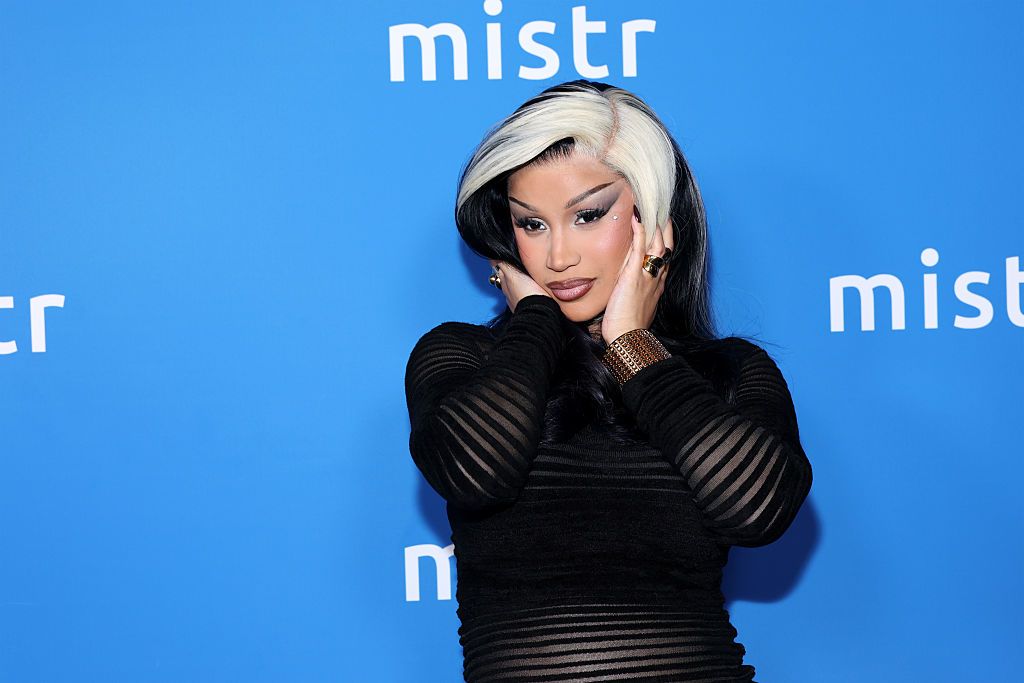
The sirens, the bass rattling the block, the aunties hanging out the window trying to see what’s going on. That feeling when your whole neighborhood turns into a movie set and you just know somebody important is outside. That is the exact energy Cardi B just bottled up and dropped on YouTube with her new “AH HA” video, taking it from the Bronx to Brooklyn and planting a flag right back in the streets that made her.
Cardi has never been shy about being a Bronx girl to the core, but this time she crosses the bridge and turns Brooklyn into her playground. “AH HA” is not some glossy, fake-luxury, green-screen fantasy. It is concrete, corner store, project-hallway rap. The video feels like one long summer night where the whole city is outside for no reason except vibes and loud music, with Cardi as the loudest voice on the block.
The first thing that jumps out is how intentionally New York this whole rollout feels. From the styling to the locations to the extras, “AH HA” looks like somebody took the energy of early-2000s DVD-era street rap and updated it for the TikTok generation. Think old smack DVDs, early G-Unit, Dipset in Harlem, Foxy and Kim stomping through Brooklyn. That raw, “this could get shut down by police any minute” type of energy, but now the police are lowkey background noise because Cardi is the main event.
The fits match the attitude. Cardi cycles through looks that scream “hood rich but fashion editor watching.” Oversized but tailored, icy jewelry, big hair, and that signature “do not play with me” face. Nothing about it feels accidental. She is reminding everybody that even with the Grammys, the brand deals and the late-night talk show slots, the core of her brand is still that regular-degular girl who used to post rants from the staircase. Only now the staircase is replaced by a whole borough.
Then Kash Doll pops up and the energy shifts from solo flex to sisterhood flex. The Kash Doll cameo is quick but effective, like a friend sliding into the party right when the shots get poured. There is something powerful about watching two women who came up in male-dominated rap spaces stand next to each other looking like bosses, not rivals. Hip-hop is still addicted to the “who’s beefing with who” narrative when it comes to women, so moments like this matter. They quietly push back on the idea that there can only be one at the top at a time.
This collaboration energy taps into the same current we have been seeing with other women in rap who refuse to play the scarcity game. Think of how City Girls and Latto move, or how Sexyy Red keeps popping up everywhere because she understands that community and controversy both fuel momentum. Cardi linking with Kash Doll on camera, in the middle of the block, says a lot about where women’s rap is right now. It is less about “I’m the only one” and more about “we all outside, and we all getting paid.” That same spirit is part of why a lot of folks still do not want to bet against artists like Sexyy, no matter how loud the think pieces get, which is exactly the tension we broke down in our look at Sexyy Red’s so-called ‘15 minutes’.
What “AH HA” really signals is Cardi trying to reset the conversation around her pen and her presence. The last few years have been a weird place for her career. She has not flopped, not even close, but the momentum has felt choppy. A hit here, a guest verse there, social media drama always lurking. The internet has been whispering “Is she done?” for a while, forgetting that hip-hop careers do not move in straight lines. They move in waves, and sometimes artists need to step back, live life, and then come back outside swinging.
“AH HA” feels like a swing. The song itself is aggressive, taunting, and petty in the way only New York rap can be. Cardi is talking directly to haters and indirectly to anybody who thought she quieted down too much. The video backs that up by putting her dead center in the environment that birthed her. No fancy metaphors. The message is simple: still here, still loud, still connected to the block.
There is also something deeper happening here about visibility and who gets to frame New York culture. Over the past decade, New York rap has had waves of energy from A Boogie to Pop Smoke to the Brooklyn drill era, but the mainstream image of the city often gets flattened into tourist shots of Times Square and subway trains. Cardi shooting in Brooklyn with real people, real buildings, real corner energy reclaims that image a bit. It says the heartbeat of this city is still Black and brown, still working class, still outside with folding chairs and hookah on the sidewalk.
That matters in a moment where so much of Black life and joy is either criminalized or sanitized. One day we are reading about a cop chief sending racist messages or an ICE agent leaving a gun in an airport bathroom like it is nothing, like everyday people are not punished for less, stories we have broken down in pieces like our coverage of that Mississippi police chief’s racist texts. The next day we are watching a woman like Cardi take up space, loud and unbothered, in a city that tried to push people like her out through gentrification and over-policing. That contrast hits harder than the bassline sometimes.
Historically, New York rappers love a “I still run this city” visual. Jay-Z rapping on the Marcy benches. 50 Cent on the block with bulletproof vests. Nicki in Queens in the “Beez in the Trap” era. Cardi is clearly stepping into that lineage here. The block as co-star. The borough as costume. The city as character. Artists from other regions do it too, but New York has a particular obsession with proving authenticity through location. If you are from here, you know: people care if you are really outside.
There is also something very Cardi about the way the video refuses to be too polished. Yes, there is real money on screen, but the energy feels like a party you could have accidentally walked into on your way home from work. No one looks like a background prop. Everybody looks like somebody’s cousin, somebody’s homegirl, somebody who might have a story about knowing her “before the fame.” That texture is part of what separated Cardi from the start. Fans never bought into her as a manufactured star. They saw her grind from strip club stages to reality TV to Grammy night in real time.
On the industry side, a video like “AH HA” is also a reminder that Cardi is in a different category than most of her peers. She is not dropping mixtape after mixtape or feeding the algorithm weekly, and yet every time she presses go, the whole ecosystem reacts. That kind of cultural gravity is rare. It is similar to how someone like J. Cole can cancel a show or tweak a tour and the conversation immediately becomes “What does this mean?” instead of “Will anyone care?”, like we unpacked around his Sacramento stop in our breakdown of his canceled concert.
“AH HA” looks like the opening statement for a new phase. Not necessarily a full album era just yet, but a recalibration. The timing of dropping something this rooted in the streets also makes sense when you consider how crowded the pop-rap lane is right now. TikTok has every kind of glossy, algorithm-bait song imaginable. Street anthems that feel specific and local are cutting through harder because people are tired of generic. Cardi is betting that authenticity, plus chaos, plus charisma, still wins.
The Kash Doll cameo deserves another look too, because it quietly touches on the way regional lines are softening in women’s rap. A Bronx-born Dominican-Trinidadian superstar linking with a Detroit-bred rapper in a Brooklyn video is the kind of cross-city, cross-style mashup that keeps the genre interesting. For years, labels and blogs tried to pit women against each other based on region, style, or fanbase. Now you see more of them pop up in each other’s worlds, from collabs to tour appearances to cameos like this that feel like a nod of respect.
There is also a conversation here about longevity and what it means for a woman in rap to age in public. Cardi is not the new girl anymore. She is a mom, a mogul in progress, and someone whose personal life has been dissected to death online. Every new song now sits next to years of headlines and think pieces. That is a different pressure than when “Bodak Yellow” first hit. “AH HA” answers that pressure by not running from it. The song and the video both carry the energy of someone who has already been doubted and dragged, but still steps on the scene like, “You are going to hear me whether you like it or not.”
For fans, the big question is where this is all heading. Is “AH HA” the warm up for a full project, or just a reminder that Cardi can still clear the timeline whenever she wants? The visuals suggest a larger strategy. The streets, the cameos, the styling, the attitude, it all feels like a table-setter. Artists rarely spend this much energy on a throwaway. If this is the first chapter, expect more New York, more collaboration, and more unfiltered Cardi in the months ahead.
What “AH HA” really proves is that the culture still cares when Cardi steps outside. The debates, the stans, the critics, the casual fans who only show up when it is a big moment, they were all locked in. In a music landscape where attention is the real currency, that might be her biggest flex. If she can turn one Brooklyn block into the center of the rap world for a few minutes, imagine what happens when the full rollout hits. The city is watching. The internet is watching. The only real question now is how far she is willing to push this next era, and who else she is bringing to the block with her.
About The Author