By Renee Fontaine, PowerVault Staff
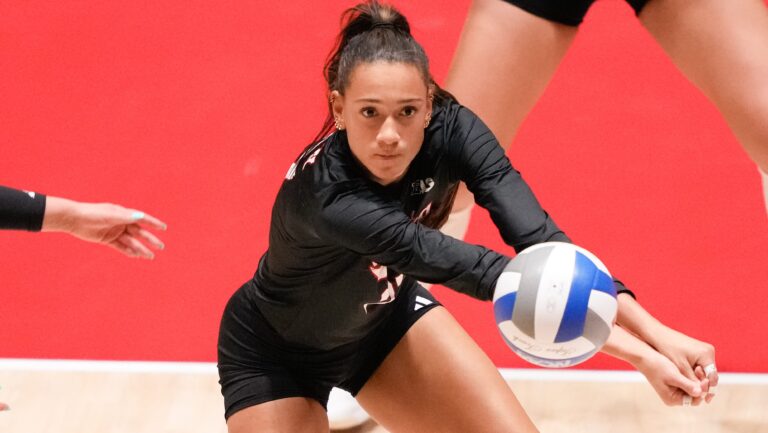
The cameras always catch the star. The logo three. The game winner. The flex to the crowd. What they almost never catch is the quiet guard who has already read the play before it happens, slid into help, and turned some superstar’s moment into a turnover. That is where Veronica Burton lives. In the margins, in the film room, in the habits that get built long before you ever touch a WNBA floor.
For the newest fans just tapping into the Golden State Valkyries, it is easy to lock in on branding, the colors, the Bay hype, the Steph Curry adjacency. But if you are trying to understand why this expansion team might actually be built to last, you have to start with a 5-foot-9 guard whose entire game is built on something the algorithm cannot fake: a family culture of work.
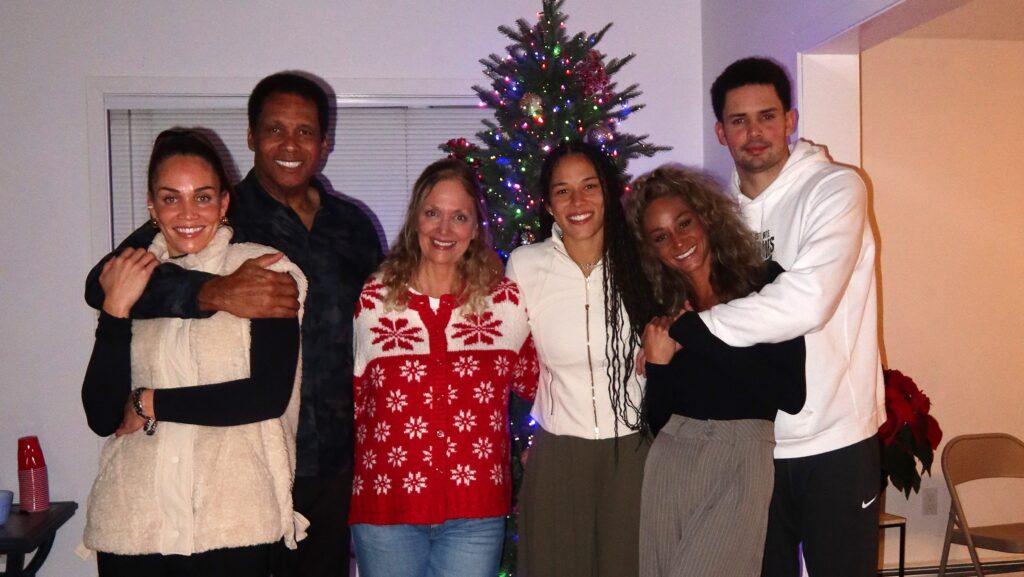
Veronica Burton did not just show up in the W as a “gritty defender” or “high IQ guard” because a scout said so. She is literally third generation in a sports lineage that has been grinding since before most of the current WNBA was even a thought. Her grandfather Ron Burton was the first-ever draft pick by the old Boston Patriots in the American Football League. That means before the shiny Super Bowls, before Brady turned New England into a brand, a Black man was their first investment. That is a heavy legacy to grow up under, and it explains a lot about how Veronica plays.
Her story is not the typical “no one believed in me” underdog movie. People believed in her early. What her family did was refuse to let her believe the hype without matching it with discipline. That is the part that connects across generations of Black excellence, whether you are talking hoop, hip-hop, or anything else. Somebody’s mama, grandmama, or OG uncle is usually behind the scenes saying, “Talent is cute. What are you doing when nobody’s watching?”
In a lot of ways, Veronica is a throwback guard. Defense first, reads first, ego last. Northwestern fans saw it for years when she was locking up Big Ten guards and stacking steals like streaming numbers. Her game is not designed for TikTok highlights. It is designed to win possessions. That is not sexy in the moment, but it is how you stay on rosters and how you help an expansion team build a real culture instead of just vibes.
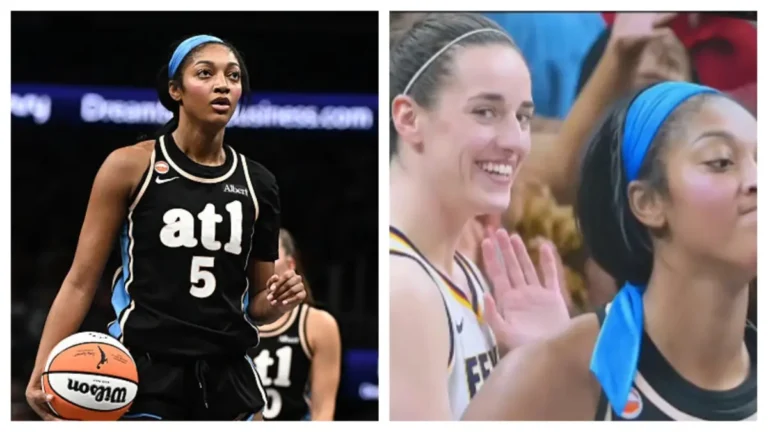
There is something very Black and very familiar about that kind of career path. In hip-hop, every superstar has a story, but the culture is really held up by the engineers, the writers, the producers who are in the studio at 3 a.m. fixing the details. Same thing in sports. Not everybody is Angel Reese or Caitlin Clark with the lights and the discourse and the culture war every time they touch the ball. Sometimes you are the one doing the dirty work that makes those moments possible, or ruins them. That is where Burton fits, and that is why her family background matters more than just a feel-good anecdote.
The WNBA right now is sitting in a weird, powerful moment. Ratings up. Debates wild. People pretending they just discovered women can hoop because of one or two players. But for Black fans who have been locked in, the real shift is not just about who is trending. It is about structure. Who is getting opportunities to lead. Who is being trusted with the new franchises and new money. When you see Golden State, one of the most influential NBA brands of the last decade, launch a W team and choose a player like Veronica Burton, it is not random.
Burton’s whole profile screams “franchise grown-up.” Not old in age, but old in approach. She grew up in a home where workouts were normal, where discipline was not punishment but lifestyle. Her grandfather’s story as a trailblazing Black athlete in a league that barely wanted him in the first place is the kind of thing that seeps into your bones. Her mother and relatives played sports and understood the grind. So when she talks about family being her constant support, it is not just “they came to my games.” It is “they built the environment that made this possible.”
That matters a lot for Black kids watching. There is a whole conversation in our culture about parents, legacy and what we pass down. Hip-hop fans love to joke about which rappers have the most kids, and pieces like “Which Rappers Have The Most Kids And What Does It Really Say About Hip-Hop Culture?” touch on how messy and beautiful that can be. But Veronica’s story is a reminder of the other side of legacy. Not just who you have, but what you pour into them. Her family did not give her the WNBA, they gave her the tools.
There is also a gender piece here that deserves real attention. In Black culture, we throw all kinds of love at our sons when they hoop or play football. The whole neighborhood is outside. But our daughters often have to outwork that gap just to be seen. Burton is from a sports family that actually took her journey seriously. That should not be rare, but too often it is. When you see her now in a brand new WNBA market, you are seeing what happens when a girl with game is treated like an athlete from day one, not an afterthought.
Golden State as a franchise understands how to package a story. They turned Steph into a mythology: undersized shooter, family man, faith, work ethic, joy. The Valkyries are clearly trying to build something that feels rooted in that same mix of culture and character. Burton fits right into that. She is not a social media headline. She is a “my dad would love watching her rotate on defense” type of player. In a league fighting for respect on every possession, you need that.
Look at how the conversation around women’s hoops has shifted in just a year. Angel Reese missing a layup became a whole cultural debate, so much so that we broke down the play and the pressure in “Why Did Angel Reese Miss That Layup Against Caitlin Clark And The Fever?” The microscope is ruthless, and a lot of it is coming from people who just arrived and do not know the history. Players like Burton, who have been hooping without fanfare for years, represent the backbone that lets the league survive those hype cycles.
There is also something bigger happening any time a Black sports family has multiple generations in the game. It connects directly to how Black communities fight to build institutions, not just moments. The same way Black music has always been our lifeline, like we talked about in “What Is Black Music Month Really About And Why Has Black Music Always Been Our Lifeline?,” sports legacies are another way we keep memory and possibility alive. Ron Burton being the first Patriots draft pick is not just trivia. It is a reminder that we were there at the beginning, even when the record books try to flatten it out.
Veronica stepping onto the floor for the Valkyries ties that thread from AFL history to this new WNBA wave. That is almost sixty-plus years of Black athletic labor, discipline, and resilience sitting in one family tree. When she talks about calling her family after games, about how they still hold her accountable, that is cultural continuity. That is the village model actually working.
From a hoops perspective, Burton gives Golden State a guard who can organize, defend, and accept a role without shrinking. She is not going to hijack possessions trying to prove she belongs. She already knows she does. The challenge for her in this new era will be balancing that humble, worker-bee mindset with the reality that the WNBA now rewards personality and branding in a way it did not ten years ago. Fans want to know who you are, not just what your defensive rating is.
That tension is everywhere in Black culture right now. Think about how Channel Tres, for example, is blending art and responsibility, working with young musicians in LA and using his platform to pull others up, which we broke down in “Who Is Channel Tres Working With In LA And How Is He Helping Young Black Music Students?” The new standard is not just being good at your craft. It is about how you use that craft to impact people around you. Burton’s version of that might not be a viral song, but it could be a generation of Bay Area girls who see her and feel permission to be defensive dogs, film nerds, and leaders without having to be loud about it.
There is also a business angle that deserves attention. Golden State is savvy. They know the Bay is a hoops city, but it is also a culture city. If the Valkyries want to lock in long term, they need players who actually show up in the community, at youth camps, in schools, in spaces where girls are still deciding if sports are for them or not. Veronica’s family-first mentality and grounded energy make her an ideal ambassador for that kind of work. She comes off like someone parents will trust and kids will respect.
On a more emotional level, her journey is a quiet counter to how violent and unstable Black life in America can be. Every day brings some new story about loss or fear, like the horrific case of a Black man found hanging from a tree in North Carolina that had folks rightfully angry and terrified. Against that backdrop, seeing a Black sports family that has managed to sustain love, stability, and opportunity across generations hits different. It is not escapism. It is proof that our stories are not only about pain.
As the Valkyries find their identity, keep an eye on how often Veronica Burton is on the floor in big moments. Watch who she guards, how she talks in huddles, how often the coaching staff trusts her to calm things down when the game gets wild. Pay attention to how the broadcast teams start talking about her family more as the season goes on, because once producers realize how deep that legacy runs, it is going to become part of the Valkyries mythology.
For now, what matters is this: Veronica Burton is not just “a role player” on an expansion roster. She is a bridge. From an AFL pioneer to a WNBA future. From old-school grind to new-era spotlight. From family living rooms where little girls are just learning to dribble to a packed Bay arena where they can finally see what that work can lead to. If the Valkyries are going to be more than a trendy rollout, players like Burton, backed by families like hers, will be the reason why.
The next few seasons will tell the story. If she carves out a starting role, becomes a defensive anchor, or even just the kind of veteran every contender wants, her name is going to ring different. But even if her box scores never go viral, the impact is already in motion. Somewhere, a Black girl with a ball in her hand and a family in her corner is watching Veronica Burton and thinking, “Oh, this is possible.” That is how culture shifts, one household at a time.
About The Author