By DeShawn Price, PowerVault Staff
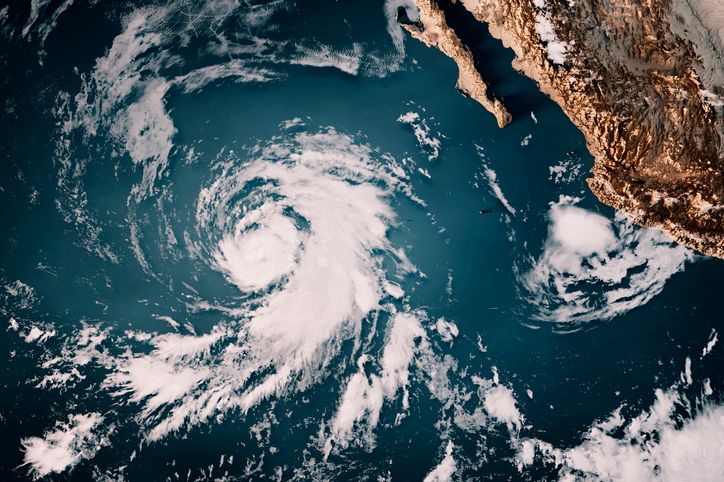
The group chat always flips the same way. Somebody drops a screenshot of the weather app, that red swirl spinning in the Atlantic, and the first reply is jokes. “Not Ida pulling up uninvited again.” “Hurricane Keisha finna shut the city down.” We laugh because that is how Black folks survive, but under all the memes is the same quiet question every summer: are we ready if this one hits for real?
Now the 2026 hurricane season is here, and the official list of storm names is out. Twenty one names that look harmless on paper but could end up written across headlines, FEMA forms and GoFundMe pages. A system is already trying to organize in the tropics, meaning Dolly might be up next. The science side is simple. Meteorologists pre pick names years in advance, rotating lists unless a storm is so deadly the name gets retired forever. The human side is where it gets heavy, because for Black communities on the Gulf Coast and Atlantic shoreline, hurricane season is not just weather. It is history, housing, racism, insurance, music, migration and mental health all rolled into one spinning cloud.
Think about how Katrina is not just a storm, it is a chapter in Black American memory. The Superdome full of mostly Black families. The “refugee” headlines. Kanye on live TV saying what everybody’s grandma was already yelling at the screen. Hip hop documented that trauma in real time. From Lil Wayne’s “Tie My Hands” to Jay Z and Bun B sitting with the city’s pain, the culture turned a natural disaster into a permanent record of what government neglect looks like when it lands on Black neighborhoods.
Every time a new list of hurricane names drops, that is what sits underneath it. On cable news, it is graphics and tracking cones. In our world, it is “Do my parents have somewhere to go if the levee fails again” and “Can my job let me leave if we have to evacuate” and “Why is my cousin still fighting insurance from a storm that hit three seasons ago.” Natural disaster in America is never just natural. It moves through systems that were already built unequal, and disasters just expose the wiring.
The 2026 list is another reminder that the climate conversation is not abstract for us. It is literally about where home can exist. New Orleans, Houston, Miami, Jacksonville, Charleston, Norfolk, Wilmington, all the way up to parts of New York and Jersey, these are not just dots on a map, they are hubs of Black life and Black music. Atlanta gets a lot of the shine in hip hop, but that whole Southern corridor has fed the sound for decades. Take those cities off the board or keep hitting them with “once in a century” storms every three years and the culture shifts in ways we are not fully ready for.
Look at how Katrina quietly reshaped hip hop. When New Orleans families scattered to Houston, Dallas, Atlanta and beyond, that migration blended sounds and scenes together. A lot of the Southern dominance in the late 2000s had roots in that forced movement. Club scenes changed, local slang moved, producers linked up in new cities because their studios back home were underwater. Disaster shifted the map, and the music followed.
There is a bigger pattern here about how Black people are expected to just “be resilient” no matter what. When a hurricane hits a mostly Black parish or an HBCU campus on the coast, the coverage turns into admiration for how strong everybody is. The auntie cooking for the whole block on a propane grill. The church turning into a shelter overnight. The college athletes helping clear debris between practices. That strength is real and beautiful, similar to what we just saw in how Black families showed up for each other in stories like the wild California surrogate custody case. But the constant demand for resilience is its own kind of violence when the systems causing the harm never change.
The hurricane name list dropping every year is almost like a subtle reminder from the government. “We know it is coming. We have a system. Good luck.” Storms get cute first names while whole neighborhoods wait months for a blue tarp. Folks in Lake Charles and Lafourche Parish can tell you what it feels like to still be rebuilding when the next storm’s name trends on Twitter. People in Puerto Rico still talk about Maria like it just left, because the damage never really ended.
This is where culture has a job to do. The same way the community holds athletes and celebrities up as examples of how Black love and preparation can look, like when LeBron posted Savannah and had everybody calling him the real relationship goals, that energy can apply to disaster readiness too. That LeBron and Savannah moment worked because it showed care that was not performative. Imagine if more artists with platforms treated hurricane season like that. Not just pulling up with cameras after the fact, but using that same influence before June to help fans in storm zones figure out plans, paperwork, and community check ins.
To be fair, some rappers already move like that. After Harvey, Houston artists did not wait for FEMA. They were on boats, in trucks, in schools, getting people out. After Ida, New Orleans organizers tapped into long standing mutual aid networks that existed way before a GoFundMe link could go viral. That spirit is the same one behind artists like Lil Baby doing his Back To School Fest in Atlanta. Different situation, same core idea. If the state will not show up fully for our kids, our elders, our blocks, the culture fills in the gaps.
What makes 2026 feel different is the frequency. Storms are stacking up faster. Seas are warmer, seasons start earlier, and the phrase “rapid intensification” is now part of everyday language. That means the window between “just a tropical wave” and “you need to get out now” is shrinking. For working class Black families, that is a problem. You need money to evacuate, somewhere to go, a car that will not die on the highway, a boss who will not threaten your job if you leave, a landlord who will not lock you out or hike the rent after repairs.
Hurricane names might be neutral on paper, but disaster is never experienced equally. The same racial blind spots we see in media and politics show up in weather coverage too. You saw it when a White NFL announcer casually confused Travon Walker’s name with Trayvon Martin on live TV and had Black viewers feeling that sting in real time. That moment we broke down in our coverage of the Travon Walker Trayvon Martin slip is the same kind of casual harm that pops up when anchors talk about “looting” in Black neighborhoods after storms instead of asking why people have to break into a closed store for water in the first place.
There is also a mental toll that rarely gets named. Every June, folks in hurricane zones start sleeping a little lighter. Kids who lived through Katrina or Maria or Ida sometimes tense up when they hear heavy rain at night. Parents low key panic every time school sends a weather alert. The names on that 2026 list may not mean anything yet, but the idea of another “Harvey” or “Sandy” or “Ian” is already living rent free in people’s heads. Disaster fatigue is real, especially when you feel like nobody outside your zip code is paying attention until your neighborhood is underwater on viral drone footage.
Hip hop could be one of the loudest voices pushing this conversation forward, the same way it has been on criminal justice, politics, and social issues. When artists speak out about the courts targeting rap lyrics or lawyers like Brian Steel stepping into the fire for the culture, people listen. We saw that in coverage of Brian Steel fighting the justice system for hip hop. That same pressure can be aimed at mayors, governors and federal agencies about levee funding, zoning that keeps low income Black families in flood zones, and insurance companies ghosting policyholders after the cameras leave.
Storm names also quietly expose who this country thinks is worth remembering. Some names get retired because the death toll was too high or the damage was too massive. Those names become shorthand for tragedy. Katrina. Maria. Andrew. But behind each name are thousands of mostly Black and Brown families still rebuilding while the national conversation has already moved on to the next political scandal or viral clip. Retiring a name does not retire the trauma. It just takes it off a list so future storms will not share it. The people still living with mold in their walls or unpaved streets do not get retired from that reality.
For Black millennials and Gen Z, there is a weird double responsibility. Many of us are the ones flying out to Carnival, Rolling Loud, Essence Fest, Art Basel, all in cities living under the shadow of this hurricane list. We are also the ones our families call when it is time to figure out the paperwork, the evacuation routes, the “what do we do if the roof goes.” Our generation has the group chat, the social media, the tech literacy, and the cultural power to actually shift how our communities prepare, not just how we react.
So when people search “What are the 2026 hurricane names” the real answer is bigger than a list of 21 words. The answer is that once again, Black coastal communities are about to step into another season of uncertainty with less protection than they deserve. Once again, the culture will be asked to be resilient, generous and creative in the face of neglect. Once again, the stories that come out of these storms will shape music, migration, politics and memory in ways we might not fully understand until years from now.
What happens next depends on who treats this list as a warning instead of just trivia. City officials will have their press conferences. Meteorologists will track every wobble. But artists, influencers, churches, HBCUs, neighborhood leaders and everyday group chat captains have a role here too. If this season ends quietly, that is a blessing. If one of those cute names turns into the next storm we speak about in all caps, the question will be whether we used this early moment to get more prepared, more organized and more demanding of the people in power. Hurricane names come and go. The way Black communities fight to protect home, history and each other is the part that lasts.
About The Author