By DeShawn Price, PowerVault Staff
Football is supposed to be the escape. Sunday, or in this case preseason Saturday, is when the timeline cools off a little, fantasy lineups get tweaked, and for a few hours the only names that matter are the ones on the back of the jerseys. Then a broadcast drops a name that does not belong on a football field at all, and the whole vibe shifts.
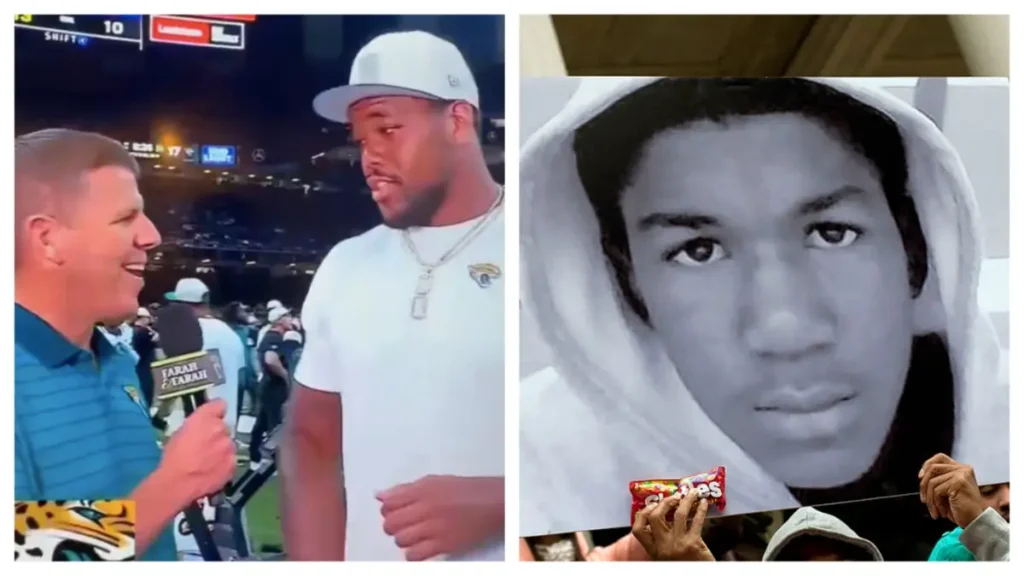
During the Jacksonville Jaguars first preseason game against the New Orleans Saints, longtime Jags announcer Brian Sexton was doing what he has done for years, setting up a sideline hit, talking through personnel, just standard booth work. Then he referred to 2022 number one overall pick Travon Walker as Trayvon Martin on live TV.
Not Travon. Trayvon Martin.
That is not just a harmless mixup. That is a name tied to one of the deepest wounds in modern Black America. That is a name that still echoes in protests, on hoodies, in hashtags, in the way parents talk to their sons before they leave the house. Hearing that name dropped casually in an NFL broadcast like it is just another player in the huddle felt jarring, disrespectful, and way too familiar at the same time.
On a pure facts level, Sexton was trying to introduce viewers to Travon Walker on the sideline. Instead of saying Walker’s name, he said Trayvon Martin, then moved on. Clips hit social media almost immediately. Some fans heard it live and thought their ears were playing tricks on them. Others caught it on the replay and felt that same little punch in the chest. Because for Black fans, Trayvon Martin is not a random reference. That name is a trigger.
Trayvon Martin was a 17-year-old Black kid walking back from a convenience store in Sanford, Florida in 2012 when he was followed and shot by George Zimmerman, a neighborhood watch volunteer who decided a hoodie and Skittles looked “suspicious.” Martin’s killing and Zimmerman’s acquittal helped spark the early wave of what would become the Black Lives Matter movement. His face in that Hollister hoodie became a mirror for every Black boy who ever got followed in a store, side-eyed in a neighborhood, or warned to keep their hands out their pockets when the police roll up.
So when an NFL announcer, working a Florida team no less, casually confuses the name of a living Black player with the name of a murdered Black teenager, it lands a lot heavier than your average on-air flub. That is not mixing up “Trevor” and “Travis.” That is mixing up a Pro Bowler in the making with a national trauma.
People who want to defend it immediately go for the “simple mistake” angle. He has probably said Travon Walker’s name a hundred times. Trayvon and Travon are one letter off. He did not mean any harm. And sure, intent matters in terms of how you judge someone’s heart. But impact is what people actually feel, and the impact here is tied to a long pattern of Black pain being treated like background noise in mainstream spaces.
Sports broadcasts love to lean into “stick to sports” until it is time to roll tribute packages, drape flags across the field, or have a moment of silence. The second the issue is Black and uncomfortable, suddenly people get amnesia. That same selective memory showed up when the US Embassy quietly took down Kehinde Wiley’s Obama portrait for being “too woke,” a move we broke down in detail here: Why Did The US Embassy Remove Kehinde Wiley’s Portrait For Being ‘Too Woke’?. The pattern is the same. Black symbols, Black stories, Black names get mishandled, erased, or treated like they are optional.
This is not the first time a Black name has been mishandled on air either. Remember when a local news anchor called Dr. Martin Luther King Jr “Martin Luther Coon” on TV and tried to play it off as a slip of the tongue. Or when commentators stumble over Black players’ names season after season, no matter how many times they are corrected. Broadcasters who can rattle off Eastern European hockey surnames with 13 consonants suddenly go blank when it is a Nigerian rookie in the NBA or a Polynesian lineman in the NFL.
In this case, the problem is not pronunciation, it is association. Why is Trayvon Martin sitting in that part of your brain where Travon Walker should be. Why is a dead teenager who became a symbol of racial violence the first name that bubbles up when you are supposed to be talking about a 23-year-old defensive end chasing a quarterback. That is what has folks side-eying this one.
There is also the specific ugliness of putting those two names together in a football context. The NFL already has a complicated relationship with Black protest and Black life. This is the same league that turned Colin Kaepernick into a cautionary tale for daring to quietly kneel during the anthem. The same corporate machine that painted “End Racism” in the end zones while making sure Kap never got a real workout. So hearing Trayvon Martin’s name dropped during a broadcast with no context, no care, no acknowledgement, feels like another reminder that the league will always be more comfortable selling Black bodies than sitting with Black grief.
What makes it worse is how quickly moments like this can be brushed past. An apology statement, a “that is not who I am,” maybe a suspension if the outrage lasts more than one news cycle, then back to business. We just watched a similar cycle when Fox News host Pete Hegseth looked visibly irritated while honoring a Black Marine on air and the internet caught it frame by frame. That moment raised the same question we asked in our breakdown of it: Why Was Pete Hegseth Mad Honoring a Black Marine?. How often are Black people being disrespected in spaces where the cameras do not catch it, or the clip does not go viral.
For Jaguars fans, this lands right in the middle of a moment where the franchise is trying to turn a corner. Trevor Lawrence is healthy, the roster is loaded with speed, and Travon Walker is supposed to be one of the leaders of that young defense. Imagine grinding your whole life to get your name called on Sundays, only for your name to be swapped with one from a tragedy that could have easily been your own if the wrong neighborhood or the wrong night had lined up. That is a mental weight players are not getting paid for.
Zoom out and this is also about how Black death gets processed in America. Trayvon, Mike Brown, Tamir Rice, Breonna Taylor, George Floyd, so many more. Their names become hashtags, then slogans, then “topics.” People debate them on TV like they are case studies, then move on. For Black folks, those names are cousins, classmates, “that could’ve been me.” So when Trayvon Martin’s name pops up in a context that treats him like just another random Black name, it feels like another step in the slow erasing of what that loss meant.
This is the same country where a dating show like “Pop The Balloon” can build an entire concept around humiliating darker skinned women for entertainment, then act surprised when Black viewers call it colorist and cruel. That whole situation, which we unpacked here in What Is Pop The Balloon Dating Show And Why Are Black Women Calling It Colorist And Cruel?, is part of the same ecosystem. Black humanity turned into content. Black pain turned into a punchline or a slip.
There is a deeper reason moments like this feel exhausting. Black culture is the engine of American entertainment, sports included. The league markets Black athletes, Black celebrations, Black storylines, slaps hip hop on every highlight package and halftime show. Our soundtracks make the product cool. Our style makes the jerseys move. Yet when it comes time to show basic care with our names, our histories, or our martyrs, suddenly everybody is “caught off guard” and “didn’t mean it like that.”
Think about how carefully studios handle the legacies of white icons. The way the industry guarded Elvis for decades, or how this generation is finally starting to unpack what Michael Jackson meant to the world, as we broke down around the new biopic in How Did Michael Jackson Beat Elvis at the Box Office?. That level of protection and care rarely gets extended to our dead unless there is money involved. Trayvon Martin did not leave behind a catalog or a championship ring. He left behind a hoodie and a hole in his family. That should be more reason, not less, to treat his name like something sacred.
So what should happen now. At minimum, a real apology that acknowledges why the name Trayvon Martin carries a different weight. Not a PR rinse, not a “my bad if anyone was offended,” but a direct recognition that you said the name of a murdered Black child on an NFL broadcast by accident and you understand why that hurts people. The Jaguars and the network also have a chance to show this is not just about putting out a fire, but about growth. That could mean bringing in people from the community for real conversations, not just internal HR training nobody feels.
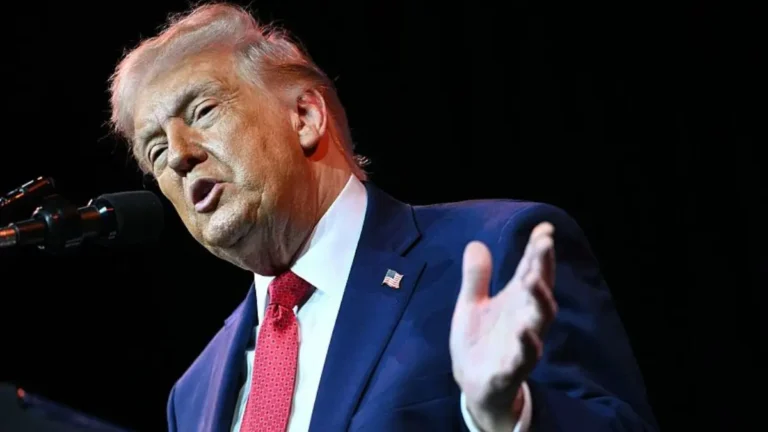
For fans, this is another reminder to keep watching the product with clear eyes. Enjoy the games, root for your team, argue your fantasy lineups, but stay sharp about how the people behind the mic and behind the camera treat Black life. The same way folks freeze frames and zoom in when a politician looks off in a press conference, like we did in Why Was Trump Beet-Red and Slurring on TV?, that same attention needs to be on who gets our stories right and who plays casual with them.
The next few weeks will show what the league, the team, and the broadcaster really learned from this. Will this be another 24 hour outrage cycle that fades as soon as the regular season kicks off, or a small turning point where people in those booths understand that Black names are not props. Travon Walker will keep chasing quarterbacks. Black fans will keep filling stadiums and timelines. The question is whether the people calling the game can respect that Trayvon Martin should never be reduced to a slip of the tongue between commercials.
Because even in a preseason game on a random night in August, the culture is listening. And the culture remembers who treats our dead like a headline, and who handles their names like they matter.
About The Author